India's Leftist Rule Ends After Five Decades; Nepal's Leftist Parties Face Crisis


Kathmandu. After nearly five decades, leftist rulers in neighboring India have been freed from power. The leftists, who were considered their strongholds, have been defeated in the state assembly elections this time and have become powerless for the first time.< /p>
In Kerala, which has a total of 140 seats, the Congress-led Indian Union Muslim League (UDF) alliance has won a majority of 102 seats. In the elections, Congress alone won 63 seats, while the Left Democratic Front (LDF) led by the Communist Party of India (Marxist) won 35 seats.< /p>
The Communist Party of India (CPI) won only three seats. As soon as the election results were announced, the leftist governments in all the states of India, which had a strong hold for years, have been swept away. Earlier, the 34-year-long leftist government in West Bengal collapsed in 2011. The 25-year-long leftist rule in Tripura collapsed in 2018. Kerala was considered one of the best in the world in land reforms, education, and health. But with the spectacular entry of Congress into power after 10 years, the leftists have suffered a major setback.< /p>
In India, the CPI waged an armed struggle in 1948-49. But the rebellion could not succeed. The leftist government formed in Kerala in 1957 under the leadership of E.M.S. Namboodiripad is considered the world's first democratically elected government. The leftist government made revolutionary reforms in land, health, and education. After this caused a great stir, the then central government led by Congress's Jawaharlal Nehru dismissed the leftist government. However, since 1977, leftist governments have been in power in one state or another. But the recent elections have swept the leftists out of power.< /p>
After India gained independence in 1947, the CPI adopted the policy of establishing a socialist state peacefully through parliamentary elections. However, there are differences regarding the establishment of the Communist Party. Some consider the Communist Party formed in Tashkent in 1917 as the first. Although there are differences regarding the establishment of the party, the CPI was formed in Kanpur in 1925. The party was reorganized in 1927. As the Communist Party completes a hundred years of its establishment, the crisis of the CPI's existence is being analyzed from various angles in India and Nepal.< /p>
According to Rajarshi Dasgupta, an assistant professor at the Centre for Political Studies at Jawaharlal Nehru University in New Delhi, the leftists could only maintain their hold in certain areas like Kerala, Tripura, and West Bengal.< /p>
'Their presence in Hindi-speaking regions, mainly North India, was largely confined to industrial areas, which declined with the fall of trade union politics,' Dasgupta said.< /p>
He cited the inability of communists to address caste and gender issues and, especially, their failure to understand the changing nature of capitalism after liberalization as the main reasons for their limited reach.< /p>

Coincidentally, Union Home Minister Amit Shah, a leader of the Bharatiya Janata Party, which has led the government for the last three elections, had announced the eradication of Maoist violence in India. In a program organized last March, Shah had said, 'Naxalism is now on the verge of extinction in the country. The country will be informed once this entire process is formally completed, but I can say that we have become Naxal-free.'< /p>
The influence of the People's Revolution led by Mao Zedong, the supreme leader of the Chinese Communist Party, in 1949, also spread to Nepal and India. In the Maoist armed movement that lasted for decades in India, 20,000 people lost their lives and 120 million people were affected.< /p>
Last year, the Chhattisgarh government announced that Maoist General Secretary Nambala Keshav Rao alias Vaswaraju was killed in an encounter with the army deep inside the forest in Chhattisgarh. This is considered the most significant success achieved by the Indian government against the Maoist insurgency in years. Rao, who had an engineering background, was considered the backbone of the ongoing insurgency in central India. Home Minister Amit Shah said that security forces killed 27 dangerous Maoists, including General Secretary Rao, in an operation in Narayanpur, Chhattisgarh.< /p>
In Nepal too, there was a Maoist armed conflict from 1995 to 2005. Later, the CPN (Maoist) entered peaceful politics by ending the armed conflict through the 12-point agreement.< /p>
According to leftist analyst Rajendra Mahajan, the Communist Party of India needs to be viewed from three perspectives.< /p>
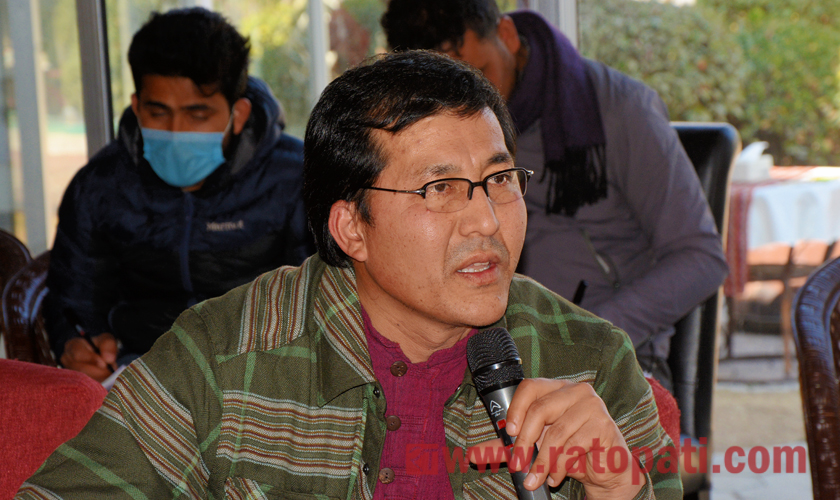
'One is the ruling leftists, and the question is how long they remained leftist. There is the issue of parties in power from the Communist Party. There are also leftists who have come through struggle. There is the approach of achieving social change through non-violence for a long time. There are also leftists who are engaged in various struggles and campaigns based on issues and people's issues,' Mahajan said.< /p>
He states that the communists who were established to be present in the Lok Sabha or Vidhan Sabha, being around the power, have been swept away. Leftists were in power in Bengal, Kerala, and Tripura for a long time. Although the process of sweeping away those forces had started earlier, they did not learn from it, Mahajan analyzed.< /p>
'They were in power on behalf of the Marxist Communist Party. The process of them being swept away had started earlier. The character of most of these parties was 'mandale' (opportunistic/self-serving),' Mahajan told Ratopati. 'They used to give special priority only to their specific party and specific leadership. It is not that the public turned away for no reason. They were no less than others in abandoning the issues of the poor. Therefore, in many places, they even played a reactionary role.'< /p>
Mahajan says that people have become fed up with the communists' behavior of ignoring or even suppressing the issues of their own base and community, leading to growing disillusionment with communists.< /p>
Mahajan analyzes that communists have suffered a major setback by deviating from the socialist system established by world communist leaders Marx, Engels, Lenin, Stalin, and Mao.< /p>
However, the first Communist state government formed in Kerala in 1957 did some land reforms for farmers. Efforts were made to improve education, but forces of the upper exploiting class agitated against it. On this pretext, the central government of Congress dismissed the Communist state government and imposed President's rule. This clearly shows that the bourgeoisie uses various tactics to prevent communists from implementing their policies in parliamentary democracy. Not only in the states of India, but the Communist Party of India (CPI) and the Communist Party of India (Marxist), which have played the role of the main opposition in the Lok Sabha many times, were reduced to 6 seats in the 2024 elections. In the first parliamentary elections held in 1951 after India gained independence from Britain in 1950, the CPI won 16 seats and played the role of the main opposition party. In that election, Congress (I) won 334 out of a total of 489 seats. The inability of the CPI to project a nationalist image is considered a major reason for the Communist Party winning fewer seats, according to political circles.< /p>
During World War II, due to the formation of a joint front of the socialist Soviet Union and Britain against Germany, the CPI was accused of adopting a right-wing opportunistic policy against the British government in India.< /p>
The non-violent struggle to make India independent was led by Indian Congress Party leaders like Mahatma Gandhi and Nehru, which led to the Indian Congress Party holding power for a long time after India gained independence. The CPI has been analyzed as being defensive from the beginning due to its right-wing opportunistic character.< /p>
Another leftist analyst, Dambar Khatiwada, said that the fate of leftists is bad not only in Kerala but all over the world.< /p>

'Kerala was like the last bastion of communists in India, and it fell. Not only seats, but the vote share also decreased significantly. In West Bengal, where they ruled for 34 years, they got 2 seats. The so-called left, which had long rule in three states and was the main opposition in the Lok Sabha, has collapsed. The fate of communists is similar all over the world,' he wrote on social media X.< /p>
In India, 18 Lok Sabha elections have been completed from 1951 to 2024. It has seen various ups and downs in the 73 years since gaining independence from British colonial rule.< /p>
- When and how many seats did the CPI win in the Lok Sabha elections?
1951-52
Total seats 489 - Congress 334, CPI 16 (Opposition party)< /p>
1957
Total seats 494 - Congress 371, CPI 27 (Main opposition party), Jayaprakash Narayan's Praja Socialist Party 19< /p>
1962
Total seats 494 - Congress 361, CPI 29 (Main opposition party)< /p>
1967
Total seats 520 - Congress 283, Independent Party 44, CPI split into CPI and CPI (M). CPI 23 and CPI (M) 19< /p>
1971
Total seats 518 - Congress 352, CPI (M) 25 (Main opposition party), CPI 23< /p>
1977
Total seats 542 - Janata Party 295, Congress 154 (Opposition party), CPI (M) 22, CPI 7< /p>
1980
Total seats 542 - Congress 353, Janata Party 41, CPI (M) 36, CPI 11,< /p>
1984
Total seats 543 - Congress 404, Telugu Desam Party (TDP) 30 (Main opposition party), CPI 6, CPI (M) 22< /p>
1989
Total seats 543 - Congress 197, BJP 85, CPI 12, CPI (M) 33< /p>
1991
Total seats 543 - Congress 232, BJP 120, CPI 14, CPI (M) 35< /p>
1996
Total seats 543 - Congress 140, BJP 161, CPI 12, CPI (M) 32< /p>
1998
Total seats 543 - Congress 141, BJP 182, CPI 9, CPI (M) 32< /p>
1999
Total seats 543 - Congress 114, BJP 182, CPI 4, CPI (M) 33< /p>
2004
Total seats 543 - Congress 145, BJP 138, CPI 10, CPI (M) 43< /p>
2009
Total seats 543 - Congress 206, BJP 116, CPI 4, CPI (M) 16< /p>
2014
Total seats 543 - Congress 44, BJP 282, CPI 1, CPI (M) 9< /p>
2019
Total seats 543 - BJP 303, Congress 52, CPI 2, CPI (M) 3< /p>
2024
Total seats 543 - BJP 240, Congress 99, CPI 2, CPI (M) 4< /p>
- Deepening Crisis for Leftists in Nepal
Like in India, the leftist movement has a long history in Nepal as well. At the height of the Chinese Communist Revolution, the Communist Party of Nepal was established on April 22, 1949. The founding member Pushpa Lal Shrestha led the party's establishment in Banaras, India, with members Narayan Vilas Joshi, Niranjan Govinda Vaidya, and Nar Bahadur Karmacharya. As the Communist Party completes 76 years of its establishment, the government led by leftists was accused of playing a role in suppressing the peaceful protest by youth in August last year.< /p>
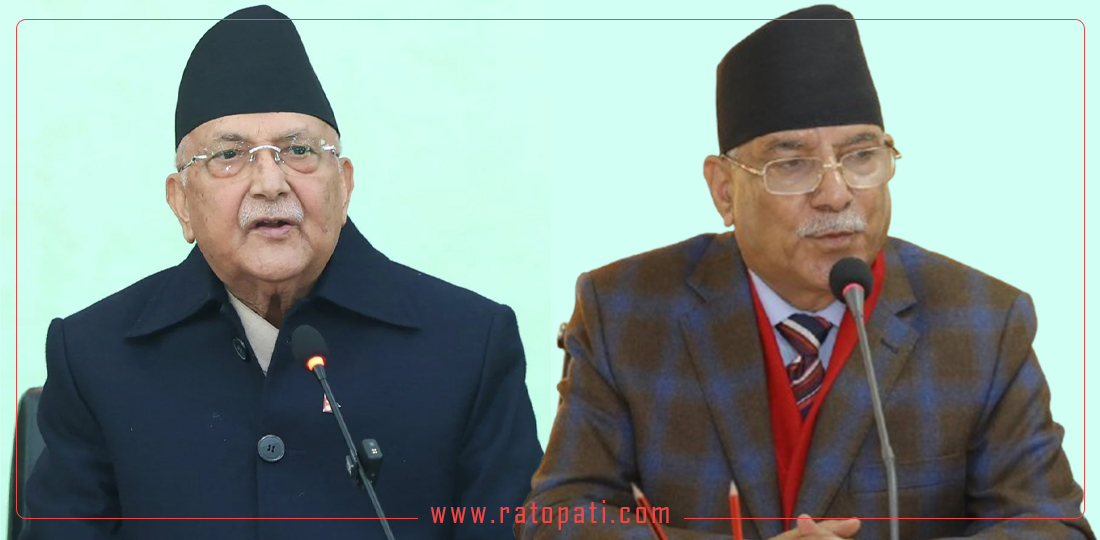
At that time, the coalition government of left and democratic parties was led by CPN (UML) Chairman KP Sharma Oli. The government brutally suppressed the peaceful demonstration held at Singha Durbar, New Baneshwor, resulting in the deaths of 23 youths. The Oli government collapsed on September 10 following nationwide protests against the government's repression. After dissolving the elected parliament, an interim government led by former Chief Justice Sushila Karki announced elections on March 14. In the elections, not only the UML but the entire leftist movement in Nepal suffered a major setback. The Rastriya Swatantra Party (RSP), formed three years ago, won nearly a two-thirds majority with 182 seats to form a single-majority government, while the leftists could only win 42 seats. The vote share of leftist parties is 21.50 percent of the total votes.< /p>
The government led by RSP senior leader Balendra (Balen) Shah has aggressively advanced governance reform programs according to its election manifesto. If the government continues on its current path, the leftists are likely to face a major setback in the local and provincial assembly elections to be held next year.< /p>
Analyst Rajendra Mahajan cited examples where leftist governments have severely suppressed those demanding rights, despite talking about class liberation.< /p>
'They talk about class liberation, but when organized groups raise demands for rights or question them, they are suppressed. How can they be called leftists then? If this is ignored, the very existence of leftists cannot be sustained,' Mahajan said. 'In Nepal too, those who call themselves leftist but exhibit non-leftist characteristics, severely suppress and exploit workers, laborers, and farmers, whether Dalits, indigenous peoples, Madhesis, or any marginalized community, by ignoring their rights, employment, and social security. Sooner or later, they are likely to be swept away here as well.'< /p>
After the political change of 1990, leftist parties have repeatedly led the government and participated in it in one form or another. In the mid-term elections of 1994, a minority popular government was formed under the leadership of UML. The movement of 2006 overthrew the traditional monarchy. After the establishment of the Federal Democratic Republic in 2008, the two major leftist parties, CPN (UML) and CPN (Maoist Centre), took turns leading the government. In the 2017 federal elections, the leftists had the opportunity to form a government with nearly a two-thirds majority.< /p>
From UML, former General Secretary Madhav Kumar Nepal and Chairman Jhalanath Khanal each became Prime Minister once. Current Chairman Oli has become Prime Minister four times. From the former Maoist party, Chairman Prachanda became Prime Minister three times, and Baburam Bhattarai became Prime Minister once.< /p>
Except for 1991, 1995, 1999, 2001, and 2004, leftists had effective participation in every government. Although leftist parties have been swept out of the federal government due to the Janji movement, there is a left-democratic coalition government in all seven provinces. Leftists have a hold in most of the 753 local level bodies. Periodic elections are due in the provinces and local levels in April and November 2084 (2027 AD). If the leftists here do not transform themselves by learning from the recently concluded general elections in Nepal and the state assembly elections in India, they face the risk of their existence ending in the near future.
This specific news has been automatically translated by AI. As a result, there may be some inaccuracies or language errors.
_fjMKnvPt3r.jpg)