International Labour Day Celebrated Worldwide

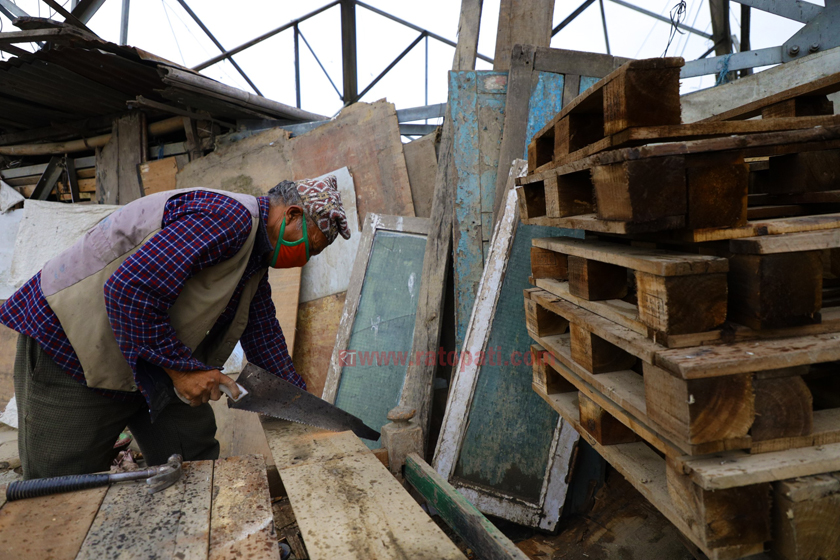
Kathmandu. The 137th International Labour Day is being celebrated today across Nepal and the world in memory of the labour movement that began in 1886 with the slogan 'Eight hours of work, eight hours of entertainment, and eight hours of rest'.
On the occasion of the day, the Ministry of Labour, Employment and Social Security has organized various programs across the country with the participation of employers, workers, and representatives of related international organizations.
International Labour Day has been celebrated every year on May 1st of the English month since 1890, as decided in the conference of labor organizations and labor leaders held in Paris, France in 1889.
Workers consider this day as a festival and organize various programs with the objective of pressuring the government and employers to ensure their rights and entitlements.
It is a history that International Labour Day began to be celebrated in Nepal with the Biratnagar labor movement in 2007 BS. The government has been giving public holidays on the occasion of International Labour Day since the political change of 2046 BS.
In Nepal, the day has been celebrated by organizing various programs at the government level since the 60s decade. Programs organized by the Government of Nepal will discuss and debate the current status of workers in Nepal, major policies brought for the welfare of workers, minimum wages, living standards of workers, strategies to bring informal sector workers into the formal sector, programs to create employment within the country, and long-term plans targeting youth.
Presentations by subject matter experts on the status of labor law implementation in Nepal will also be made during the program. A person who works physically and mentally for wages is considered a worker.
The government has clarified that efforts are being made to address various policy reforms, labor market management, foreign employment, social security, and worker rights issues for the welfare and rights of workers in Nepal.
Prem Prasad Acharya, Chief of the Labour Relations and Social Protection Division and Joint Secretary at the Ministry, said that significant progress has been made in the implementation of labor laws and the protection and promotion of workers' rights compared to the past.
He said, "Efforts are being made to implement the provisions of the Labor Act, 2074 BS and the Labor Rules, 2075 BS. The process of amending the act is moving forward based on the suggestions of stakeholders. In the context of making the domestic labor market organized and dignified, the process of legal compliance and action in case of violation is moving forward."
Nepal is on the list of countries that send a large number of workers to the global market. A large part of the country's economy is occupied by remittances sent by Nepalis working in foreign employment.
The government has a long-term vision of strengthening the national economy and eradicating poverty by producing competitive, skilled, and proficient human resources for domestic and foreign labor markets and creating employment and self-employment opportunities, providing a safe, dignified, and healthy working environment.
The government has set the minimum wage for workers at Rs 19,550 in recent years. There is a provision to review wages every two years. Consultation is being held with stakeholders regarding this.
The Ministry has been advancing the contribution-based social security program in the recent phase. After including world-class health services and pension-based livelihood programs in Nepali society, about 2.9 million workers have been included in the Social Security Fund.
Government efforts are underway to include about six lakh workers from the formal sector in the Social Security Fund. The government is also making various efforts to make foreign employment, which is the main labor destination, safe, organized, and dignified.
In recent times, global mobility and development in the field of technology have brought about rapid changes in the labor market. Ensuring employment for the labor force continuously entering the labor market is becoming challenging.
The government has been advancing various reform programs to make foreign employment free from exploitation, safe, and organized, and to guarantee, regulate, and manage rights. The ministry has stated that a policy has been adopted to encourage the investment of capital, skills, technology, and experience earned from foreign employment in productive sectors within the country.
This specific news has been automatically translated by AI. As a result, there may be some inaccuracies or language errors.
_shBQSnE9IK.jpg)
_fkg5u05PqN.jpg)