UAE Visa Rule Sparks Outcry Among Nepali Workers Over Costly Police Report Verification

Kathmandu. Stakeholders have been complaining that the new system implemented by the United Arab Emirates (UAE) directly affecting Nepali workers after the Janja movement in Nepal is impractical. However, due to the government's long-term inaction in resolving the issue, Nepali workers are still forced to pay an additional approximately Rs 14,500 (353 dirhams) to the VFS center in the name of police report verification to go to the UAE.
Workers and businesses have been demanding the abolition of this fee, collected to enrich VFS, but the problem has remained unresolved for a long time. A mandatory system was implemented from December 4, 2025, requiring police reports to be verified through VFS by the UAE Embassy. The UAE had suddenly adopted a strict visa policy, citing reasons such as many prisoners escaping in Nepal following the Janja movement. Citing security sensitivities, the UAE initially stopped visit and work visas for Nepalis. However, even after the government facilitated diplomatic efforts, it made its own embassy's verification mandatory for work visa processing, abandoning reliance solely on the Ministry of Foreign Affairs' stamp.
Even though the country has returned to normalcy after the Janja movement, the requirement for police report verification remains. Stakeholders believe that diplomatic efforts are necessary to remove this system. It is said that while the previous government did not show interest in this matter, the current government, with a two-thirds majority close to it, has not paid attention to it, according to foreign employment entrepreneurs. Mahesh Basnet, General Secretary of the Nepal Association of Foreign Employment Agencies, stated that workers are suffering due to the government's diplomatic weakness, causing billions of rupees to flow out of the country. He mentioned that despite repeatedly visiting the Ministry of Foreign Affairs and the Ministry of Labor to resolve this issue, no one has listened.

He said that workers are forced to pay an additional Rs 14,500 through VFS just to get a stamp on the police report issued by the Nepal Police, which is valid for only 3 months. 'It is an official document issued by the Nepal Police. We talk about free visa, free ticket in Nepal, but in the end, such a large amount is collected from the worker's pocket for a police report,' he told Ratopati. 'This is causing hardship to the workers.'
Similarly, former chairman of the association, Rajendra Bhandari, also said that despite repeated warnings from entrepreneurs to the government, no attention has been paid. He stated that it is not good for the government to remain silent on the issue of workers. He said, 'Workers are being unnecessarily burdened financially. But the government has not been able to make any diplomatic efforts so far. For more than the last 7 months, they have been continuously paying Rs 14,500 for the verification of a police report. Facilitation has not happened yet.'
Silent Government
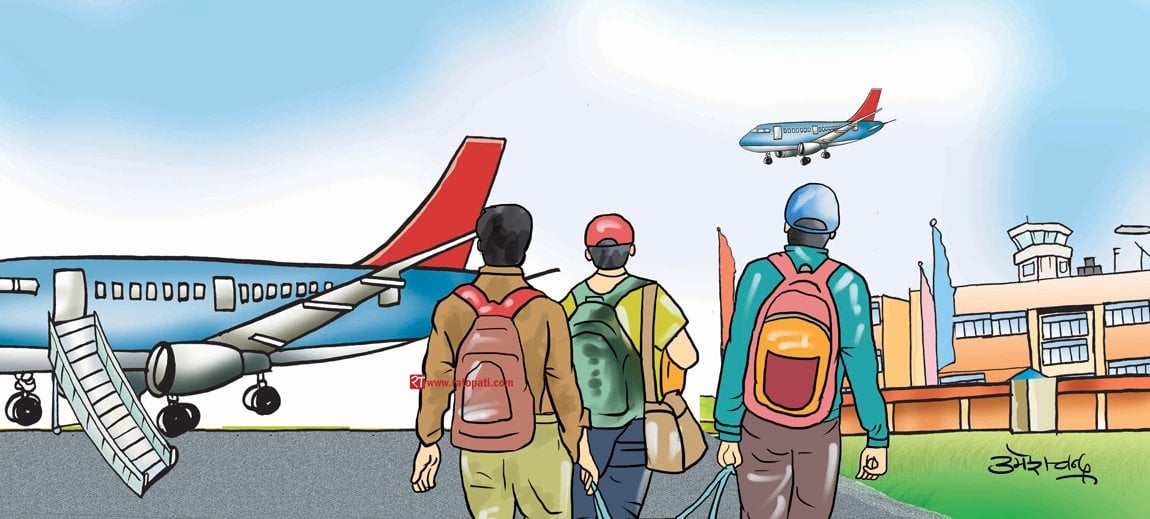
Last year alone, nearly 150,000 Nepali workers went to the UAE. Calculating at this rate, entrepreneurs say that 2.5 billion rupees will flow out of Nepal in a year in the name of police report verification.
In the last 10 months of the current fiscal year, 600,000 Nepalis have gone abroad for employment. Among them, the number going to the UAE is the highest. According to the department's data, 154,493 people have taken labor approval for the UAE by Baishakh. The UAE is one of the major destination countries for Nepali workers.
Even based on this number, a large amount of money is being collected from workers in the name of police report verification. According to entrepreneurs, the Nepali government does not receive a single rupee in revenue from this. On one hand, the pockets of workers going abroad after taking loans are empty, and on the other hand, the country's capital is going out. Along with this, a loophole has been created to enrich private companies. But the government appears to be a silent spectator on this issue.
Complaint: Government Doesn't Care About Workers
Entrepreneurs complained that the government does not care about the workers going for foreign employment. General Secretary Basnet complained that even high-level officials, including the Minister of Foreign Affairs, have not shown any interest in the workers' problems.
'We have raised this issue many times by meeting the Minister of Foreign Affairs, the Minister of Labor, and high-ranking officials. But we don't know what the game is inside, they pretend not to hear,' he told Rato Pati. He said that although diplomatic officials talk about the great diplomatic relations of 1961, they have not made any effort to reduce the suffering and expenses borne by the workers. Basnet stated that the Ministry of Labor also talks about zero cost but has not coordinated with the Ministry of Foreign Affairs to stop the burden on workers in the name of verification.
If the Nepali diplomatic missions take effective initiatives, this problem can be easily solved, claim entrepreneurs. They suggest that since Nepal Police has already started providing police reports with QR codes online, the UAE government should be persuaded to recognize it as official.
What Does the Ministry Say?
The Ministry of Foreign Affairs has stated that efforts are being made to facilitate the issue of police report verification and VFS. The ministry has acknowledged the issue of the high fees paid by workers going to the UAE for foreign employment for police report verification.
Lok Bahadur Paudel Chhetri, spokesperson for the Ministry of Foreign Affairs, said that although Nepal cannot directly interfere in the laws and fees of another country, the ministry is working on various options to reduce the expenses and hassle for workers. Spokesperson Chhetri said, 'Initially, when visas were stopped altogether, our main objective was that the destination for Nepalis should not be blocked. In the process of opening them up, the situation arose where expensive fees had to be paid through the agency they designated (VFS). It depends on their rules how much fee any country charges. However, we are facilitating how to make it less expensive for the workers.'
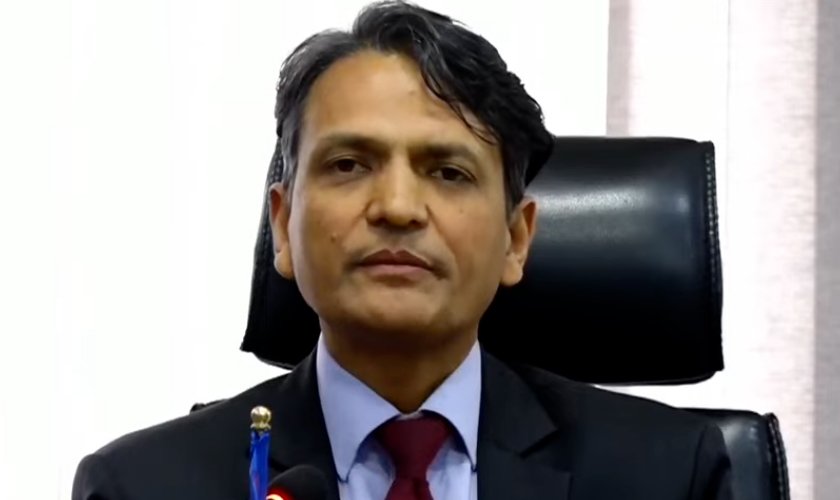
According to Spokesperson Chhetri, the ministry is currently working on three main options for the convenience of workers. The first is the current process of going through the agency. The second is to get it verified by the UAE Embassy in Kathmandu after certification by the Consular Department of Nepal, and then by the UAE Ministry of Foreign Affairs. In addition to this, the ministry has also implemented a third option which is the easiest and least expensive. He informed, 'We have arranged for documents produced in Nepal to be stamped directly at the UAE Embassy (MBC) in Kathmandu without going to the Consular Department, and based on that, the Ministry of Foreign Affairs there will stamp it. This will significantly save both time and money for the workers.' He added that diplomatic efforts are underway to reduce the fee, stating that the fee is according to the UAE government's rules.
'We cannot directly tell another country to change its laws or remove fees, but we are continuously making efforts to make the process simpler and less expensive,' said Spokesperson Chhetri. 'The Ministry of Foreign Affairs and the concerned embassies are serious and fully committed to the convenience and rights of all Nepali workers going to the UAE and other Gulf countries and other labor destinations.'
The ministry stated that with the arrival of the new government and leadership, the problems of the workers are being looked at more closely, and diplomatic efforts are underway to make the verification process even simpler and cheaper in the coming days.
Before the visa restrictions were tightened, the character certificate provided free of charge by the Nepal Police was verified by the Consular Service Department under the Ministry of Foreign Affairs for a fee of Rs 500, and then it was valid for a UAE visa.
This specific news has been automatically translated by AI. As a result, there may be some inaccuracies or language errors.
_wNIRIr8xqE.jpg)
_wqJwwAzuWG.jpg)

_Mks4af4WAR.jpg)