
Lalitpur Metropolitan City Claims No Squatter Population, Mayor Praises Government's Efforts

Kathmandu. The government is currently in the process of removing squatters residing in various parts of the country and is working on their resettlement and identification. In Kathmandu itself, squatters living along the banks of the Thapa River, in Manohara, and Sinamangal are being removed, and their costs are being collected.
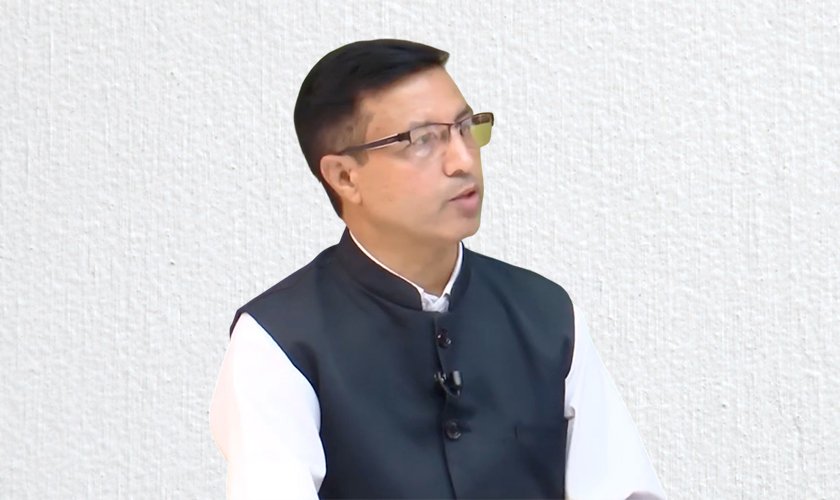
However, Mayor Chiribabu Maharjan of Lalitpur Metropolitan City stated that there are no squatters within the metropolitan area, which is adjacent to Kathmandu.
What does Mayor Maharjan think of the steps taken by the Balen government to solve the squatter problem, especially in Lalitpur Metropolitan City, which is relatively peaceful compared to other major cities? Here is the conversation Ratopati had with Mayor Maharjan:
The government is currently working to solve the squatter problem across the country. In this situation, Lalitpur Metropolitan City appears peaceful. Are there no squatters within Lalitpur Metropolitan City?
There are no squatters within the Lalitpur Metropolitan City area. Therefore, we have not had to conduct any kind of 'operation' in our area. Lalitpur district has six local levels: one metropolitan city, two municipalities, and three rural municipalities. While there may be some issues in other local levels, there are no squatters within the 36.2 square kilometer main area of Lalitpur Metropolitan City.
How do you view the process the government has initiated for squatter management?
I see it as the commencement of a very positive initiative. However, genuine squatters should not be deprived of their constitutional rights. It is not necessary to keep them on the banks of the Thapa River or any riverbank. The Nepal government should manage them by creating policies and regulations, as no one can be rendered homeless according to the constitution. My belief is that the government should conduct thorough studies and research to identify genuine squatters and manage them appropriately.
There are criticisms that the government is creating panic in the name of solving the squatter problem. What do you say about that?
I don't think so. Previously, when Kathmandu Metropolitan City Mayor Balen Shah tried to remove squatters, he could not succeed due to the government's lack of cooperation. But now, the government itself has shown initiative. It is natural to see some minor crowds or sporadic problems when working, but overall, this process is moving forward well.
Many commissions have been formed since 2047 BS to solve the squatter problem, but the problem has not been resolved. Doesn't it seem like past governments have deliberately kept this problem unresolved?
Past governments did have the intention to solve the squatter problem, but in practice, apart from managing their own cadres, not much work was done. Commissions were formed to support cadres, reports were submitted, but the files were hidden without advancing the work, leaving the problem as it is.
Although 8-9 commissions have been formed so far, none except one seem to have done concrete work. The government's firm resolve to identify and manage genuine squatters without succumbing to any pressure is commendable. Squatters also seem to be cooperating with the government now. The government should not back down from this task.
If we move forward with long-term policies that will not change for the next 50-100 years, this problem can be eradicated.
The current management appears to be temporary. What do you think needs to be done for its long-term solution?
Initially, the management will be temporary. However, to make it permanent, groundwork, strategic planning, clear policies, and procedures are necessary. Such work may take time. Since the current government has a clear majority and the basis for stability, a constructive and permanent solution to the squatter problem can be found. The government should utilize this opportunity and move towards a long-term solution.
Conversation in audio
This specific news has been automatically translated by AI. As a result, there may be some inaccuracies or language errors.




_Eqo5W0NMVM.jpg)