Exploring New Jersey: A Journey Through History, Culture, and Landscapes

New Jersey is one of the 50 states of the United States, located northeast of the capital, Washington D.C. Geographically, it ranks 47th, while it is 11th in terms of population.
Despite its small size, it is one of the most densely populated states, ranking second only to New York. Surrounded by New York, Pennsylvania, Delaware, and the Atlantic Ocean, New Jersey is a peninsula. The state capital is Trenton. With one of the world's busiest and most comprehensive transportation systems, New Jersey is seeing daily growth in religious, historical, tourism, business, and industrial sectors.
The state was a hub for producing essential materials for the two World Wars, particularly warships, cruise ships, and missiles. New Jersey was home to Paleo-Indians as early as 13,000 BC, followed by the Lenape people who settled there around the 6th millennium BC.
The Lenape primarily lived along the Delaware and Hudson rivers, surviving by hunting in nearby forests before the arrival of Europeans.
In 1776, the state constitution granted voting rights to all permanent citizens. On December 15, 1787, the United States declared New Jersey a separate state under the constitutional framework. During the 19th century, the American Civil War took place from 1861 to 1865.
The Northern states emerged victorious, leading to the abolition of slavery. Like other states, New Jersey had practiced slavery until then. On February 15, 1904, the U.S. declared the end of slavery.
With its coastal plains and mountains, New Jersey prioritized silk production and textile manufacturing, transitioning into an industrial revolution. Today, it remains a high-tax-collecting state. It is divided into northern and southern regions, both maintaining a long-standing indigenous presence dating back over 2,800 years.
Beyond the indigenous population, New Jersey is home to a diverse mix of African, Slavic, Russian, European, Hispanic, Jewish, West Indian, Portuguese, Korean, Chinese, Pakistani, and Nepali communities. Developed according to a master plan, New Jersey is known as the 'Garden State' due to its lush greenery.
Our tour began in Trenton, the state capital since 1790. Located on the border of the Philadelphia metropolitan area, Trenton is rich in art, culture, history, and science, featuring large buildings and European-style architecture.
Trenton was a battlefield during the American Revolutionary War. Many houses were built by British soldiers around 1758. The city saw significant development in the 19th century, with industries like resin, plastic, metal, electrical, automotive parts, textiles, glass, and railways driving its economic leap.
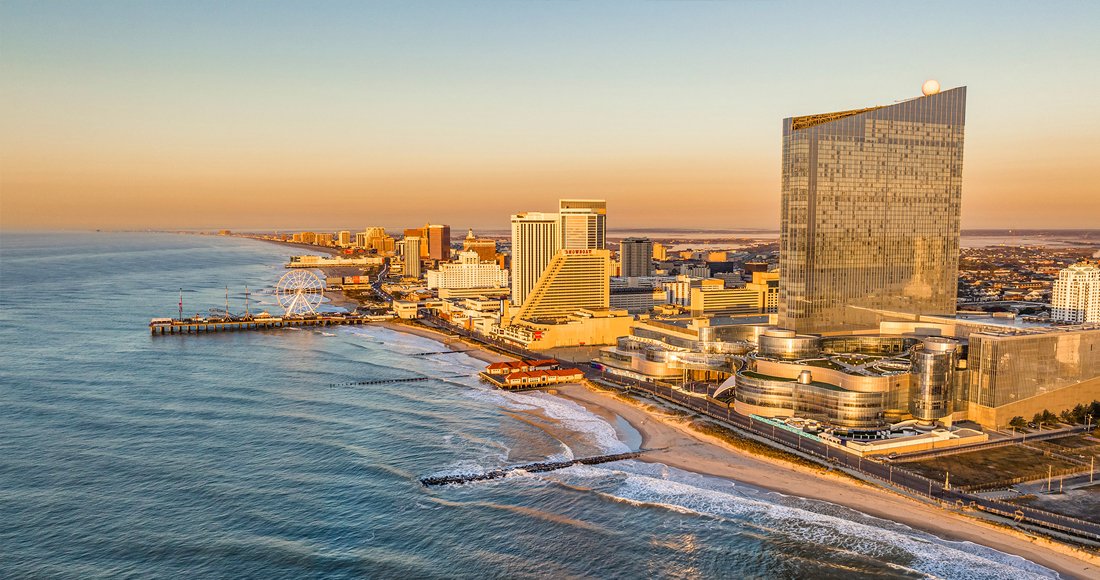
We then visited Atlantic City. Like many American cities, it features skyscrapers, wide roads, and uniform traffic signals. Located by the sea, it is a hub for tourists enjoying shopping malls, restaurants, lodges, and parks.
A major attraction is the Adventure Aquarium, which features a grand entrance, animal statues, and a vast array of marine life. The facility is climate-controlled and features the 'Piranha Falls' and a penguin exhibit. The aquarium houses 850 species, including sharks, turtles, hippos, and penguins, with divers even swimming in the tanks.
Another historical site is the Battleship, linked to World War II. Used in conflicts including the Korean and Vietnam Wars, the ship is open to the public for a fee, displaying various weaponry and military equipment.
The Delaware River is famous for rafting, with its clean, blue water. Seeing the crowds enjoying boating reminded me of Phewa Lake in Nepal. Summer brings activities like rock climbing, swimming, hiking, fishing, and horseback riding.
New Jersey's proximity to the coast allows for water-based activities. The 18-kilometer Hudson River walkway, proposed in 1970, is popular with all ages. In 1988, New Jersey enacted environmental protection laws. The bridge in Hudson County is particularly stunning, especially when illuminated at night.
Cape May is another significant tourist destination, surrounded by the sea at the confluence of the Delaware Bay and the Atlantic Ocean. With a population of about 40,000 as of the 2010 census, it covers 7.50 square kilometers. Named 'Cape Island' in 1851, it offers numerous restaurants and cultural programs.
Fishing is a major industry here. As evening falls, tourists head to their accommodations. New Jersey has countless such coastal areas developed for recreation.
The immigrant population in the U.S. is growing. While indigenous people are largely Christian, others follow various faiths. Indian and Nepali residents often practice Hinduism, leading to the establishment of temples. The Indian-American community is particularly prominent in New Jersey.
The Indian community established the 'Guruvayurappan Temple' in Morganville, modeled after a 5,000-year-old temple in India.
The temple features a grand spire, a small pond, and a tower. Inside, statues of Krishna, Ganesha, and Hanuman are worshipped by devotees, with priests performing rituals using Vedic mantras. The statue of Lord Krishna, holding a conch, discus, lotus, and mace, is particularly noteworthy.
At the end of our trip, we visited the historic Barnegat Lighthouse in the south. It was evening, and the area was bustling with tourists.
The lighthouse, which resembles Nepal's Dharahara, was designed by a U.S. Army engineer during the Civil War and completed in 1858. It is open to the public for a fee based on age.
Capturing the glowing view of the Barnegat Lighthouse, we headed toward Baltimore, our stop for the night, leaving New Jersey behind.
This specific news has been automatically translated by AI. As a result, there may be some inaccuracies or language errors.
_Yq85YOxh21.jpg)