Dhangadhi Faces Severe Drinking Water Crisis Due to Drought and Falling Water Table

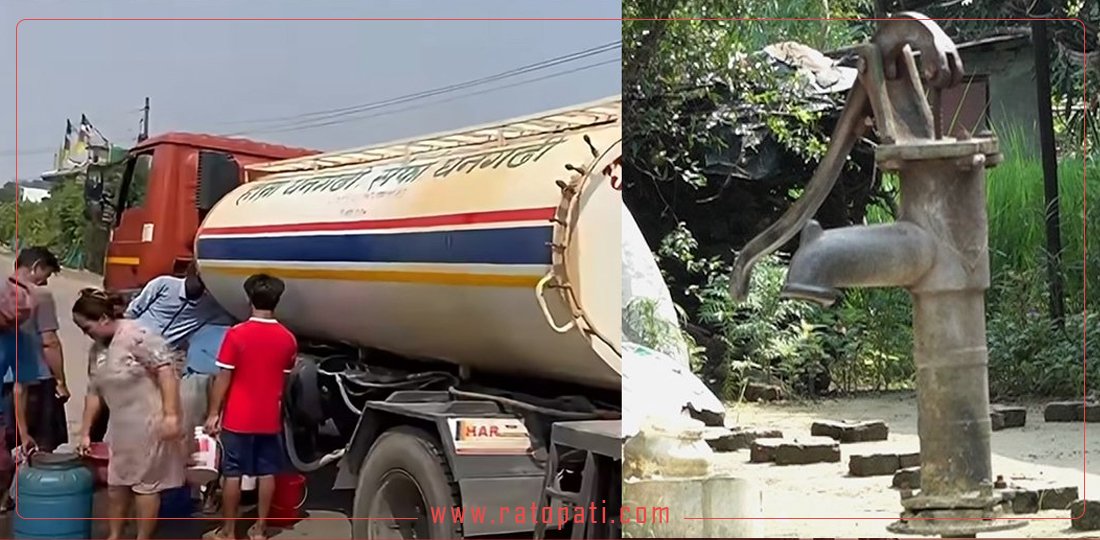
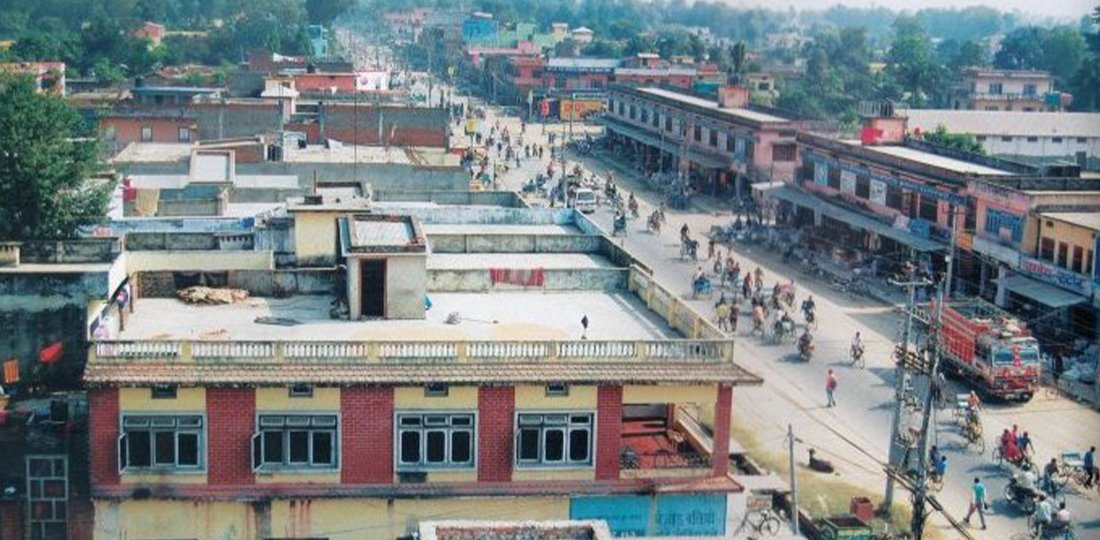
Dhangadhi. A severe drinking water crisis has emerged in Dhangadhi, the temporary capital of the Sudurpashchim Province. Due to excessive heat and prolonged drought, the groundwater level has dropped, causing hand pumps, tube wells, and motors, which have been the main source of drinking water in various areas of Dhangadhi Sub-Metropolitan City for years, to dry up.
For the past few days, there has been a severe scarcity of drinking water in the Syaule Bazaar area of Dhangadhi-14. Dozens of families here have been struggling for the past three months, searching for a bucket of water. With the tube wells dug in their homes completely dry, local residents are forced to fetch water from neighbors or distant sources to survive. Local resident Manisha Chaudhary said that since last Baishakh, water has stopped coming to the tube wells, forcing her to go to her neighbors.
She states that the lack of timely rain from the sky and the significantly lowered groundwater level have disrupted daily life.
This water shortage has severely impacted the daily lives and local businesses of the general public. Hotel entrepreneurs are barely managing their businesses by buying or transporting water from afar. According to local Lalita Bisht from the same area, women and children are suffering the most due to the lack of water for cooking, washing clothes, and sanitation. She laments the problem caused by the absence of water from the taps for everything from cooking to cleaning.
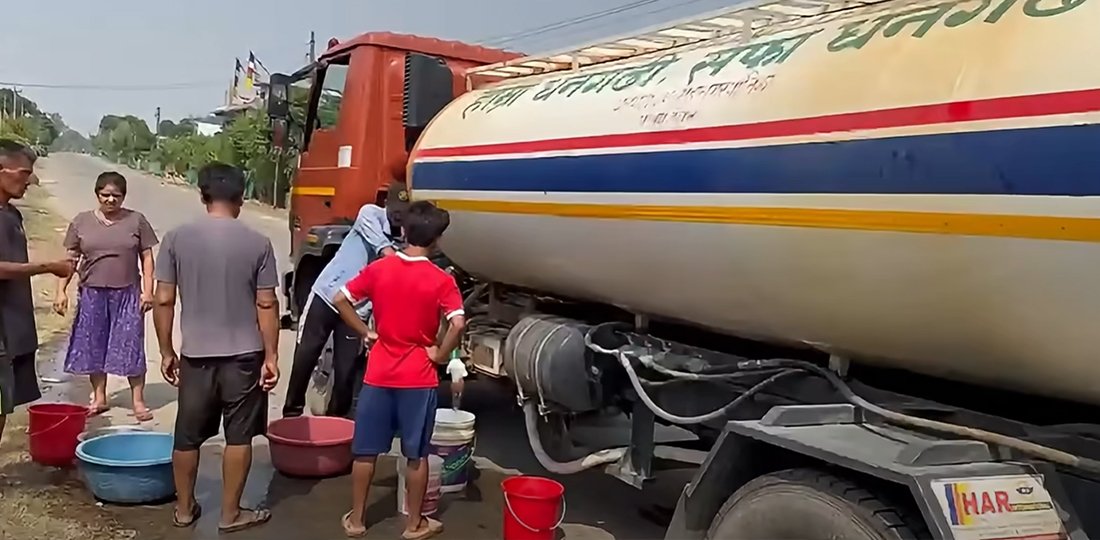
In this situation, Dhangadhi Sub-Metropolitan City is currently distributing water to various neighborhoods through tankers and road washers. The sub-metropolitan city is providing water to the city dwellers using fire trucks as an immediate measure.
Mayor Gopal Hamal has expressed commitment to providing alternative arrangements and ensuring easy access to drinking water by installing deep borewells for a long-term solution, as the problem is likely to persist until it rains. However, locals are also expressing anger, stating that although funds were collected from locals years ago for a drinking water project, only a water tank has been built so far, and taps have not reached every house.
Although the problem is currently most apparent in Dhangadhi-14, residents in other wards are also facing similar difficulties due to drying tube wells. Bina Chaudhary from Dhangadhi-12, Manehra, did not have water in her tube well for three months from Chaitra to Jestha this year. After her tube well dried up, she was forced to fetch water from her neighbor, whose tube well is dug deeper than hers. She shared her experience that although water used to flow year-round, it has been drying up from Chaitra to Jestha for the last 7 years, and only starts flowing after the monsoon begins. Even though her tube well pipe is dug 145 feet deep, it stops yielding water during the dry season.
Neighbor Ram Chaudhary's tube well is also showing similar problems. Water comes to his tube well, but the quantity has significantly decreased. With most of the surrounding tube wells facing similar issues, both the workload and mental stress of the locals have increased.
The water level in Dhangadhi has dropped significantly. According to Bahadur Rana from Ward No. 11, when he was a teenager, borewells dug at a shallow depth provided ample water for irrigation. Although borewells dug in some parts of Dhangadhi in 2045 BS by royal decree irrigated well for a few years, none of them yield water now. He is concerned that the land that once provided sufficient water for irrigation has now stopped providing even drinking water.
In Ward No. 13 as well, water has dried up in taps connected to underground water extraction. These taps, which once supplied water 24 hours a day, are now completely dry. As the groundwater level continues to drop, the depth of tube well pipes now needs to be at least 200 feet or more.
Officials of drinking water projects that extract and distribute groundwater have also experienced this crisis firsthand. According to Rajesh Khati, chairman of the Shivnagar Drinking Water Project in Dhangadhi-8, a borewell that used to supply 26 liters per second now provides a maximum of 22 liters. After the water drastically decreased from 10 borewells dug a few years ago at a depth of 100 feet, the depth has now been increased. While 2 million liters of water were distributed monthly in the past, the demand has now increased to 4 million liters, but the water availability continues to decline, he informed.
According to Dr. Motiram Regmi, an expert on groundwater, the continuous decline of the groundwater level in the Terai region is a clear sign of desertification. Recalling a similar crisis in Birgunj, Parsa, a few years ago, which required water distribution by tankers, Regmi stated that while they have seen rainwater flow away, they have not paid attention to what is happening underground. He believes that the groundwater is decreasing daily because the active monsoon in Nepal lasts only for 100 days, and the remaining 265 days are largely dry.
Roads and other physical structures built east-west are also contributing to the decline in groundwater levels. Dr. Regmi argues that since water flows from north to south, east-west highways and settlements obstruct the flow of water and disrupt the system of groundwater recharge. He explains that due to insufficient recharge, the groundwater level in the Terai has been dropping, causing borewells and tube wells to dry up. Furthermore, large industries and garbage dumping sites are also increasing groundwater pollution.
In the Terai region, groundwater is the main source for irrigation, industrial purposes, and drinking water. However, experts complain that the government's attention has not turned towards conservation and recharge, despite the excessive exploitation of groundwater for activities like fish farming and swimming pools. According to Dr. Regmi, to solve this problem, the state should adopt scientific methods to channel rainwater into the ground using forests and open areas. For this, it is necessary to first study the underground conditions, create ponds for water accumulation, and regularly clean these ponds to monitor whether they are recharging.
Considering this problem, Dhangadhi Sub-Metropolitan City formulated a special policy three years ago to start groundwater recharge work. According to Divisional Engineer Dighraj Bhatta, programs have been implemented under the policy of conserving natural lakes and ponds for groundwater recharge. Mayor Gopal Hamal states that with urban development, trees are being cut, natural lakes are disappearing, and people are paving their courtyards, reducing the surface area for water absorption into the ground. To prevent this, the sub-metropolitan city has been identifying natural lakes, canals, and rivers and removing encroachments in some areas. Accordingly, a strict rule has been implemented to stop the extraction of groundwater for continuous day and night flow and to approve house plans only after checking if there is a provision for groundwater recharge.
The sub-metropolitan city has put forward the concept of 'One Community Forest, One Pond,' which will increase the groundwater level and provide a water source for fire control and wildlife. Efforts are also being made to make these lakes and ponds useful for tourism.
The sub-metropolitan city is working in consultation with community forest representatives. Experts warn that if timely scientific management and conservation are not prioritized, not only in Dhangadhi but also in the Terai districts of Sudurpashchim where the groundwater crisis is deepening, the region may have to rely on the hills for drinking water in the future, and the Terai region risks turning into a desert.
For now, it appears that Dhangadhi residents will continue to be dependent on tankers for water until significant rainfall occurs from the sky.
This specific news has been automatically translated by AI. As a result, there may be some inaccuracies or language errors.
_Yq85YOxh21.jpg)
_jqRIbYgb17.jpg)