Squatter settlements in Kaski on edge following government eviction plans


Pokhara. As the government begins preparations to clear squatter settlements in Kathmandu, anxiety has spread among similar communities in Kaski. Thousands of families who have occupied public land for years without legal land titles are now living in fear.
According to data from the National Land Commission in Kaski, approximately 25,000 households—including landless squatters, landless Dalits, and unmanaged settlers—have applied for land ownership certificates. The highest number of formal applications originated from Constituency No. 1.
In Kaski Constituency No. 1 alone, 9,545 families have submitted applications to the commission. Similarly, there are 5,614 families in Constituency No. 2 and 5,413 families in Constituency No. 3 identified as landless or squatters. It is estimated that an additional 5,000 families have yet to file their applications.
The largest squatter settlement is located at Khudikhola in Pokhara-32, housing 700 families. Other significant settlements include approximately 300 families in Bhandardhik (Pokhara-29), 250 in Hanuman Tol (Pokhara-17), 220 in Shanti Tol (Pokhara-1), and 207 in Shivashakti Tol (Pokhara-15).
Due to the presence of squatters, the government has been unable to construct a bus park at Prithvichowk in Pokhara-9. According to Pokhara Metropolitan City data, about 400 families reside on more than half of the 207 ropanis of land acquired for the project.
Regarding the decision to clear squatter settlements in Kathmandu, Prem Gurung, chairman of the Land Rights Forum Kaski, alleges that the state is attempting to drive out the poor to hand over land to land mafias.
‘We do not disagree that development must happen. We are willing to cooperate,’ he said. ‘However, the poor should not be driven out while buildings erected by mafias are spared. Squatter issues must be addressed in terms of social justice.’
Gurung stated that they do not agree with the decision to clear settlements without addressing the needs of the squatters. ‘We are ready to move, but it is the state's responsibility to provide proper management,’ he said. ‘If they try to remove us without alternatives, we will not remain silent. We will prepare our response after the federation makes its decision.’

The federal government has not yet issued an official circular regarding the removal of squatter settlements in Kaski.
Bain Bahadur Gurung, chairman of the National Land Commission Kaski, emphasized that squatters should be managed rather than displaced. ‘Land is a natural resource and should belong to the state. Instead of putting it in individual names, it should be managed where people are currently living,’ he said. ‘Forced eviction is not democratic.’
He noted that they remain in a state of uncertainty because accurate data has not yet been received from the local levels. He believes that once all data is collected, there will be no issue in resolving the problems of landless squatters in Kaski.
The commission is also searching for locations for alternative management.
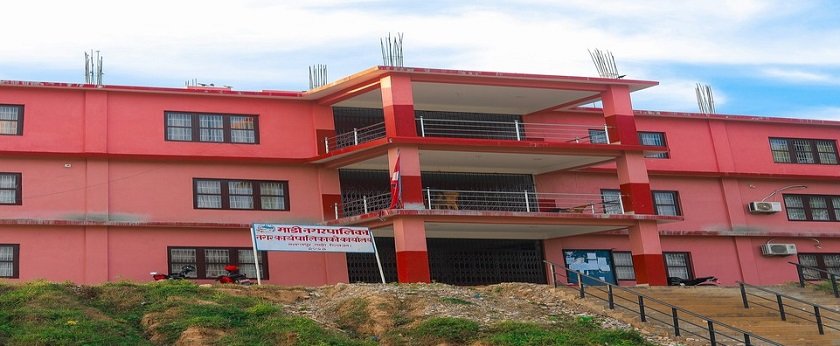
In this context, the Pokhara Metropolitan City issued a notice on Friday to remove structures built without permission on public, unregistered, and vacant land. The city has ordered all such structures to be cleared within 35 days. The metropolitan authority issued the warning following complaints that public land was being occupied, rented out, and fenced off based on influence.
‘This notice is issued to express solidarity in the protection of public land and to require that all structures built to date be cleared, removed, or demolished by the occupants themselves within 35 days from the date of publication,’ the metropolitan city stated. The city announced that the decision to remove structures built on public land was made during an executive meeting held on Thursday.
This specific news has been automatically translated by AI. As a result, there may be some inaccuracies or language errors.