The Decline of Nepal's Communist Movement: An Era Ends

Kathmandu. The recently concluded House of Representatives election saw communists swept away significantly. They did not just lose the election; they received a disastrous mandate. While Madhesh-based parties face a similar situation, the current state of the communist movement, given its historical legacy and political dominance, has become a matter of history.
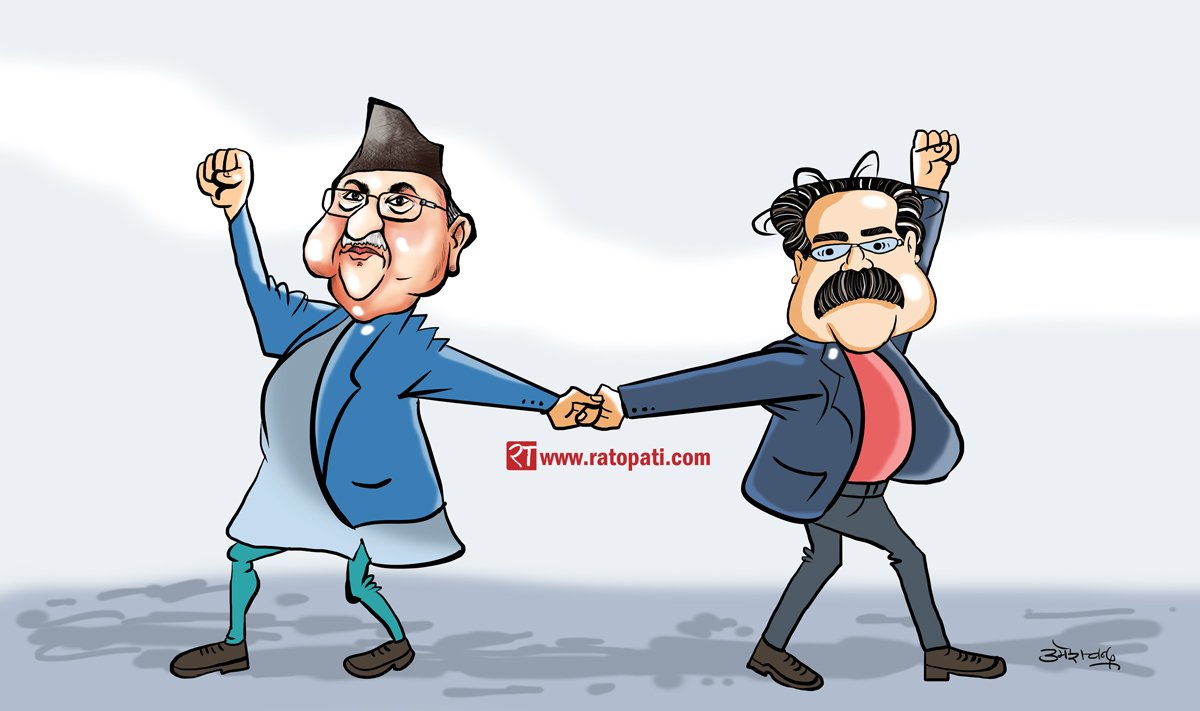
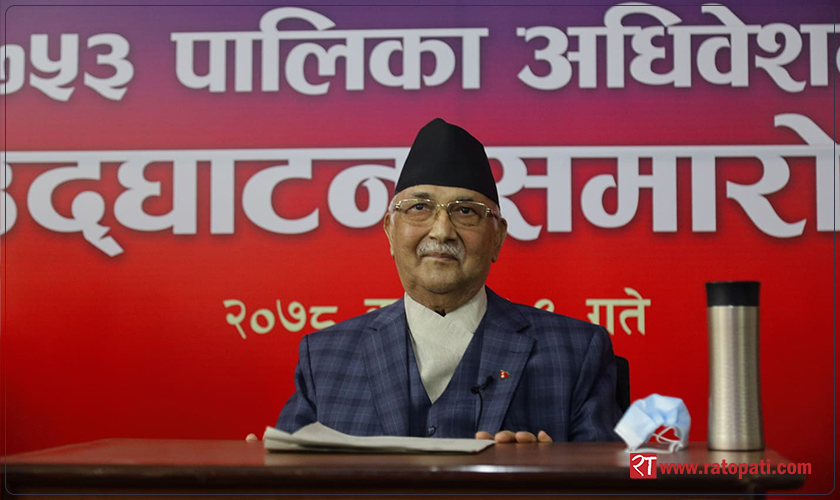
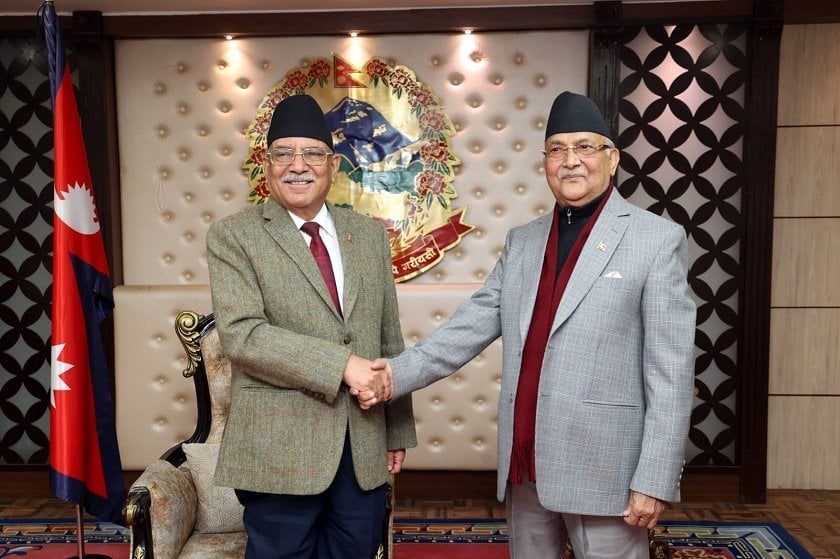
The most surprising damage was suffered by the largest communist party, CPN-UML, with Chairman KP Sharma Oli facing a humiliating defeat. Although Pushpa Kamal Dahal 'Prachanda' won, the party he formed by merging all communist factions, the CPN, secured only 17 out of 275 seats in the House of Representatives. The status of other communist parties did not even register in the count.
Is this the end of the 77-year-long Nepali communist movement? Or has the time come to put a full stop to the necessity of a communist party in Nepal? The election results of Falgun 21 have posed a major question to this movement with a long legacy. Based on these results, the analysis that the era of Oli and 'Prachanda' has ended has already begun in political circles.
000
In an election aimed at bringing the state power, long held by old political parties, back to the right path of the democratic system due to the Gen-Z movement, these two major communist parties suffered a severe blow.
Not only did the then-government led by Oli, accused of killing 23 youths to suppress the Gen-Z movement, fall, but the angry protesters also dismantled the key organs of the state: the executive, legislature, and judiciary. Oli was not the only target of this anger; the entire communist movement reached a state of collapse.
Regarding the leftist mandate, Acting Chairman of CPN (Unified) Ghanashyam Bhusal analyzes that the Oli-Prachanda era has ended, marking the beginning of a new era.
'This election has ended the era of Prachanda and Oli. In other words, an era of organized communist movement has ended. The door to another era for communists, leftists, or socialism has opened,' he says, 'If Oli and Prachanda are talking about unity again, there is a basis for them to meet. One never built an organization, and the other has come after bringing the grand organization he had to its 'final rites'. If they unite, it will only be a declaration assembly for their own end.'
In this election, the CPN-UML, which had a strong organization down to the ward level, received 1.455 million votes. Similarly, the Nepali Communist Party, formed by the merger of 25 leftist factions, received only 811,000 votes. In the 275-member House of Representatives, the CPN-UML won a total of 25 seats—9 under the first-past-the-post system and 16 under proportional representation—shrinking to third place. The Nepali Communist Party won a total of 17 seats—8 under the first-past-the-post system and 9 under proportional representation—shrinking to fourth place.
The 8 leftist parties that participated in the election received a total of 2.378 million votes under the proportional representation system. This is 21.50 percent of the total votes received by the leftists. The election results show that the leftist mandate has decreased by 50 percent compared to the 2079 election.

Based on the latest electoral mandate, analyst Arun Kumar Subedi asserts that there is no possibility of communists being re-established in Nepal. Speaking to Ratopati a few days ago, Subedi said, 'Communists are finished now. Prachanda is the main reason for this downfall since 2063. If they abandon the slogan of socialism, they might return one day if the people feel the need for a leftist force.'
After the party's shameful defeat in the election, it was believed that Oli and Prachanda would resign on moral grounds and propose the reorganization of a broad communist movement. However, both did not resign, adopting their old style by claiming that the party suffered defeat due to the tsunami brought by the Rastriya Swatantra Party (RSP) and domestic/foreign conspiracies.
Prachanda has called a meeting of the Central Coordination Committee with the agenda of a unity convention, but instead of bringing a clear blueprint for party reorganization, he has been accused within the party of doing homework for party unity with the CPN-UML.
After surgery, Oli spent 13 days at the Teaching Hospital in Maharajgunj and was discharged. Having just reached his residence after gallbladder stone surgery, he does not appear to be in favor of calling a central committee meeting immediately. However, pressure is mounting from within the party for Oli to step down from leadership.
- Communist History and the Inaction of Oli-Prachanda
It has been 77 years since the establishment of the Communist Party in Nepal. The Communist Party of Nepal was established on Baisakh 10, 2006, in Varanasi, India, with the aim of ending the then-autocratic Rana regime, feudalism, and imperialism to establish a communist system. The founding General Secretary of the CPN was Pushpa Lal Shrestha. Niranjan Govinda Vaidya, Narayan Vilas Joshi, Nar Bahadur Karmacharya, and Moti Devi were its members.
In the 77 years since the establishment of the CPN, the communist movement, weakened by splits and divisions, divided into various factions after the Fourth General Convention in 2031. Through the CPN (Fourth Convention) led by Mohan Bikram Singh, CPN (Masal), CPN (Unity Center), and CPN (Maoist), it has now become the Nepali Communist Party led by Prachanda.
_sfLOMd8H80.jpg)
KP Oli is currently leading the CPN (UML), which evolved through the CPN (ML) led by Madan Bhandari, who claimed to be Pushpa Lal's successor. Narayan Man Bijukchhe has led the NWPP since 2031. Mohan Bikram Singh continues to lead the CPN (Masal).
The open front of Masal, the Rastriya Janamorcha, and the NWPP, which had been winning elections continuously since 2048, could not win a single seat this time. Apart from these, many leftist parties like the CPN (Maoist) led by Biplav, the Scientific Socialist Communist Party led by Ahuti, and the Revolutionary Communist Party led by CP Gajurel exist, although the CPN-UML and the Nepali Communist Party have dominated as interventionist forces in state power for a long time.
The CPN-UML, carrying the legacy of the 2028 Jhapa rebellion, and the Maoists (now the Nepali Communist Party), carrying the legacy of the 2052 People's War, ran the government for a long time in turns.
The 9-month government formed in 2051 under the leadership of then CPN-UML Chairman Man Mohan Adhikari was very popular. After Prachanda announced a long-term armed movement in 2052, the royal state power of that time was thrown into chaos.
The Maoist war, which became powerful on the strength of oppressed women, farmers, workers, and the laboring class, lasted for 10 years (2052-2062). After the 12-point agreement between the then parliamentary 7 parties in 2062, the Maoists entered peaceful politics.
On the foundation of that consensus, the People's Movement of 2062/063 overthrew the autocratic monarchy and established a federal democratic republic in the country. Since then, in about 20 years, Oli and Prachanda have repeatedly come to power. From the CPN-UML, Madhav Nepal, Jhalanath Khanal, and KP Oli became Prime Ministers. From the Maoists, Prachanda and Baburam Bhattarai became Prime Ministers. Oli became Prime Minister four times and Prachanda three times.
Realizing the need for broad leftist unity, the CPN-UML and the Maoists joined forces to contest the election in 2074. At that time, the leftists received 4.477 million popular votes, or 44.34 percent of the total votes cast. The leftist alliance, which received a two-thirds majority in the federal parliament, had also secured a two-thirds majority in all provinces except Madhesh Province.
After the election, the CPN-UML and the Maoists merged to form the Nepal Communist Party (NCP) on Jestha 3, 2075. However, after power struggles between Oli and Prachanda increased in running the government and the party, the NCP dissolved in 2077. Even when the government was formed under the leadership of the proletariat, public anger grew as good governance, social justice, and prosperity could not be achieved. The extreme frustration growing among the general public exploded on Bhadra 23 and 24.
Leader of the Nepali Communist Party, Chakrapani Khanal (Baldev), asserts that the communist movement was weakened due to technical reasons between Oli and Prachanda. He claimed that the party did not split at that time due to theoretical and ideological differences.
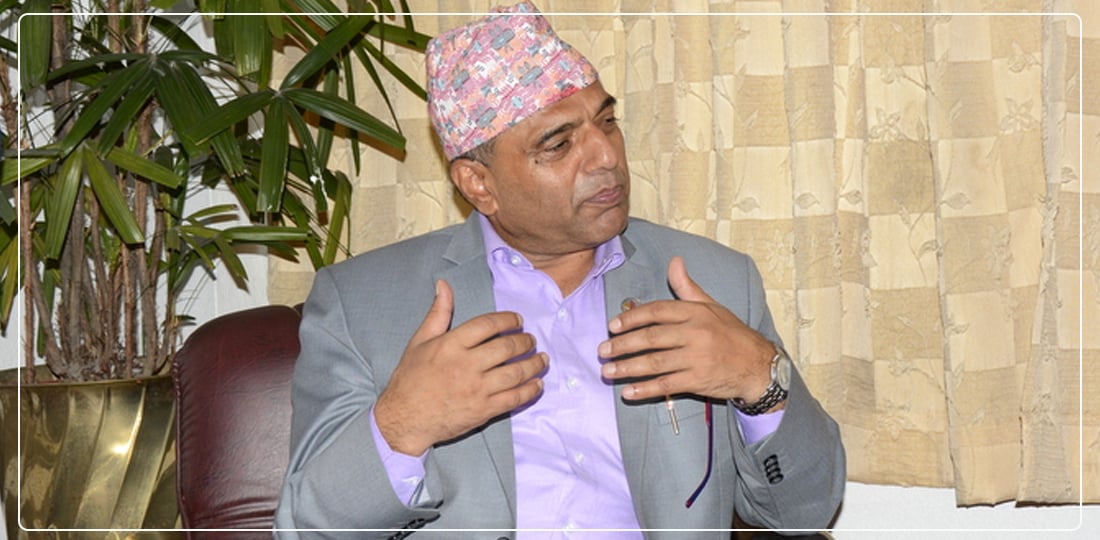
'There is a technical aspect to this. It is not good to split due to technical aspects, but that became the main reason. Because Oli had his own tendency and style. We had united with the CPN-UML where Oli was the chairman, but there was an agreement that Prachanda would be the party head and Oli would be the government head after the unity. At that time, a disaster occurred because Oli and Prachanda could not manage the internal power balance,' Khanal told Ratopati.
Baldev recalled that even though the party united in 2075, Prachanda had explained the legacy of Madan Bhandari well in the first central committee meeting. It is his understanding that after hearing Prachanda's explanation, the anti-Oli forces within the CPN-UML started inciting him. Baldev alleged that at that time, Ashta Laxmi Shakya, Bhim Rawal, Ghanashyam Bhusal, and others incited him by saying that Prachanda was the only one to save Madan's legacy.
'There was a continuous struggle with Oli within the CPN-UML. At this time, they started working, thinking that if Prachanda was nurtured well, an anti-Oli front could be formed,' he said, 'That activity startled Oli, thinking that Prachanda was deliberately inciting against him. After that, Oli started gathering people close to him and started working against Prachanda.'
However, Baldev says that the suggestion they gave to not rely on people around Madhav, Jhalanath, and Bamdev, but rather to cooperate with Oli, was not implemented. 'Prachanda failed by relying on Madhavji. Oli also could not convince Prachanda to solve the problem through political dialogue. There is no chairman post for the next five years. Prachanda felt how it would go if he was not in the government,' he said.
Baldev asserts that even though ideological and theoretical veneers have been applied now, in reality, it is not so.
'Oli is diplomatic, he talks more about non-theoretical things. Prachanda is a bit more honest, he talks about theoretical things. He cannot work by stooping very low. Oli does not hesitate to topple the government in the afternoon after talking sweetly in the morning,' said Baldev.
Baldev asserted that party unity with the CPN-UML is not possible in the current situation, although he says that unity could happen if the leadership changes.
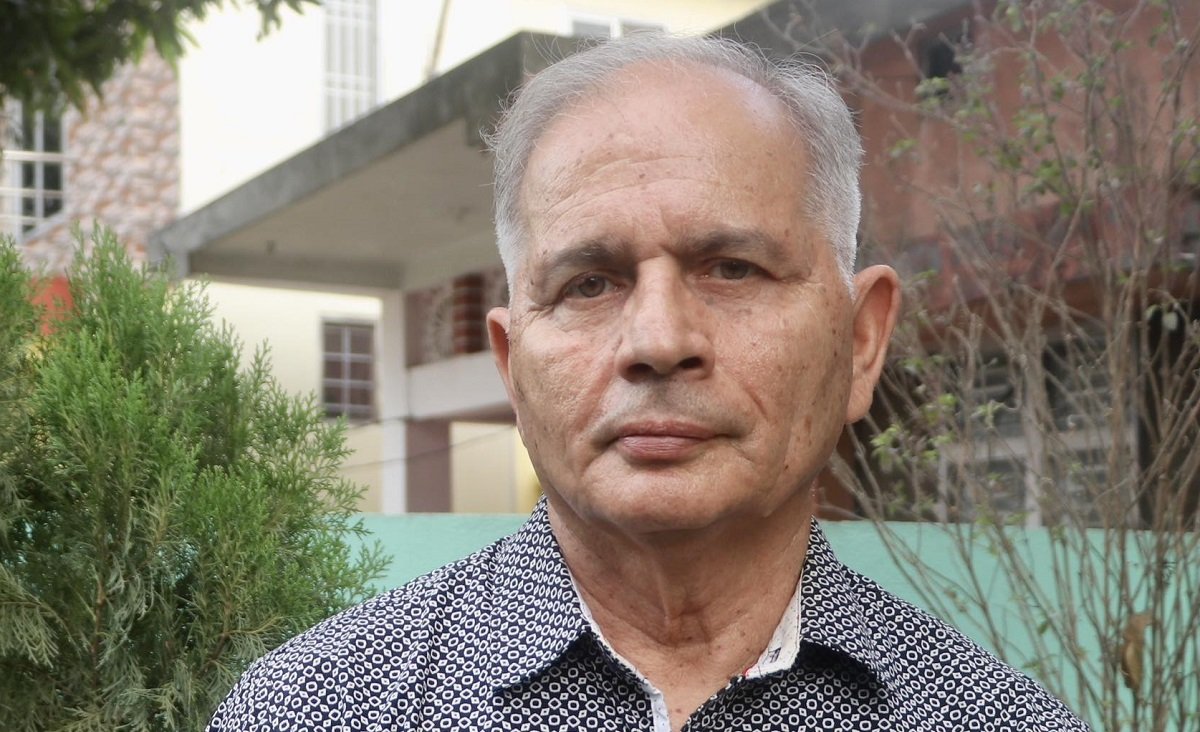
Professor Krishna Pokharel has analyzed that a huge loss occurred because the opportunity obtained in 2074 could not be preserved.
'The CPN-UML and the Maoists had formed a government with nearly a two-thirds majority; if they could have continued that, the current situation would not have arisen. The Nepali Congress would also have been forced to form another alliance,' said Pokharel, 'Ideologically, this would have been one political force to the left of the center and another to the right of the center. That would have put the country's politics on the right track.'
Meanwhile, Ghanashyam Bhusal has blamed Oli and Prachanda for the setback of the communist movement. Although the communist party organization was said to be seen as a 'Brahmastra' (ultimate weapon), he interpreted that the party organization itself has dissolved in this election.
Bhusal's argument is that the Maoists were never a political party in terms of the definition, formation, and process of an organization. However, he analyzed that looking at old documents, the organized preparation of the People's War seems to have been done in a very planned manner, and the training and testing done for it are commendable.
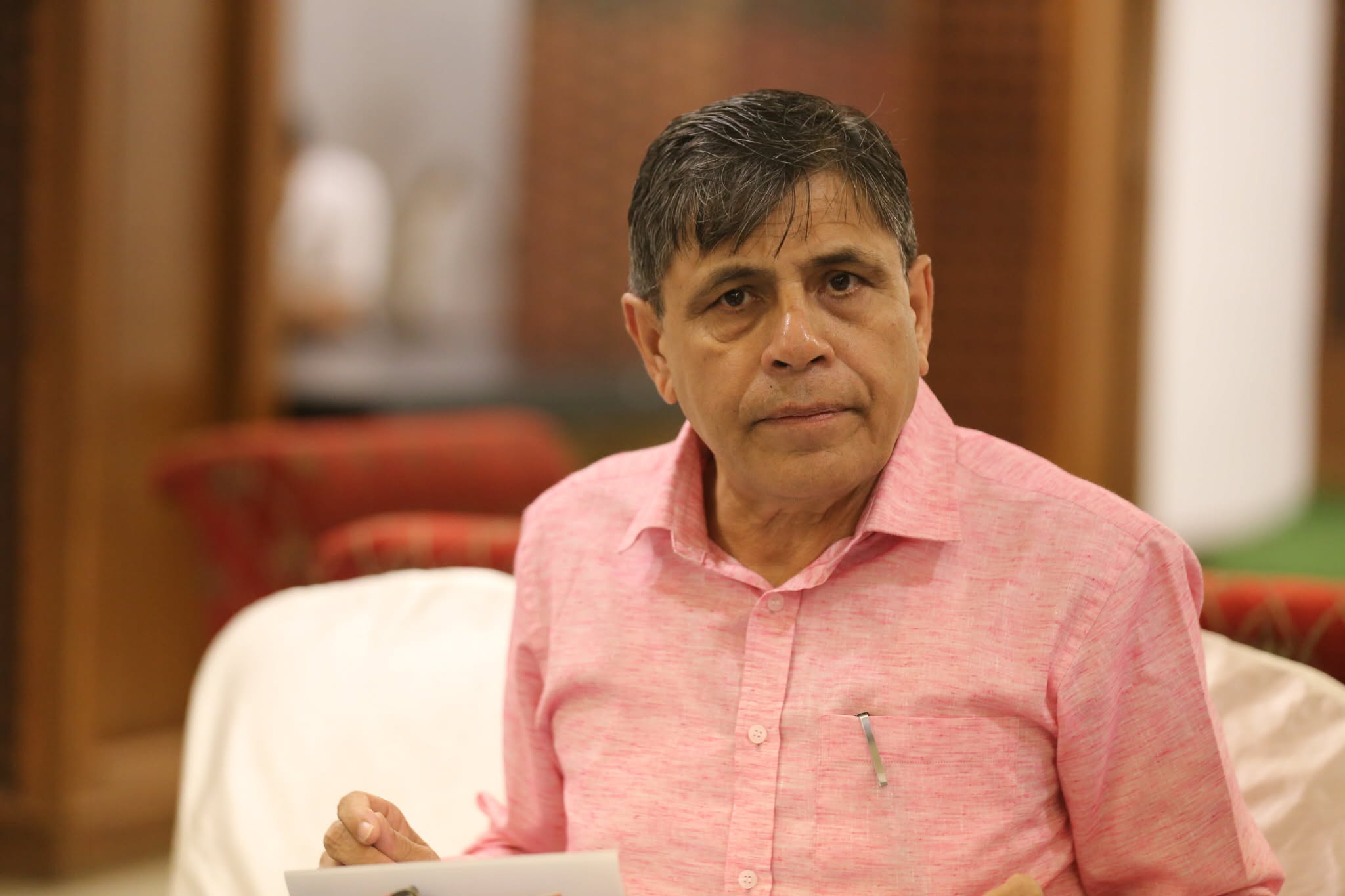
'After the People's War started, the political organization kept collapsing. A military structure was formed that operated on the orders of the supreme command. When they came into the peace process, there might have been 100,000 professional cadres. If they had dared, they could have steered the country wherever they wanted. The support it received inside and outside the country was not small. If that power had been made into organized political cadres instead of fighters, the Maoists could have contributed to nation-building,' Bhusal said via Facebook Live.
His analysis is that although the Maoists waged the People's War to bring about a new democracy, problems within the party kept increasing because a democratic republic was established.
'What came was not what was wanted, and what was wanted could not come in any way. Prachanda found a trick. He got involved in the work of making and breaking the government and the party. He kept breaking the party too. He kept breaking the government too. Prachanda was born under a planet-constellation where he could not stay without power,' said Bhusal, 'The party and government remained in crisis. If an organization had been built, it would have faced it. Without an organization, the crowd gathered by Prachanda became a problem for himself. The Maoists were never an organization. The vast movement dissolved, and only a small whirlwind of the power movement remained. This election ended that whirlwind of Prachanda too.'
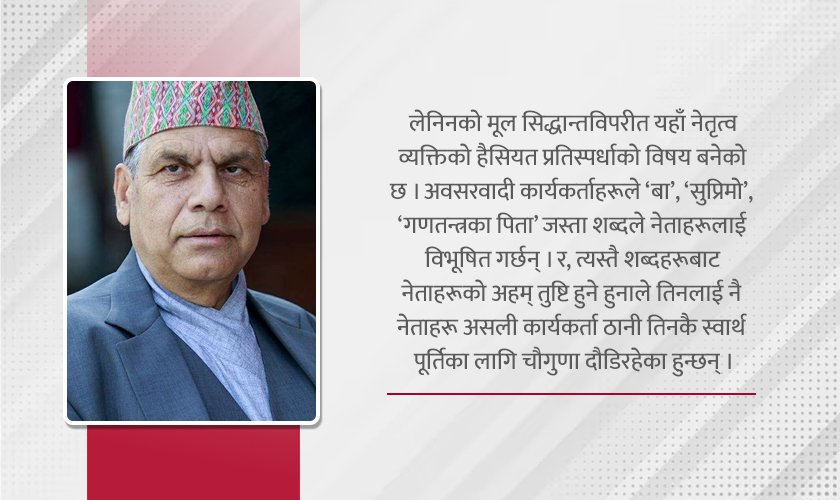
His analysis is that Oli's tendency is the main reason for the CPN-UML's defeat despite having a vast and disciplined organization. Bhusal's argument is that in terms of organization, the CPN-UML carries the story of an extraordinary rise and a terrifying fall in history. 'At one time, the CPN-UML was the most organized party in the world. In its place, there was an organization of millions of good and honest people around honest and party members. They were ahead in every place in society. There were differences of opinion, but all leaders followed the rules,' he said.
Bhusal alleged that after Oli came to leadership in 2071, he destroyed the party structure. He clarified the scenario where the CPN-UML had become so hollow that it elected Oli as chairman, going against some of the theoretical and ideological decisions made by the ninth general convention. His analysis is that Madhav Nepal, who was the General Secretary of the CPN-UML for 15 years, returning without any political compass to compete for the chairman post made Oli's rise easier.
'Whoever stays under Oli's shadow, he provides guardianship. If they don't want to stay, they are all enemies. This is his philosophy, theory, and organization,' said Bhusal, 'If guardianship is accepted, he protects them no matter what accusations are made. At that time, the practice of 'Ba' (Father) had not started; it was sponsored. The identity of 'Ba' had become the personality of the destruction of a prosperous communist party. Oli destroyed the party built with much hard work in just 10 years.'
This specific news has been automatically translated by AI. As a result, there may be some inaccuracies or language errors.
_UIDnxrYIZi.jpg)

_BSX4jxIBxx.jpg)