
Student Leader Dipak Raj Joshi Criticizes Government Move to Ban Campus Political Organizations


There is growing speculation that the government is preparing to abolish active political student organizations in universities. The news emerged following a meeting of the University Coordination Committee on Chait 20, where discussions with vice-chancellors reportedly led to a decision to remove the offices of these political student groups, sparking a wave of unrest in student politics.
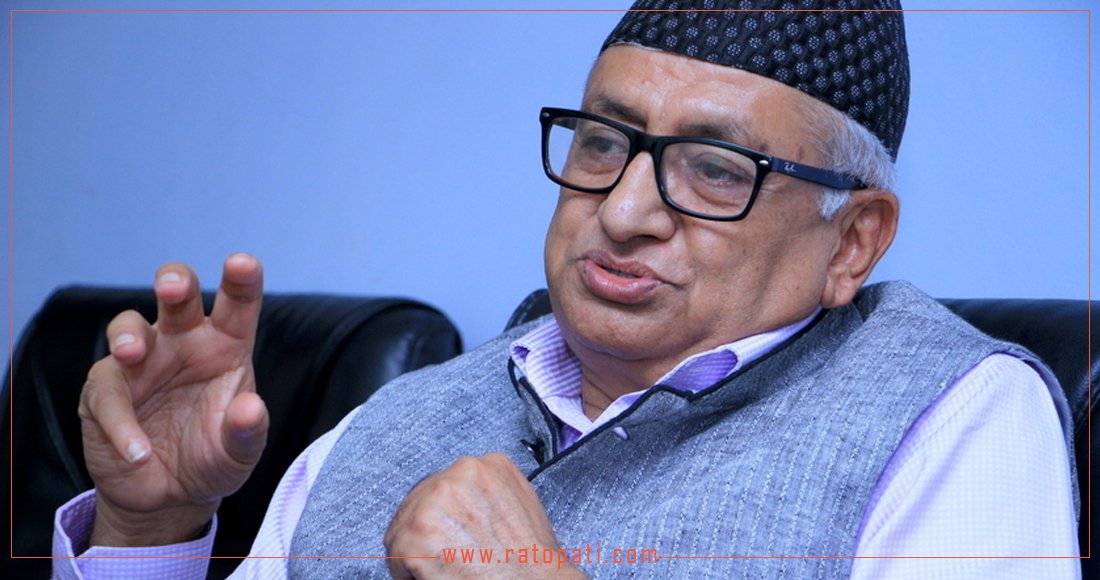
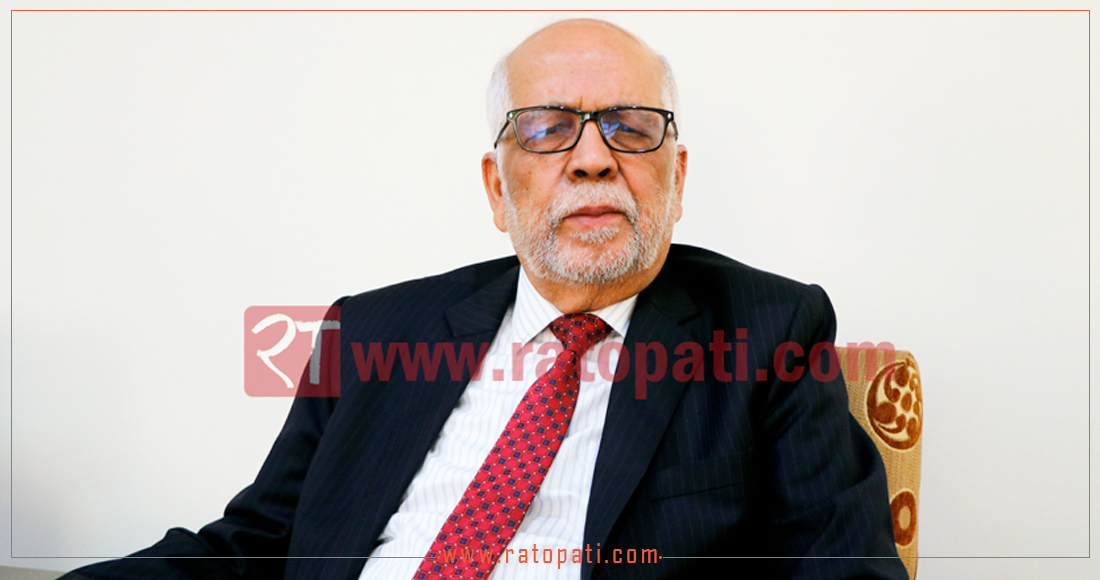
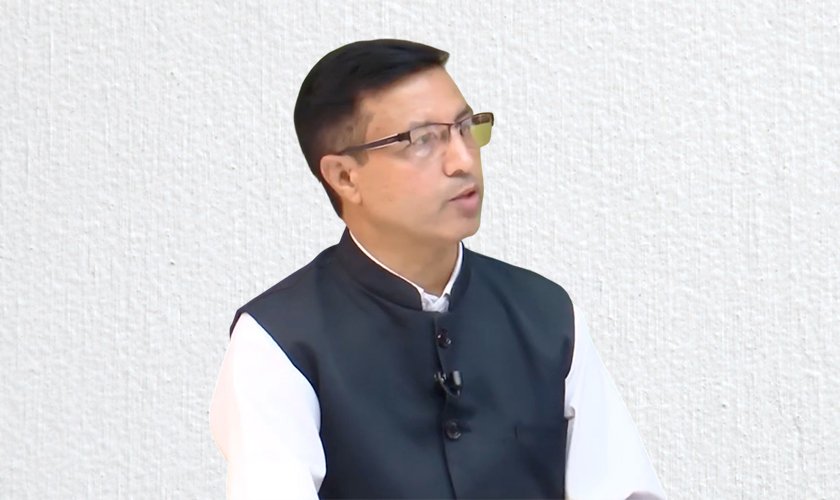
Ratopati spoke with Dipak Raj Joshi, Chairman of the Free Student Union (FSU) at Tribhuvan University Central Campus, regarding the relevance of student organizations, the government's push for their abolition, and issues surrounding university reform. Here are the edited excerpts from the conversation (full video available):
_GbRCzAOKdB.jpg)
- The government is preparing to abolish political student organizations, and reports suggest a decision was made at the University Coordination Council meeting on Chait 20. How do you view this?
I interpret the government's discussion with the University Coordination Committee merely as a proposal and a deliberation. Even if it has been reported as a decision, it lacks any legal basis.
There are many internal, systemic, and policy-related problems in universities right now. Instead of solving those, it feels like the government is chasing cheap popularity by targeting student organizations.
A university is an academically and administratively autonomous institution. The government cannot have an interventionist role there. The University Coordination Committee has no authority to abolish political student organizations.
- This issue has already appeared in the manifesto of the ruling RSP and the government's roadmap. Furthermore, vice-chancellors have confirmed that discussions took place. Can this really be dismissed as just a casual discussion?
It should be viewed this way: we have a multi-party system. Rather than discussing this with university vice-chancellors or the chairman of the University Grants Commission, the government needs to discuss this with political parties. Current student organizations are affiliates and sister wings of political parties. Therefore, there must first be a dialogue among the parties on how to refine them or move forward in a new way.
The primary stakeholders are the student organizations themselves. However, the government did not even attempt to create an environment for dialogue by inviting student organization heads and FSU chairmen. I believe the government is failing in this regard and is heading toward an undemocratic practice.
- A majority government could implement this by amending the act. Therefore, this is a political issue, not a legal one. How do you prove the relevance of student organizations?
There are many internal, systemic, and policy-related problems in universities right now. Instead of solving those, it feels like the government is chasing cheap popularity by targeting student organizations. The obstacles in universities were not created by student organizations! Who appoints the university vice-chancellor? The government does. The Prime Minister himself is the Chancellor.
_z2nRhpRleg.jpg)
You tell me, if universities were ruined because of student unions, why are so many other institutions in trouble? Everything should be fine there! Why is there constant agitation at the B.P. Koirala Institute of Health Sciences?
Is it fair to engage in political power-sharing, appoint your own people to weaken the university, and then blame the students? Student organizations are not responsible for university question papers leaking or the same questions being repeated. We are transparently raising public issues concerning students and engaging in creative debate.
- What facilities or conveniences have students received because of you? What difference does it make to students whether you exist or not?
From the moment students enter the university, we provide them with information, maintain help desks, and organize cultural programs. Currently, we are organizing workshops on climate change, research topics, and connecting students with skills.
Tribhuvan University is an open space where non-partisan individuals can also participate. Therefore, a Student Welfare Council cannot replace the FSU.
Student organizations are continuously raising voices on how university students can participate in research and how to improve policies regarding fees.
- There is talk of the government creating a Student Welfare Council instead of the FSU. This is the practice at Kathmandu University (KU). What would happen if a similar system were created?
The practice at KU does not show an advanced democratic character. There is a practice of selecting a representative from the class, and those individuals then become the heads of higher bodies.
_ualxIUgiTD.jpg)
However, at Tribhuvan University, every student from the lowest level is a general member of the FSU. Everyone can use their voting rights to elect an executive committee. Our practice is an open space where even strictly non-partisan individuals can participate. Therefore, a Student Welfare Council cannot replace the FSU.
- Why are student organizations affiliated with political parties necessary? Why must there be the Congress's NSU, the UML's ANNFSU, and the Maoist's All Nepal National Independent Students Union-Revolutionary?
There are not only political party organizations in the university. There are also organizations like the Tamang Student Council, Tharu Student Society, and Magar Student Association that preserve tradition and culture. There are also scientific student organizations. One should not put everyone in the same basket.
The FSU is not involved in any construction committee or contract bidding committee. If anyone brings proof of commission or quotas, we are ready to face legal action.
In the past, there may have been incidents of mistreating professors or smearing faces with soot, and we must self-reflect on that. However, student organizations have improved significantly. We are focused on issues of educational strengthening and are working as a platform for deliberation at the policy-making level.
- Previously, student organizations were seen on the streets protesting issues like price hikes. Have you stopped raising those issues?
The style of burning tires and throwing stones on the streets like in the past has changed. However, we have not stopped raising issues. We recently held discussions on the budget to increase investment in education policy and research.
The 'Trital Commission' report on universities has been made public, and we are in dialogue regarding its implementation and long-term solutions. We are moving forward through creative attention-seeking and dialogue, not through vandalism or lockouts.
- There are allegations that student organizations and the FSU take commissions and quotas for everything from campus contracts to scholarships.
This is a completely false accusation. The FSU is not involved in any construction committee or contract bidding committee. Regarding scholarships, we are raising our voices so that deserving and needy students receive them.
_tGRkED0hck.jpg)
This is for the campus administration to distribute, not us. We have been saying that a 'Central Scholarship Portal' should be created to make scholarships transparent. If anyone brings proof of such commissions or quotas, we are ready to face legal action.
- There is a problem in organizations like the NSU where elections are not held, leaders are chosen through the 'Tika' system, and the same person holds a position for a long time. Hasn't this raised questions about the relevance of student organizations?
The party leadership and headquarters are to some extent guilty of this. We have repeatedly raised our voices that conventions must be held through an automated system. In the past, there was no age limit of 32; now, an age limit of 32 has been implemented for organizations and 28 for the FSU. We are in favor of parties giving student organizations functional autonomy.
- If the government decides to abolish student organizations, what will be your next step?
I don't think the government can make this decision so quickly. Even if they proceed by amending policies, rules, and laws, there will be strong resistance from the parliament to the streets. We are discussing this with civil society leaders and former student leaders.
Having political consciousness in any university should not be taken negatively. If there are some distortions, they should be regulated and refined, but imposing a ban is not a good practice. My request is that the government reconsider this matter and immediately call for a dialogue with students.
This specific news has been automatically translated by AI. As a result, there may be some inaccuracies or language errors.

_Eqo5W0NMVM.jpg)