Nepal Development Watch Welcomes Government's Anti-Corruption and Reform Initiatives


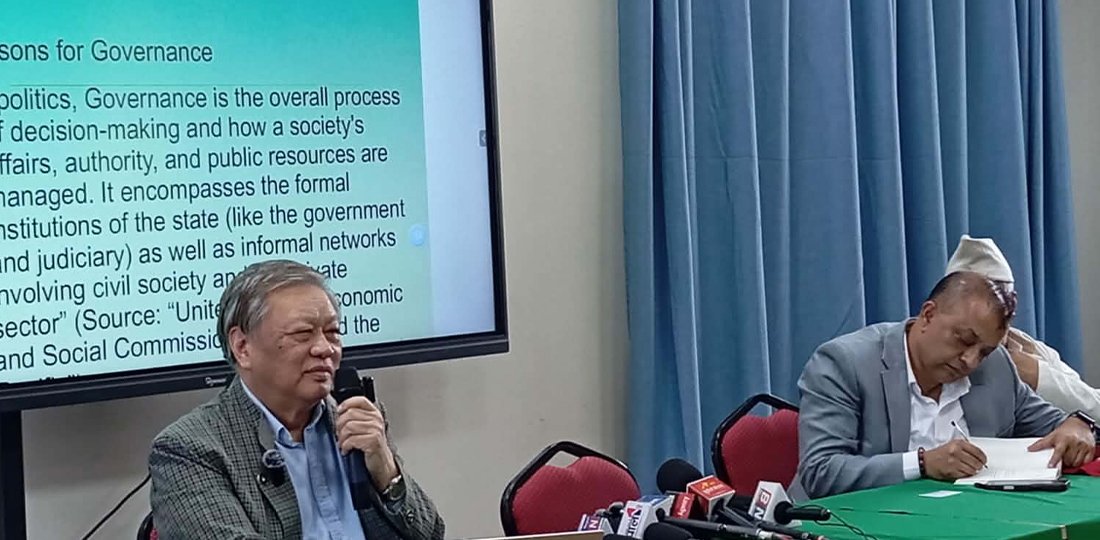
Kathmandu. Nepal Development Watch (NeDW), an organization dedicated to monitoring development and good governance in Nepal, has welcomed the government's decision to form a high-level commission to investigate the assets of public officials who have held high office since 2006.
The organization termed this a significant step toward strengthening transparency and accountability. In a press release issued on the occasion of the New Year, B.S. 2083, Nepal Development Watch congratulated the government for moving forward with the implementation of the 100-point program unveiled after the formation of the new government led by Prime Minister Balen Shah on March 27, 2026.
The program outlines comprehensive reforms across fourteen thematic areas, including administrative reform, public service delivery, digital governance, anti-corruption, investment promotion, energy, tax reform, and human development. The organization noted that this will help address long-standing public grievances.
While welcoming the commitment to investigate the assets of high-ranking officials, Nepal Development Watch emphasized the need to ensure legal processes, transparency, and impartiality in its implementation. The organization expressed confidence that this would send a strong message against corruption.
Nepal Development Watch viewed the government's acknowledgment and apology for past discrimination against Dalit and other marginalized communities as a positive step. However, the organization believes that a formal apology from the Prime Minister on behalf of the state would send an even more powerful message. The statement also mentioned the need to review the reservations Nepal has placed on the UN Convention on the Elimination of All Forms of Racial Discrimination.
Welcoming the new government's commitment to drafting a second national action plan against corruption, Nepal Development Watch suggested setting clear, measurable targets to improve international indices, particularly the Corruption Perceptions Index and the Human Development Index. The decision to reserve 10 percent of hospital beds for the economically disadvantaged was also noted as a positive initiative.
However, Nepal Development Watch expressed concern over the proposal to ban student organizations. Stating that this could affect freedom of expression and the right to organize, the organization suggested adopting a balanced policy that controls violence or criminal activities while safeguarding democratic participation.
Welcoming the government's commitment to solving the poverty of landless farmers, Nepal Development Watch noted that traditional land distribution alone would not be sufficient due to limited arable land. Instead, long-term measures such as housing support, livelihood training, and income-generation programs are necessary.
Regarding the proposal to operate women-only public transport services to ensure safety, Nepal Development Watch stated that this is only a short-term measure and emphasized the need for improvements in public transport management, security systems, and behavioral change for long-term solutions.
Describing the inclusion of various political parties' commitments in the government's action plan as a positive step toward consensus-building, Nepal Development Watch urged the government to move forward with a time-bound and practical implementation plan.
Furthermore, Nepal Development Watch committed to continuously monitoring Nepal's development journey based on the baseline established with the formation of the new government and to publishing evidence-based analysis and commentary in the coming days.
The organization was recently established with the goal of contributing to the promotion of transparency and the strengthening of the policy-making process in Nepal through in-depth research, policy analysis, dissemination of evidence-based findings, and public debate.
This specific news has been automatically translated by AI. As a result, there may be some inaccuracies or language errors.