Nepal Implements Strict Customs Enforcement at India Border, Sparking Local Outcry

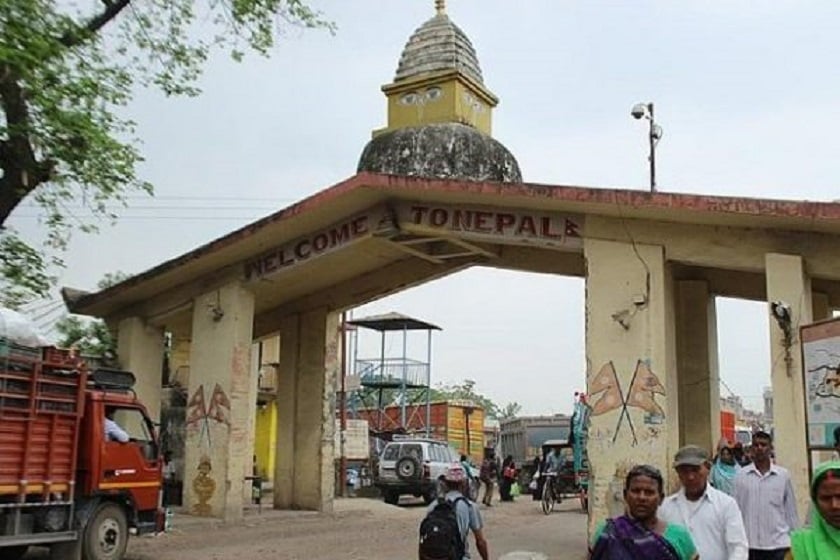
Kathmandu. Customs administration and security agencies have become significantly stricter at the Nepal-India open border crossings. Targeting ordinary citizens who previously enjoyed informal customs exemptions for small purchases and household items, the government has begun strictly enforcing a rule requiring mandatory customs duties on any goods valued over 100 rupees.
From Jhapa in the east to Kanchanpur in the west, major and secondary customs points are seeing widespread crackdowns in the name of controlling customs evasion. Specifically, the activity of the Armed Police Force and customs officials has surged at border points like Kakarbhitta, Bhadrapur, and the Phareniya area in Rupandehi.
High-ranking officials at the Department of Customs have confirmed this tightening of border controls. An official stated that the government's previous declaration to control revenue leakage at border points is now being implemented strictly.
'It has always been the government's policy to adopt a zero-tolerance approach to prevent illegal imports in customs areas. The Customs Act already had a provision requiring duties on goods worth more than 100 rupees,' the official said. 'We have become more proactive now. There are similar directives from the Minister and the Prime Minister.'
According to the official, joint monitoring teams comprising the Department of Customs, the Department of Revenue Investigation, District Administration Offices, Nepal Police, and the Armed Police Force have increased their activity, leading to stricter controls on all goods entering the country.
In Jhapa, the Armed Police Force Battalion No. 2 is conducting awareness programs and strict surveillance at border points like Mechinagar and Bhadrapur, informing citizens that duties must be paid on goods exceeding 100 rupees. Similarly, the Bhairahawa Customs Office in Rupandehi has begun rigorous searches of individuals carrying small packages with the support of the Armed Police Force. Other border points are experiencing similar conditions.
Furthermore, private vehicles with Indian license plates are now prohibited from entering Nepal without prior authorization. Previously, motorcycles with such plates were frequently seen entering Nepal, and some individuals were even using them within the country.
Problems in Madhesh Following the Crackdown
This unilateral, strict policy and the ban on Indian-registered vehicles have created significant problems in the border districts of Madhesh, affecting the daily lives of residents. Various political parties, civil society leaders, and local residents have expressed intense dissatisfaction, claiming that the decision from Kathmandu ignores the reality of life in the Madhesh region.
Umesh Yadav, a member of the Central Coordination Committee of the Janata Samajbadi Party (JSP), expressed strong outrage at the government's move, labeling it 'fascism by an elected group.'
'The state is deliberately harassing the people of the border region; this will increase serious resentment against the state among the general public,' he said.
Similarly, Anil Mahaseth, General Secretary of the Rastriya Mukti Party, stated that the open border between Nepal and India cannot be determined by people sitting in air-conditioned rooms in Kathmandu or Delhi.
'The open border is a literal and practical truth here. It is completely wrong to impose policies arbitrarily without understanding the concerns of residents from Biratnagar to Nepalgunj,' he said.
Dr. Rajiv Jha, a leader of the Rastriya Swatantra Party and chairman of the Open Border Dialogue Group, argued that the border is not just a geographical line. He urged the government not to forget the social, cultural, and familial ties that have existed between Nepal and India for centuries.
'Setting a limit of 100 rupees in today's era of inflation is extremely low and impractical; the government must review this immediately,' Dr. Jha said. 'There should be a clear distinction between simple gifts brought by a daughter visiting from her maternal home and goods for commercial purposes. Food items should be exempt from customs.'
Binay Yadav, Chairman of the Rastriya Ekta Dal, described the move as an 'undeclared blockade.' He says, 'This step is against the provisions of the 1950 Peace and Friendship Treaty. The government should immediately remove the customs limit for household items and instruct security personnel to behave in a citizen-friendly manner.' He warned that if these demands are not met, the people of the border region will launch a powerful protest.
Youth activist Sanjay Yadav criticized the government for its double standards, stating that the Madheshi people are the victims. He asks, 'Why is there no customs duty when bringing suitcases full of goods from Tribhuvan International Airport, but people are treated like smugglers for bringing a little salt and oil from the land border?'
Hardship Beyond Shopping
The scene at border points from east to west now appears abnormal and tense. The checks conducted by the Armed Police Force on Nepalis returning from the weekly market in Phareniya, Rupandehi, reflect the reality of the border. Long lines are visible as every person's bags and packages are opened and inspected.
Local resident Ram Prasad Yadav in Bhairahawa complains that while no one used to ask questions about small items before, he is now being forced to pay taxes even on a small amount of oil and sugar bought for his home.
Another woman met at the border shared a similar complaint. She says, 'We are poor people; we bring things from across the border because they are cheaper. If we have to pay taxes even on 100 rupees worth of goods, how are we supposed to run our households?'
However, local traders near the border are pleased with this crackdown, hoping that stricter controls will lead to increased business for them.
This specific news has been automatically translated by AI. As a result, there may be some inaccuracies or language errors.