
Nepal's Transitional Justice Remains Stalled 20 Years After Peace Accord


It has been 20 years since the Comprehensive Peace Accord was signed between the government and the then-rebel CPN (Maoist), yet victims of the conflict have yet to receive justice. Following the peace agreement, the then-ruling and rebel sides took turns in government. At one point, the warring parties even participated in the same government. However, apart from the disarmament and integration of Maoist combatants, the remaining tasks of the peace process have not progressed.
The Commission of Investigation on Enforced Disappeared Persons and the Truth and Reconciliation Commission were formed to investigate incidents that occurred during the war. Although officials have been appointed to these commissions three times, they have achieved little beyond collecting complaints.
The previous government led by the Congress and UML appointed officials to both commissions towards the end of Baisakh last year with the aim of concluding transitional justice, but the government fell due to the Gen-Z movement in Bhadau.
In the election held on Falgun 21, the new party, Rastriya Swatantra Party, won a landslide majority and formed the government. Since both the former ruling and rebel forces are now in the opposition, there is widespread interest in how the remaining tasks of the peace process will be concluded.
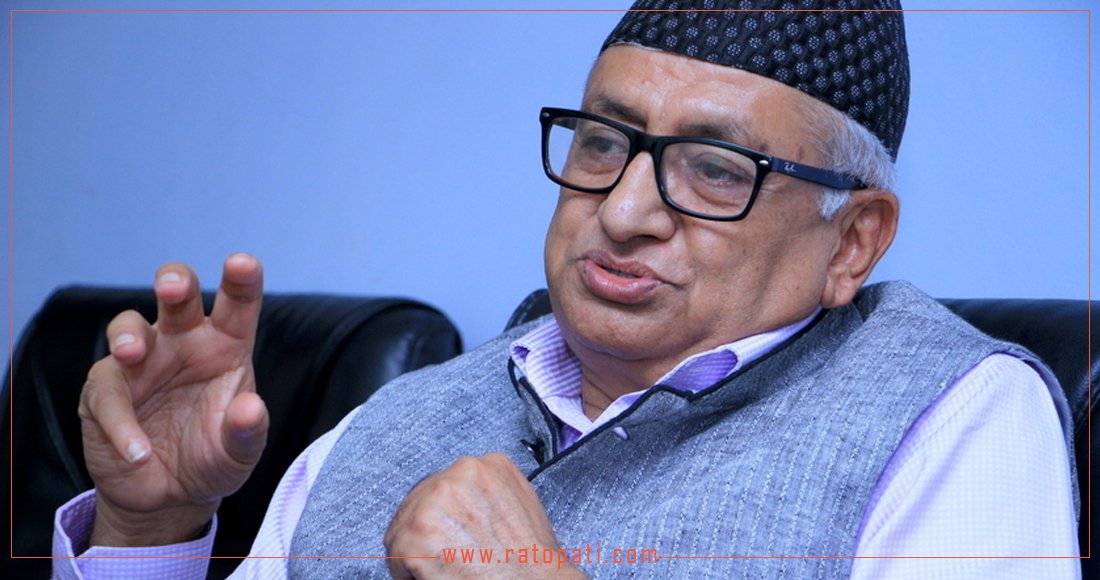
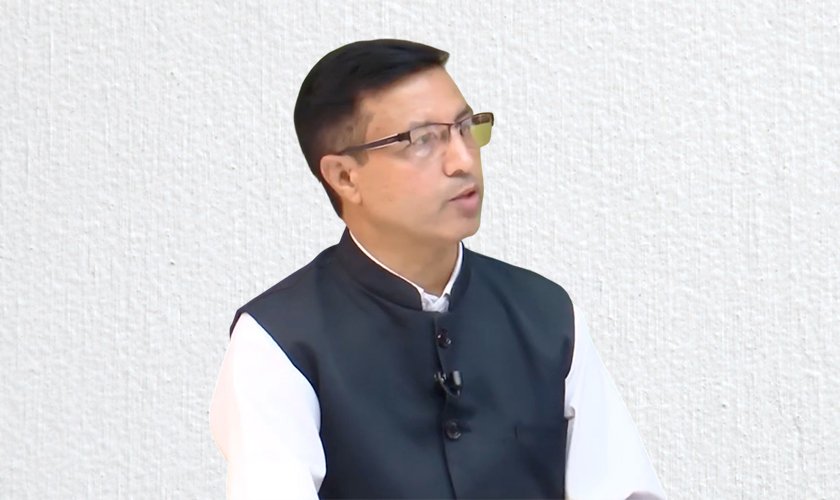
Rato Pati reporter Ganesh Pandey spoke with Agni Prasad Sapkota, former Vice-Chairman of the Maoist Center and current leader of the Nepali Communist Party, on this issue. Presented here is an edited excerpt of the conversation with Sapkota:
- Twenty years after the Comprehensive Peace Accord, the then-conflicting party, the former CPN (Maoist Center), has reached the opposition without concluding transitional justice. Following the election in Falgun, driven by the Gen-Z movement, the Rastriya Swatantra Party (RSP) has formed a government with a near two-thirds majority. Has there been any discussion with the government on advancing the peace process at a time when the balance of power has shifted?
There have been no discussions with the government on this matter yet. This is the most important issue for the nation. While it is the government's responsibility, we must also take initiative. The government has just been formed. The government should also discuss with the parties to bring transitional justice to a conclusion.
Since this is a matter linked to the nation's prestige, our goal is to reach a logical conclusion through discussions with the government, political parties, civil society, and all concerned stakeholders.
- While you were leading the government for the third time, then-Prime Minister Prachanda moved the TRC Bill forward, but after the government fell midway, the Congress-UML coalition government led by KP Oli took the bill forward. The Gen-Z movement disrupted the government midway. Will this process move forward now?
Two commissions related to transitional justice (TRC) currently exist. The environment for those commissions to work has not been created. They must be given an environment to work. It should be prioritized. As I said before—I emphasize again that this is a very important matter. It is being delayed for various reasons. Our government worked to bring this to a logical conclusion.
We advanced the process up to the formation of the commissions. The rest was done by the UML government. Because it has been delayed so much, we should not delay it by taking sides. Because transitional justice is an important issue for the nation. All sides must come together to bring it to a conclusion.
- Many who were injured or disabled during the war have died without receiving justice. It has been 20 years since you came into the peace process. Don't you think there were weaknesses while you were in power repeatedly during this time?
There were weaknesses on all sides. When we were in government, we worked in a hurry to bring this to a conclusion. Even while working, it could not reach a conclusion. Accepting that it was a weakness, we must now take the initiative to bring it to a conclusion, and we will.
- There is a need to work in a way that is impartially recognized internationally and satisfies the victim families. How should the government work in the current changed situation?
We will take initiative from our side in the parliament as well. Along with that, we will also discuss among the opposition parties. We will support the government. Because this issue is not of any particular party or group. As you said, martyr families, the injured, and the disabled are all suffering. There is even greater pain among the families of the disappeared.
Family members have disappeared, and they do not even know what happened. It is the state's duty and responsibility to tell them the reality. That responsibility must be fulfilled. We should not delay any longer. We will take initiative to conclude this without delay. It is our understanding that the government must take the initiative to officially act, create an environment for discussion, make the commissions active, and provide resources.
- For compensation, reparation, and rehabilitation of victims from both sides of the conflict, global standards and the acceptance of the victim side will have to be taken. Won't international law also be attracted in some heinous crimes?
These cases will not go there, nor should they. In fact, it has been propagated in a somewhat exaggerated manner. I want to clarify that no case will go to the international court.
Another thing, everyone must work to bring this to a conclusion. The government, all parties, intellectuals, leaders, and the media must work. The judiciary must also play an impartial role accordingly. Anyway, there has been a delay in delivering justice. Due to that delay, the families of the disappeared and martyrs, the injured, and the disabled have suffered greatly. Because of this, it is affecting the overall development of the nation in one way or another. We have also taken this very seriously. It is not enough to just take it seriously; there will be a huge initiative from our side to bring it to a conclusion.
We fought a long-term war at that time for the change of the country, against tyranny, exploitation, and repression. We ourselves faced great atrocities. That happened in a certain period. Now the Truth and Reconciliation Commission will facilitate reconciliation. Everyone must fulfill their responsibilities. The government must place the greatest emphasis on this and play the paramount role.
- How can cases other than those killed in crossfire during the war be managed?
The mechanism is already in place. The Truth and Reconciliation Commission will resolve it. Once the government creates the environment for the commission, it will do it itself. It will do so based on universally accepted principles. It will fulfill it by adhering to the principles of transitional justice. Another mechanism is not needed. The two commissions are strong enough for that. Those commissions will investigate all these things. The commissions are formed based on the Act. It took a long time to make the Act. The Act is already made. Now the work must be intensified.
- Will the commission have the authority to investigate matters related to serious human rights violations?
The commission has been formed in a sophisticated manner to conclude transitional justice after many years of discussion, deliberation, debate, and consultation with all parties. There is no problem with the Act either. The commissions have also been formed. Therefore, those commissions should investigate, categorize, and move the work forward. This is a matter of national priority now.
- What will be your role in the coming days?
Discussions with opposition parties will definitely happen. Again, this is no longer a partisan matter; it is also the government's responsibility. It is the responsibility of all parties. It is not just the responsibility of a party, but the responsibility of the entire country. We were a party to the peace process yesterday. We suffered a lot of damage when the then-government repressed us. That incident has already happened. Mainly, the truth must be determined, reconciliation must be achieved, and compensation must be provided.
", "context": "", "tags": ["Transitional Justice", "Nepal Peace Process"]}```This specific news has been automatically translated by AI. As a result, there may be some inaccuracies or language errors.
_Eqo5W0NMVM.jpg)