Provincial Chief Ministers Urge Prime Minister Shah to Address Long-Standing Regional Issues
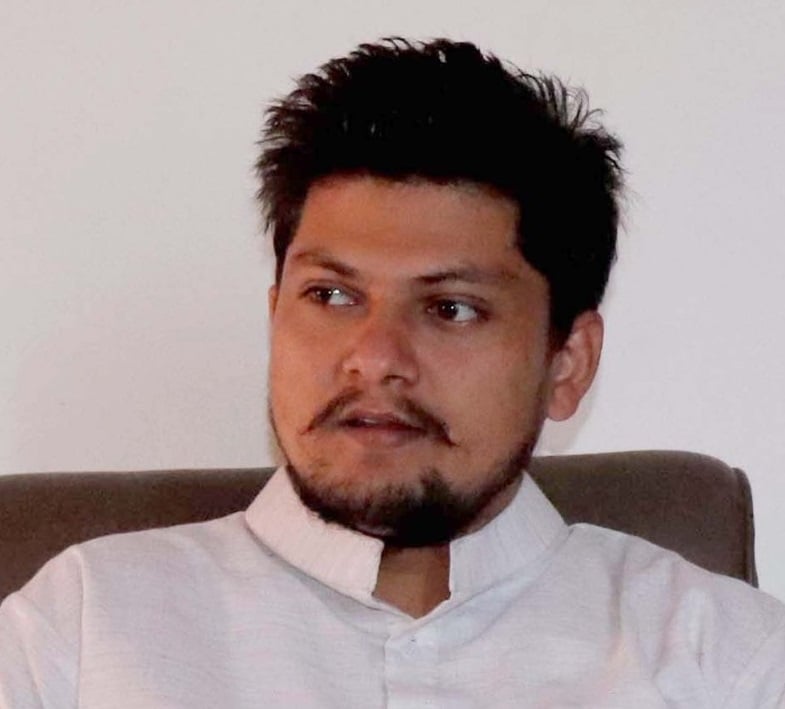

Pokhara. Provincial governments are exhausted from repeatedly requesting rights guaranteed by the constitution. Decisions made by each province in their Provincial Coordination Council and Development Problem Solving Committee meetings are nearly identical. Demands for land acquisition, police adjustment, civil service acts, and education acts have been ongoing since the inception of the provinces.
The constitution grants these powers to the provinces, but the federal government must enact the necessary enabling legislation. Based on federal laws, provinces can then draft and implement their own localized regulations.
These demands, pending since the formation of provincial governments in 2074 BS, remain unfulfilled. On Thursday, Prime Minister Balendra (Balen) Shah held discussions with the Chief Ministers of all seven provinces regarding regional problems and potential solutions.
In this informal meeting, all Chief Ministers presented shared concerns alongside specific grievances unique to their provinces. Common issues raised included police adjustment, the Civil Service Act, the Education Act, and land acquisition.

Gandaki Chief Minister Surendra Raj Pandey specifically raised six key issues. Pandey stated that he drew the Prime Minister's attention to problems the province has been facing for a long time.
'There are many problems in the province. I have raised some issues that are legal and require practical resolution by the federal government,' he said. 'We are confident that our issues will move toward resolution.'
After the discussion, he remarked that the public perception of Prime Minister Shah and his actual behavior during the meeting were completely different.
1. Gorakhkali Rubber Industry and Bhrikuti Paper Mill
Both industries are located in Gandaki Province. The Gorakhkali Tire Industry is Nepal's only tire manufacturing plant, located in Chief Minister Pandey's home district of Gorkha. Established in 2041 BS with technical assistance from the Chinese government and investment from the Government of Nepal, it began commercial production in 2049 BS.
Due to political interference and an inability to compete with modern tires in the international market, production ceased completely in 2071 BS.
Following the 2072 BS earthquake, its condition worsened, and after the government provided a 'golden handshake' to approximately 248 employees in 2076 BS, the industry has been formally closed at the government level.
Experts suggest the industry closed prematurely because the machinery became obsolete and there was insufficient domestic production of raw materials. In Falgun 2080 BS, the federal government decided to lease out this industry and six other closed factories under a public-private partnership model.
Chief Minister Pandey has demanded the implementation of this decision to hand over operations to the private sector while ensuring the provincial government is also involved.
The Bhrikuti Paper Mill in Gaindakot, Nawalpur, once held a significant share of Nepal's paper demand. Established in 2039 BS with Chinese assistance, it was privatized in 2049 BS, handed over to the Golchha Organization, Dugad Group, and Surana Group.
Due to disputes between management and workers, along with financial losses, the industry closed completely in Falgun 2067 BS. There have been allegations that the private sector sought to profit by selling the land and machinery rather than operating the factory. Frequent strikes and labor-management conflicts led to its total closure.
The industry owns over 60 bighas of land in Gaindakot. Legal disputes have been ongoing for a long time over allegations that the private sector attempted to plot and sell this land. The government is currently studying whether to reclaim the land to create a new industrial zone or restart the factory.
Chief Minister Pandey has pressured the government to utilize this land for industrial purposes and keep it under state control.
_HuNFGJBSLR.jpg)
2. Localization of Conservation Areas
The Annapurna Conservation Area Project (ACAP) is Nepal's first and largest conservation area. Started as a pilot in Ghandruk, Kaski in 1986 AD and formally established in 1992 AD, it spans 15 local levels across five districts of Gandaki: Kaski, Lamjung, Myagdi, Manang, and Mustang.
Its management has been handled by the National Trust for Nature Conservation (NTNC) since its inception. The Manaslu Conservation Area Project (MCAP) is located in Gorkha. Established in 1998 AD, it covers one rural municipality in Gorkha and is also managed by the NTNC.
There is constant friction between federal, provincial, and local levels regarding ACAP and MCAP. An entry fee of 3,000 rupees per person is collected from foreign tourists, generating billions in annual revenue. All funds go directly to the NTNC account. Questions are being raised as the provincial government and relevant local levels do not receive a direct share of this revenue.
Even for minor development projects within the conservation area, permission from ACAP/MCAP is required. Because the Environmental Impact Assessment (EIA) process is long and cumbersome, provincial plans often cannot be completed on time.
Furthermore, when ACAP was established, it was announced that management would be handed over to the local community after 10 years. Nearly 40 years later, the federal government continues to extend the term under various pretexts. The latest five-year extension, granted in Magh 2077 BS, has also expired.
The Gandaki provincial government decided in 2075 BS to bring ACAP and MCAP under provincial jurisdiction and sent the proposal to the federal government. However, the rural municipalities within the conservation areas have demanded that the authority be given to them rather than the province or the federal government.
_KUhmscDEeX.jpg)
3. Phewa Lake and International Airport Operations
The major issues for the tourist capital, Pokhara, are the conservation of Phewa Lake and the operation of the international airport.
Chief Minister Pandey drew the Prime Minister's attention to these issues, which Pokhara has repeatedly raised with previous central governments without success.
Phewa Lake's conservation is currently trapped in legal and financial uncertainty. The Supreme Court has ordered the removal of all structures within 65 meters of the lake's shore and declared the area a protected zone. However, many individuals hold land ownership certificates (lalpurja) and own large hotels within that 65-meter radius. Stakeholders claim that approximately 40 billion rupees in compensation would be required to acquire private land. The Pokhara Metropolitan City or Gandaki Province cannot bear this cost alone.
The main conservation problem is the sediment brought down by streams like Harpan Khola and the city's sewage being discharged directly into the lake. Pandey met with the Prime Minister to request that the federal government provide the budget for compensation, with a commitment that lower levels of government would assist in implementing the lake's standards.
The Pokhara International Airport, inaugurated with great fanfare on Poush 17, 2079 BS, is now struggling to cover its operating costs. More than two years after its inauguration, regular international commercial flights have not commenced. Only a few chartered flights have taken place.
Although Himalaya Airlines announced regular flights between Pokhara and Lhasa, they could not be sustained. India has not granted permission for new, shorter air routes for the Pokhara airport. The Simara route is very busy and circuitous. Since the airport was built with Chinese loan assistance, it has become entangled in geopolitical tensions.
Authority officials state that the time to pay interest on the approximately 22 billion rupee loan taken from China's Exim Bank has begun, and installments have not been paid yet. Experts suggest that international flights are affected by China's attempt to include it under its BRI project and India's security concerns. Chief Minister Pandey requested Prime Minister Shah to take the necessary diplomatic initiatives to bring the airport into full operation quickly.
4. Dumkibas-Triveni Road
This road is located in the Binayi Triveni Rural Municipality of Nawalpur district. As it is the only short route reaching the Indian border through Gandaki Province's own territory, the provincial government is making special efforts to open it. Currently, residents of Gandaki are forced to travel through Bardaghat in Lumbini Province to reach Triveni, which is within their own province, before re-entering Gandaki. Once the road is opened, a direct link will be established from the Korala border point in Mustang through Pokhara to the Indian border.
The provincial government has been pleading with the federal government to open the track, arguing it could lead to a major leap in the provincial economy. Of this 19-kilometer road, about 9 kilometers are problematic. A portion of the road falls within Chitwan National Park. According to the National Park Act, there are strict restrictions on building physical infrastructure within the park. Chitwan National Park is listed as a World Heritage Site.
UNESCO has repeatedly expressed objections, stating that road construction within the park would affect biodiversity and rare wildlife. The Gandaki provincial government has been working on this by including it as a provincial pride project since its inception. From former Chief Ministers Prithvi Subba Gurung and Krishna Chandra Nepali Pokharel to the current Chief Minister Pandey, all have repeatedly pressured the Prime Minister and the Minister of Forests in Kathmandu.
The provincial government has submitted a proposal to the federal government to open the road by building flyovers or underpasses to avoid harming wildlife. The federal government needs to resolve this by engaging in diplomatic dialogue with UNESCO. Pandey urged the Prime Minister on Thursday to move the file forward, noting that it is currently stalled at the Ministry of Forests.
This specific news has been automatically translated by AI. As a result, there may be some inaccuracies or language errors.