Discrepancies Emerge in Public Transport Fare Adjustments Between Federal and Provincial Governments


Hetauda. A discrepancy has emerged in the adjustment of public transport fares between the federal and provincial governments, with Bagmati Province implementing higher fare hikes than those set by the federal government.
According to Pravin Shrestha, division chief at the provincial Ministry of Labour, Employment and Transport, the province adjusted its rates higher than the federal level due to subsequent increases in petroleum prices following the federal adjustment. Speaking to Ratopati, he stated, 'The adjustment was made based on the petroleum price hike that occurred on Chait 27. Consequently, our fare rates differ from the federal ones.'
The federal government had increased public passenger transport fares by 16.71 percent effective from Chait 25. Similarly, fares for cargo vehicles were increased by 21.68 percent for hilly regions and 15.75 percent for the Terai region.
The following day, the Nepal Oil Corporation increased the price of diesel by 25 rupees and petrol by 17 rupees. Two days later, on Chait 27, Bagmati Province adjusted its fares. The Bagmati Ministry of Labour, Employment and Transport increased fares for passenger vehicles operating within the Kathmandu Valley by 25.96 percent. Fares for passenger vehicles outside the valley were increased by 17.35 percent, and cargo vehicle fares by 26.79 percent.
Meanwhile, Koshi Province has adjusted its fares in line with the rates set by the federal government, while other provinces have yet to finalize their adjustments.
Higher fares set due to significant differences in fuel consumption in urban areas
Saroj Sitaula, senior vice-president of the Federation of Nepalese National Transport Entrepreneurs, stated that further fare hikes were necessary due to rising fuel prices. He explained that fares were adjusted to account for the significant difference in fuel consumption between vehicles operating in urban areas like the Kathmandu Valley and those on highways.
He noted that traffic congestion leads to higher fuel consumption in cities. 'A vehicle operating in a city like Kathmandu gives a mileage of 14 kilometers per liter, whereas the same vehicle achieves 18 to 20 kilometers on a highway,' Sitaula said. He clarified that fares are currently being determined based on the methodology established in 2075 BS, factoring in distance and percentage. He added that the lower mileage in urban areas due to engines idling in traffic is being addressed technically.
'Provinces are independent to set fare rates'
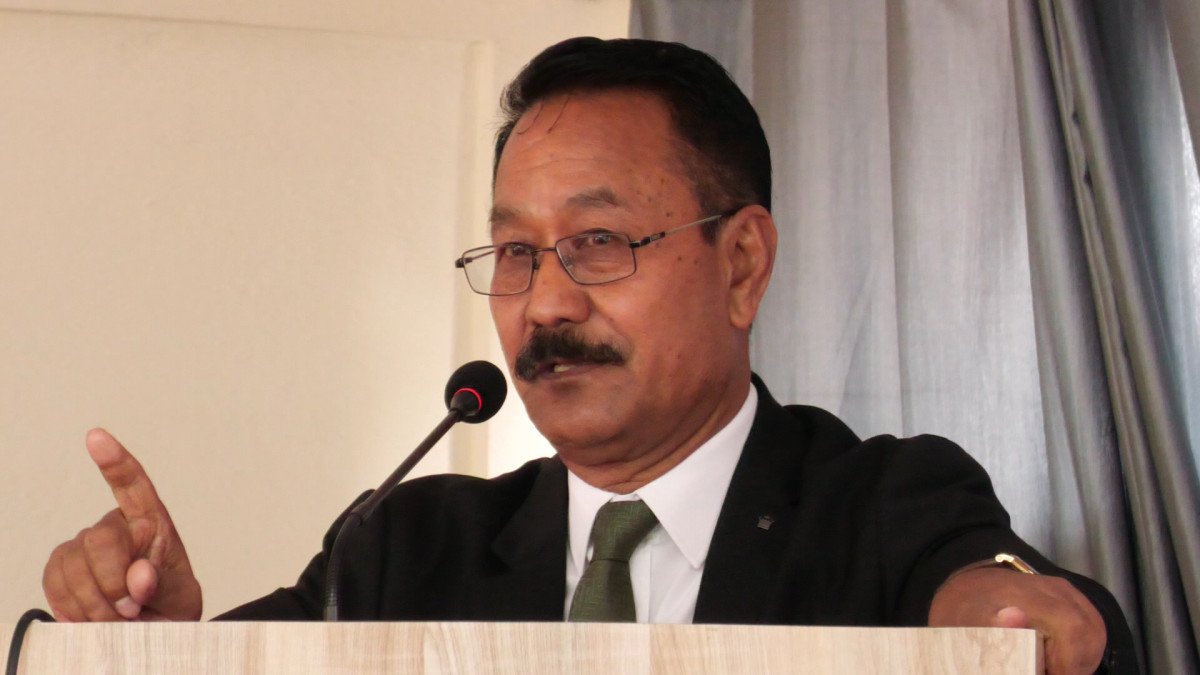
Shrikant Yadav, director of the Department of Transport Management, stated that there is a constitutional provision allowing provincial governments to determine public transport fares within their respective provinces. He clarified this in the context of Bagmati Province setting higher fares than the federal government.
In a conversation with Ratopati, he explained that according to the constitutional unbundling report, provincial governments have full authority to manage transport within their jurisdictions. 'In the case of provinces, they can set their own fare rates for transport within their territory; this falls within their jurisdiction,' he said.
He suggested that while the federal government adjusted fares when fuel prices were at a certain point, the subsequent volatility in fuel prices may have led the province to set different rates. According to Director Yadav, the continuous rise in fuel prices has put pressure on fare rates.
Meanwhile, transport entrepreneurs are pressuring the department to review fares again, citing further fuel price hikes. Regarding whether the federal government would increase fares again, Director Yadav said, 'It is not possible to say that fares will increase immediately. However, entrepreneurs have made demands, and the department is discussing the matter.'
He concluded that the volatility in fuel prices has made fare adjustment a challenging issue, and a concrete decision is yet to be reached.
This specific news has been automatically translated by AI. As a result, there may be some inaccuracies or language errors.

-(2)_QJLjKxR87n.jpg)