Supreme Court Judges Face Ethical Dilemma as Ministers Move into Judicial Quarters

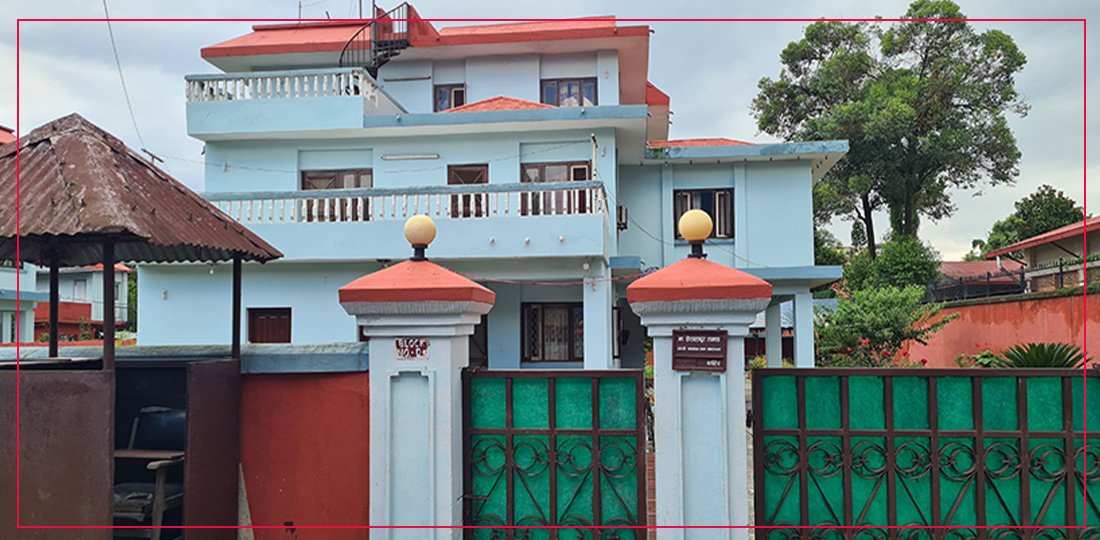
Kathmandu. Supreme Court judges are facing an ethical crisis after the government arranged temporary housing for ministers at the Pulchowk quarters. The situation, where judges and ministers reside within the same compound, has created significant discomfort for the judiciary.
Living in close proximity or engaging in constant social interaction between judges and ministers is considered inappropriate under democratic and judicial norms. According to the principle of separation of powers, there must be a clear distance between the executive (ministers) and the judiciary (judges). However, following the destruction of the ministerial quarters in Bhaisepati during the Bhadau 24 Gen-Z protests, the government began housing six ministers in the judicial quarters in Lalitpur.
Currently, only Minister for Physical Infrastructure, Transport and Urban Development Sunil Lamsal resides in the Bhaisepati ministerial quarters, occupying the residence previously used by the Defense Minister. Following the interim government formed after the Gen-Z protests, all ministers had initially used their own residences as ministerial quarters.
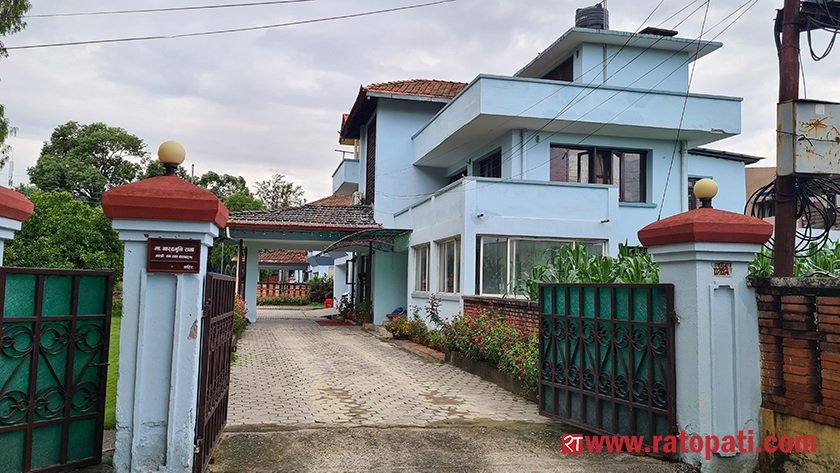
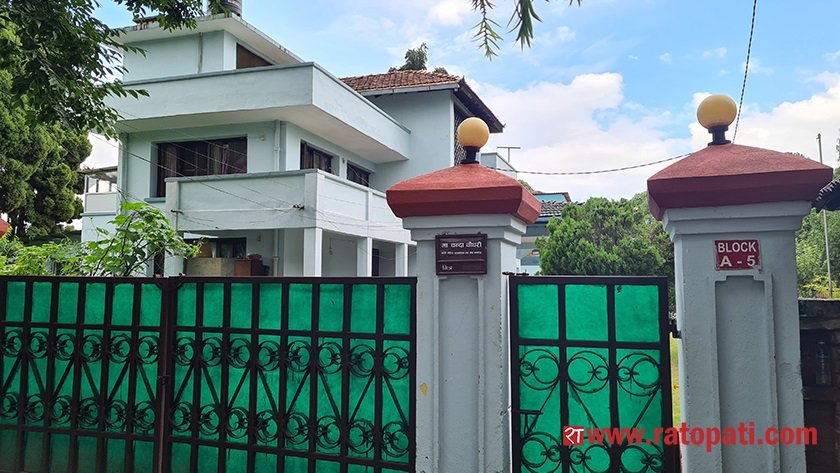
Currently, Home Minister Sudhan Gurung, Law Minister Sobita Gautam, Education Minister Sasmit Pokharel, Energy Minister Birajbhakta Shrestha, and Health Minister Nisha Mehta are residing in the Pulchowk quarters, which also house 13 Supreme Court judges. A Supreme Court judge noted that those living there feel uncomfortable with the arrangement.
A former judge stated that this proximity violates the principle of separation of powers. The executive and judiciary must remain independent, and daily interactions within the same compound could blur the lines between the two branches. The former judge emphasized that this situation forces judges to be extra cautious in exercising their discretion.
The Pulchowk compound, adjacent to Harihar Bhawan, contains 19 buildings. Since the Chief Justice resides in Baluwatar and some judges live in their own homes, not all quarters were occupied. The government planned to house the newly appointed ministers in the vacant units, but the commencement of maintenance work has left judges feeling apprehensive.
Legal experts warn that since the government is the most frequent litigant in court, the proximity between judges and ministers increases the risk of influencing judicial decisions or creating pressure to rule in favor of ministerial interests.
'Justice must not only be done, it must also be seen to be done. If judges and ministers live together, it creates a perception and distrust among the public that the court will not deliver impartial justice,' the former judge said. Advocate Anantaraj Luintel also emphasized the need for distance between the judiciary and the government. 'The independence of the judiciary should not be limited to the constitution or paper; it must be practically visible to the public,' Luintel told Ratopati.
Luintel cited the example of former Indian Chief Justice P.N. Bhagwati, who refused a congratulatory message from the Prime Minister on a special occasion to avoid any public perception of compromised judicial independence.
'The argument of Chief Justice Bhagwati was that even the exchange of such formal messages could raise questions about judicial independence. If a simple greeting can cast doubt on impartiality, then other relationships are even more concerning,' he said.
He stressed that the shared living area, social interactions, and attendance at events could complicate the administration of justice. 'While these activities might be well-intentioned, the public psychology does not view them lightly. The judiciary must not only be independent but must clearly appear to be so.'
He also expressed concern that this arrangement could foster a culture of lobbying. 'In our social context, if people go to restaurants, sit together, or eat together, it creates a situation where people might try to influence decisions based on social obligations,' Luintel added.
When will the reconstruction of ministerial quarters be completed?
The government aims to accelerate the reconstruction of ministerial quarters and complete them by the end of Ashar. Chakravarthi Kantha, head of the Federal Secretariat Construction and Management Office, informed Ratopati that construction has begun on 11 of the 26 damaged quarters, and tenders for the remaining ones were called last Monday. He stated that priority is being given to the most severely damaged units.
Current management and rental issues for ministers
Ministers are currently scattered across various locations. Six ministers are in the Pulchowk quarters, while Minister Sunil Lamsal is in Bhaisepati. Some ministers with their own homes are residing in their private residences.
Regarding ministers living in rented accommodation, the office has not yet paid the rent. Kantha said, 'We have not received requests for rent from the ministries yet, but we are processing the budget for it. Once approved, the rent will be managed.'
Clarifying the concerns about housing judges and ministers together in Pulchowk, Kantha described it as 'crisis management.' He said, 'No such problems have been seen so far. In the current difficult situation, this is a necessity and a part of crisis management, which we are facilitating.'
The ministry plans to move all ministers into organized government housing as soon as possible, considering the state of physical infrastructure. If construction is completed by the end of Ashar, ministers may be able to move into the new or reconstructed quarters by the beginning of the next fiscal year.
This specific news has been automatically translated by AI. As a result, there may be some inaccuracies or language errors.