Nepal's First Modern Nagdhunga Tunnel Nears Operational Phase


Kathmandu. Preparations are in the final stages for the operation of Nepal's first modern Nagdhunga Tunnel. An agreement with the service provider is expected to be signed this week. Project Chief Saujanya Nepal stated that the service provider has been formally notified, and the process will conclude within a few days.
Project Chief Nepal said, 'We have already written to the service provider for the agreement. They are currently preparing the necessary documents. The agreement process will likely be completed this week.'
According to the rules, the service provider was given 15 days to present the documents, and they are currently working on the preparations, Nepal added. Once the agreement is signed, the service provider will mobilize its personnel to the field to operate the tunnel on a trial basis.
The responsibility for the operation and management of the tunnel has been awarded to a Chinese company. The project has decided to hand over the 5-year operation contract to the Chinese company 'Chongqing Yuxin Road and Bridge Development' and the Nepali company 'ART Construction' (Yuxin-ART JV), which submitted the lowest bid.
The company won the contract for 1.104 billion rupees, which is 40 percent less than the government's cost estimate. The project issued a notice of intent on 2082 Chaitra 16 and gave the selected company one week to sign the agreement.
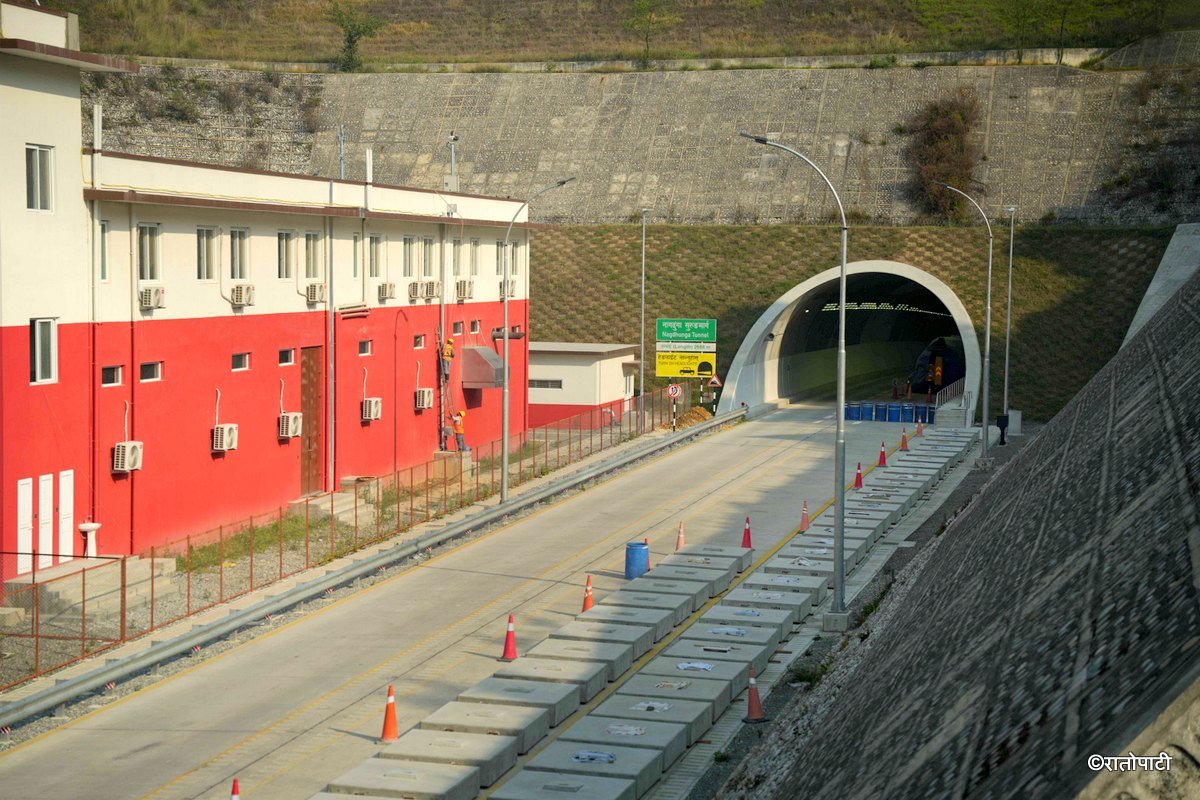
- What are the toll rates for vehicles?
The government has already determined and published the toll fees for using the Nagdhunga Tunnel. The Ministry of Physical Infrastructure and Transport published a notice in the Gazette on 2082 Chaitra 26, stating that the Council of Ministers, exercising the powers under Section 6, Sub-section (1) of the Road Board Act, 2058, has decided to collect tolls from vehicles using the Nagdhunga Tunnel section.
The Council of Ministers made this decision on 2081 Shrawan 26, and based on that, the rates were published in the Gazette.
Accordingly, cars, vans, pickups, tractors, microbuses, and other light vehicles will be charged 65 rupees for entering Kathmandu and 60 rupees for exiting.
Similarly, the fee for minibuses, mini-tippers, and trucks is set at 115 rupees for entry and 80 rupees for exit, while buses and trucks (single rear axle) will be charged 260 rupees for entry and 200 rupees for exit. For multi-axle trucks/vehicles and heavy equipment, the fee is 600 rupees for entry and 250 rupees for exit.
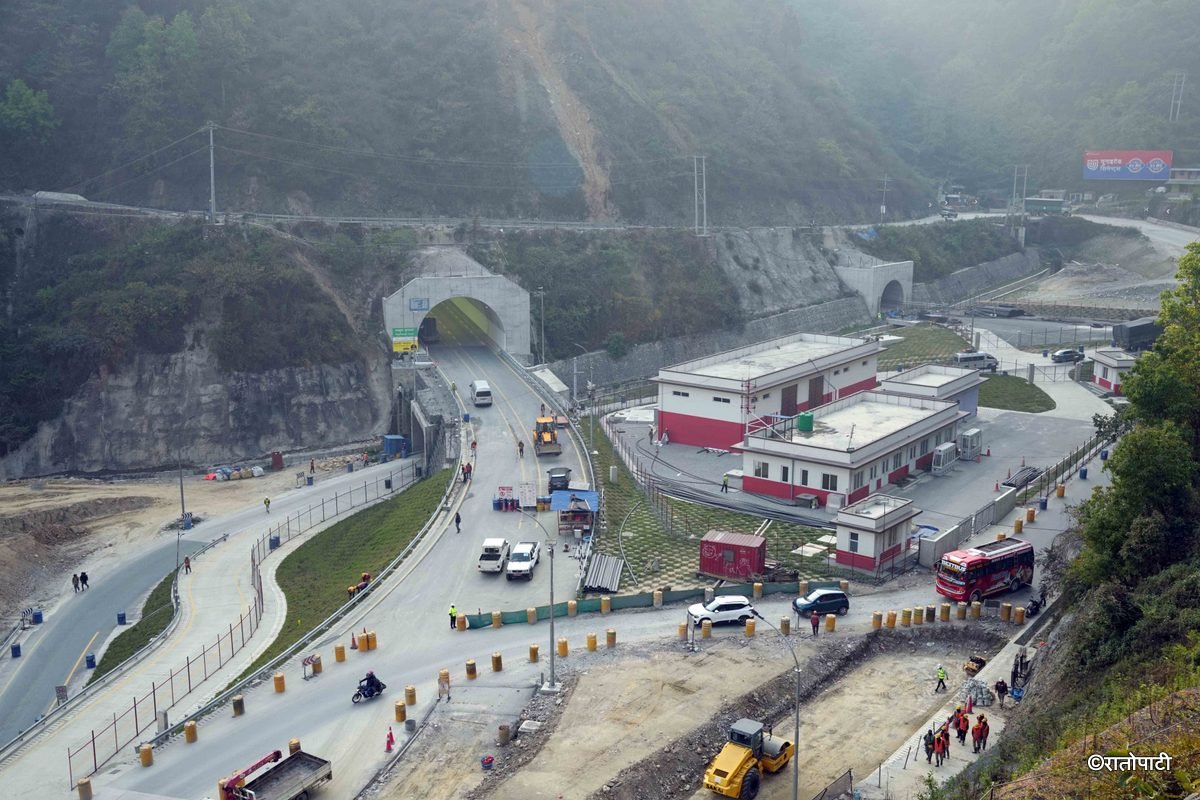
However, pedestrians, two-wheelers, three-wheelers, and non-motorized vehicles are prohibited from entering the tunnel. Likewise, vehicles carrying highly flammable substances (petrol, diesel, gas) and explosives will not be allowed to use the tunnel.
According to the 'Nagdhunga-Sisnekhola Tunnel Transport Operation Directive, 2081' issued on 2081 Chaitra 25, pedestrians and such vehicles are prohibited from entering the tunnel.
- How to pay the toll?
While the toll tax for using the tunnel has been determined, the payment method is currently a subject of interest.
The Nagdhunga Tunnel will utilize a world-class 'Electronic Toll Collection' system. According to Ganesh Bahadur KC, Executive Director of the Road Board Nepal, payments must be made through an electronic system to make the journey hassle-free and fast. For the first 6 months, drivers can pay in three ways: cash payment, digital scanning, and automated RFID system.
Since not all vehicles will have state-of-the-art chips installed when the tunnel opens, the board has made alternative arrangements for 6 months to prevent traffic jams. 'Our ultimate goal is to make the tunnel completely cashless and digital,' said Executive Director KC. 'While there will be options for cash and digital payments for the first few months, everyone will gradually be brought into the automated system.'
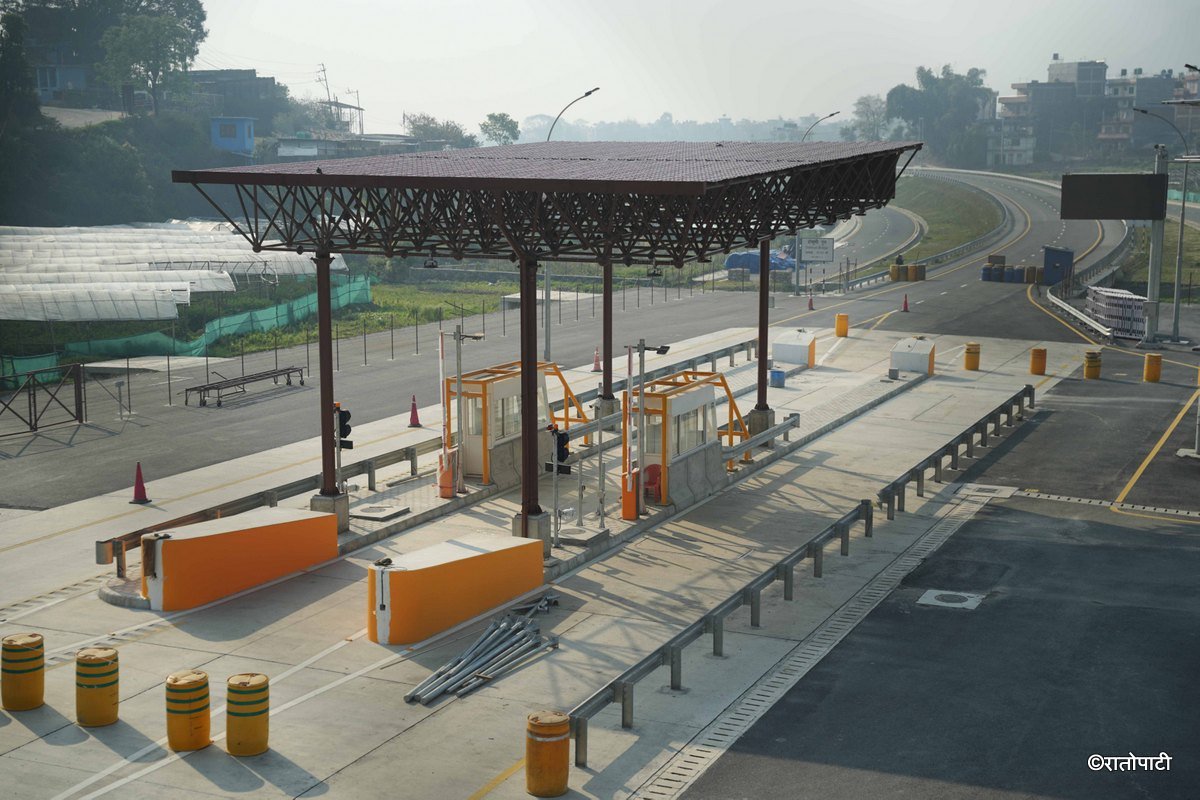
RFID gates have already been installed in the tunnel. However, vehicles do not currently have RFID chips installed. Vehicles passing through the tunnel will need to have an RFID chip or 'N-Tag' affixed to their windshield. Once attached, payments can be made through this technology. Additionally, sensors installed at the tunnel entrance will identify the chip from a distance. As soon as the vehicle reaches the gate, the sensor will read the data, and the fee will be automatically deducted from the vehicle owner's prepaid account.
The biggest advantage of this system is time savings. In manual or cash systems, one has to wait in line to pay, and paperwork takes time. However, the RFID system will complete the process and open the gate automatically in 10 to 30 seconds. This will not only reduce the years-long traffic congestion in the Nagdhunga area but also reduce fuel consumption.
Additionally, the Road Board plans to adopt a special strategy regarding fees to encourage drivers to adopt the technology. According to the board, lower fees will be set for vehicles that install the technology (N-Tag). While those who wish to pay in cash will not be 'prohibited,' they may be charged a higher fee as a penalty. It is believed that this will naturally attract drivers to the technology.
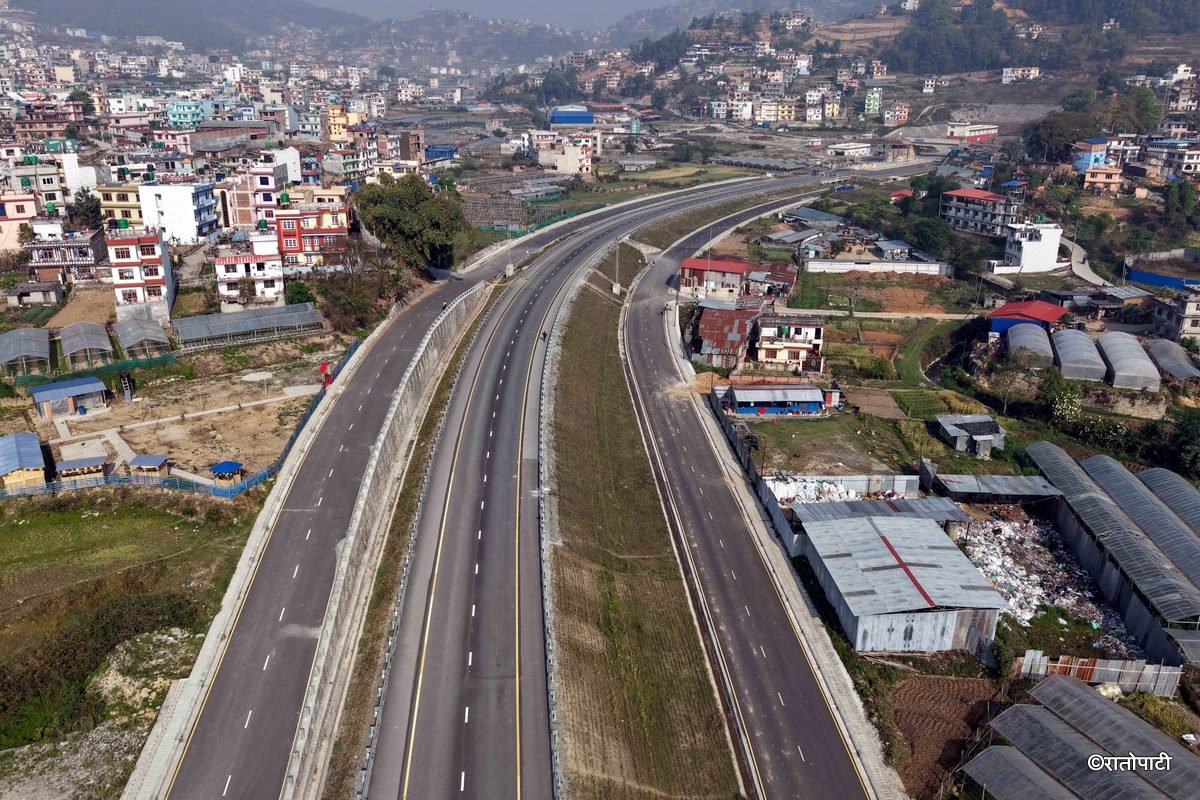
- How to get an 'R-Tag'?
The Nepal Rastra Bank has already authorized commercial banks to issue RFID chips or prepaid cards for toll collection. Currently, Global IME, Nabil, Kumari, Machhapuchhre, and NMB Bank are in the final competition to provide this service.
Vehicle owners can obtain the chip or hand-tag from the branches of these banks or counters near the tunnel. For this, a vehicle registration certificate (Bluebook), the owner's photo, and updated KYC documents will be required. This chip will be connected to a bank account, and arrangements will be made for automatic payment after using the tunnel.
- What are the benefits of using the tunnel?
The Road Board claims that since the fees are determined based on scientific studies, using the tunnel will save up to 70 percent in expenses. Using this 2.6-kilometer-long tunnel shortens the road from Kathmandu to Sisnekhola by 8 kilometers.
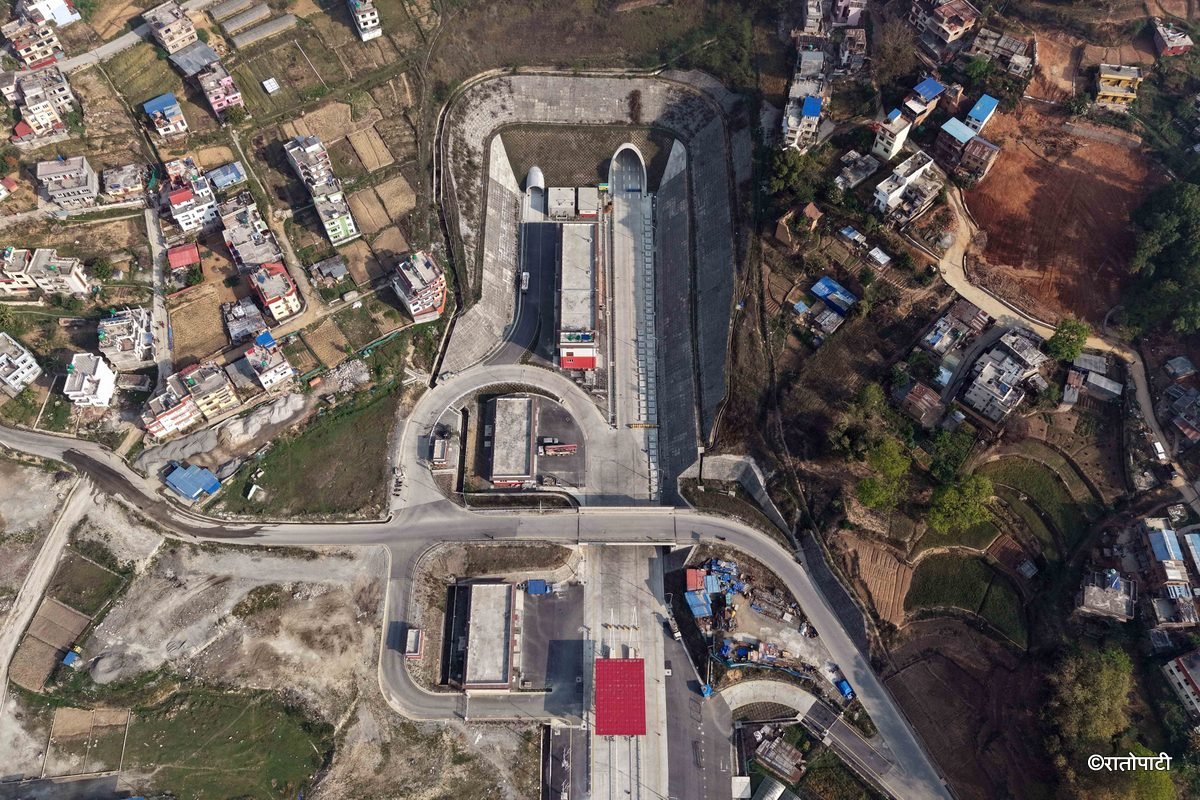
According to Board Executive Director Ganesh Bahadur KC, the tunnel is practically and economically beneficial because the time, fuel, and vehicle maintenance costs incurred when using the winding road are higher. 'The fees were determined after study,' said KC. 'This ensures a sustainable source for road maintenance and also guarantees up to 70 percent savings for vehicle owners.'
However, he stated that the use of the tunnel is not mandatory. The collected fees will be deposited into the Road Board's account and will be spent on the regular maintenance, operation, and management of the tunnel, KC added.
This specific news has been automatically translated by AI. As a result, there may be some inaccuracies or language errors.


_jxKX1kXOlf.jpg)