
Nepal's Transport Sector Faces Challenges: An Interview with Saroj Sitaula

Kathmandu. Nepal's public transport sector is frequently at the center of controversy and debate. From fare adjustments and syndicates to taxi meter disputes and the entry of Indian vehicles, this sector, being the largest employer and most utilized service, naturally attracts significant attention.
The government has recently adjusted public transport fares, which the public complains are excessive, while operators argue it is a long-overdue scientific adjustment. Meanwhile, discussions on making the transport sector technology-friendly and increasing the use of electric vehicles are ongoing.
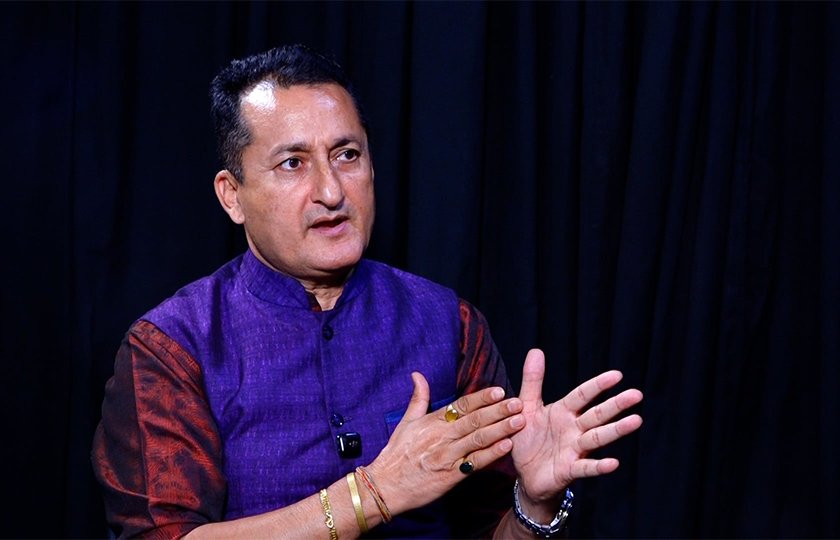
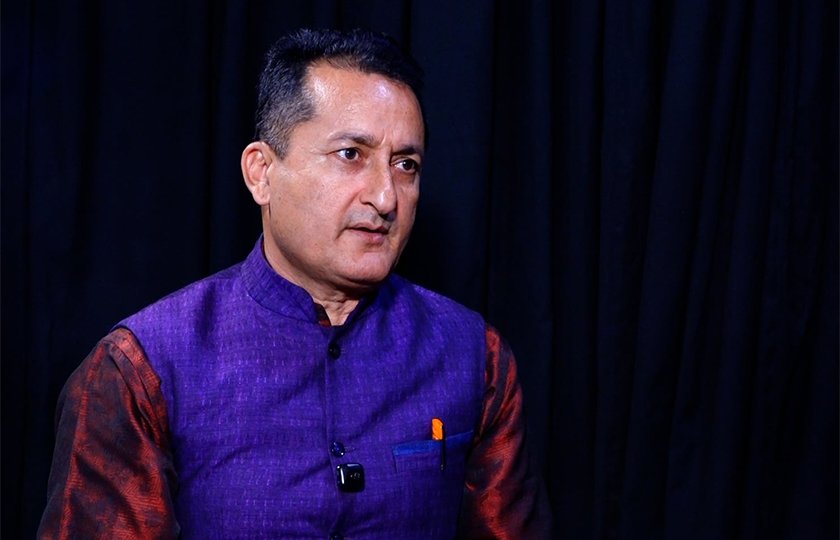
The Federation of Nepalese National Transport Entrepreneurs (FNNTE) is holding its seventh general convention in the last week of Baisakh. Here are the edited excerpts from a conversation with Saroj Sitaula, Senior Vice President of the FNNTE, focusing on these contemporary issues (detailed in the video):
You are the Senior Vice President of the FNNTE. Recently, transport fares were increased. From a consumer's perspective, the fare hike is excessive. Why was such a large adjustment made at once?
The narrative that the market has become expensive as soon as the fare issue is raised is completely wrong. In 2065 BS, the Government of Nepal spent a large sum of money, hiring experts and technicians to create a scientific fare method. That method has two components for fare adjustment—65 percent and 35 percent.
The 65 percent component includes 13 indicators such as vehicle spare parts, tires, lubricants, bank interest rates, and staff salaries. Based on these indicators, fares should be adjusted at the end of Chaitra every year. Unfortunately, for the past four years, there has been no fare adjustment based on this 65 percent indicator. Now, the fare has been adjusted by incorporating fuel and all other indicators.
Public transport fares increased by 17 to 21 percent. However, fuel accounts for only 35 percent of the share. In terms of fuel, this fare increase amounts to 58/60 percent. Does this mean the 65 percent share is the primary driver of the current fare hike?
Yes. But as I said earlier, this 17 to 21 percent increase is not just because of petrol. This is a four-year delayed fare adjustment under all 13 indicators. The department has provided an 11.33 percent increase for passenger vehicles and 14 percent for cargo vehicles (in the hills), with similar proportions adjusted for the Terai.
During this period, due to international wars and inflation, the price of fuel coming from India increased by 15 rupees, then another 15 rupees, and up to 25 rupees. That is why it has increased overall. Even in this, fuel prices have only been adjusted for the first two increments. The subsequent 25-rupee increase has not been adjusted. In Bagmati Province, the fare was adjusted after the 25-rupee price hike, which is why this happened.
Taxis also fall under your federation. The issue of taxi meters is still controversial. Ride-sharing apps like inDrive and Pathao are determining fares based on GPS location. You are still stuck on meters and weights and measures, which is why no one trusts your meters. Instead, taxis are operating through Pathao and inDrive. Have you failed to keep up with the times?
We have not said we will stick only to meters. We are in favor of hardline technology-friendly transport. We have asked the government to create a Nepali app. What is the point of keeping a meter in the 21st century? We are not in favor of that.
The world has moved far ahead. We must embrace technology. If QR codes work in vegetable shops, they should work in vehicles. What we are saying is that government agencies should bring a clear procedure for this. Let's have a Nepali app so that money stays in Nepal and does not go abroad.
Even now, despite the minimum fare being 24 rupees, they take 25 or 30 rupees. In the payment system, shops have QR codes, but if you say there is no cash in the vehicle, the assistants get angry. Why haven't you been able to go cashless?
What you said is true. Many things are broken here, and they need to be fixed. We must go cashless, and we will. For this, a committee has been formed from the Prime Minister's Office to the Ministry of Physical Infrastructure and the department.
But it shouldn't just be a committee in name; it must come with an action plan. There may be technical difficulties, or issues regarding the education level of our drivers and assistants, but we must gradually create a cashless environment.
The Urban Transport Authority was established two or three years ago. But it could not do much, and now the government has decided to abolish it. In your opinion, how necessary was this authority?
In our opinion, an authority like the current one is not right. We believe there should be a powerful federal authority like the Nepal Electricity Authority. Creating authorities in every province and local level will not be successful.
Why it failed in the Kathmandu Valley is because there were disputes between the federal government, provincial government, and local government. If there were a powerful authority, it would survey routes, determine how many vehicles are needed, and work by including all stakeholders.
Let's talk about transportation. You have been protesting against Indian vehicles entering Nepal freely for a long time. What is it that you want? Do you want Indian vehicles to unload goods at the border?
There are two things here: passenger and cargo. Passenger vehicles are given a 72-hour permit, and they can cover Nepal within that time. But our vehicles cannot go beyond Panitanki from Kakarbhitta. They cannot reach Gorakhpur from Sunauli. If they want to go, they have to go to the embassy and deposit a guarantee. Treaties should be equal, right? Indian vehicles go directly to Pokhara, Muktinath, and Halesi. We welcome tourists, but our point is that our vehicles should be allowed to carry passengers on internal routes.
Another thing is cargo. Today, Indian overloaded vehicles are destroying Nepal's roads. A 40-ton vehicle is carrying 70 tons. The Daunne bridge collapsed, and the roads are ruined. Weighbridges in our country are rotting, and they are working with their eyes closed.
If Indian vehicles are to come directly to Kathmandu, why were dry ports built? Shouldn't goods be unloaded there so that Nepali vehicles get work? Currently, our vehicles are in trouble due to a lack of work. That is why we say this needs to be regulated.
You have raised the issue from time to time that local levels have set up toll gates on highways to collect various taxes. The matter was even raised in Parliament. What is the actual situation?
Setting up toll gates and collecting money arbitrarily is completely wrong. If a vehicle travels from Kakarbhitta to Kathmandu or Pokhara, it is impossible to pay every local level on the way. The federal government has a rule that no toll gates can be set up to collect money anywhere on the highway.
In the name of road maintenance, local levels are giving contracts to people with strong arms and collecting money through brute force. After we informed the Prime Minister's Office and the Ministry of Home Affairs, it has been stopped in some places now. We are ready to pay tax in one place, but there should be a one-door system.
The toll fee for the Nagdhunga-Sisnekhola tunnel has been set at around 600 rupees for small vehicles. In your opinion, is this expensive or reasonable?
Building a tunnel is a very good thing for the country. But the 600 rupees that have been set is expensive. The government decided this on its own; we were not consulted. Such fees paid on the road are ultimately added to the scientific fare rate, and the burden falls on the passengers. We are having internal discussions on this matter.
The government has introduced a policy to convert to electric vehicles (EVs) or encourage EVs. Are you ready for this?
Electricity production is increasing in the country, so moving to EVs is a very popular and good thing. But decisions should not be made on a whim. How were electric vehicles left idle in Itahari and Butwal yesterday? How were Sajha Yatayat vehicles left idle in Kathmandu? What will be the value of their batteries? Where is the charging infrastructure? How much will it cost to replace the battery tomorrow? A clear policy on this has not yet come.
We are forming a technical team from the federation to study whether it is geographically possible to convert to long-distance travel right now. If the government brings a policy but does not provide infrastructure, entrepreneurs will go bankrupt.
Now let's talk about your general convention. The seventh general convention of the FNNTE is coming up. You are currently the Senior Vice President, and you have also been the General Secretary and Treasurer. Are you going to be the President now?
The seventh national general convention of the federation is taking place on the 27th, 28th, and 29th of Baisakh. Its public notice has also been published. The statute allows for a six-month extension. But due to the special situation of the country, floods, landslides, and political upheaval, it could not be done on time. This was a situation beyond our control.
As for whether I will become the president or not, it depends on the wishes of the colleagues coming to the convention. Whatever they say at the convention will happen.
Does this mean you are preparing to become the president?
I have spent a long time of my life working in the transport sector from the grassroots level. Entrepreneurs, citizens, and media across the country know me. My fellow entrepreneurs have never defeated me in a vote; they have always trusted me and made me win.
I am currently the first senior vice president with the highest majority among the three senior vice presidents of the federation. Naturally, colleagues and seniors across the country are saying that I should take the lead now. But our voters are entrepreneurs. After their opinion, advice, and discussion, I will make an official announcement about my candidacy.
What is left for you to do as Senior Vice President that you aspire to be President?
My biggest goal is to make technology-friendly transport in this country. The perspective of the state and society towards this sector, which has an investment of 1 trillion, is still not good. I will make this sector organized by making such a large investment dignified, drawing the attention of the state, and making all bodies understand the matter with dictatorship.
How many representatives are coming in total?
There is a deadline to renew by the 15th of Baisakh. Representatives are selected based on the number of vehicles in local associations and companies. There is a clear provision in the statute regarding how many representatives there are for those with five vehicles and how many for those with 500. We estimate that about 1800 to 2200 representatives will come this time. We are making the convention technology-friendly this time.
How is your discussion with the new government going? How optimistic are you?
We have discussed with the minister and the Good Governance Division of the Prime Minister's Office several times. They are concerned about the problems of the transport sector. We entrepreneurs also have to make some 'sacrifices'; we must accept that there may be some difficulties for a few days when implementing new rules. But we need a permanent government and a permanent policy. The practice of changing policies with every minister must end.
The government should cooperate with the private sector and the federation, which has an investment of trillions, to improve transport. We are optimistic that the government will work in the right way. I would like to wish that the New Year 2083 brings happiness and peace to the lives of all Nepalis and transport entrepreneurs, and that road travel is safe.
Video/Photo: Manoj Khadka/Ratopati
This specific news has been automatically translated by AI. As a result, there may be some inaccuracies or language errors.
_jxKX1kXOlf.jpg)

_htFaNqpIDJ.jpg)