The Mastermind Behind Balen Shah: Unveiling the Strategic Architect Kumar Ben
Do you remember the online media headlines from Poush 10, 2082?
Perhaps you have forgotten—there is an accusation against Nepalis that they have a 'short memory'.
Let me remind you!
'Balen Shah to form Desh Bikash Party'
'Balen Shah consulted with Dr. Baburam Bhattarai, Dr. Bhagwan Koirala, Dr. CK Raut, and Bhim Upadhyaya regarding the formation of a party'
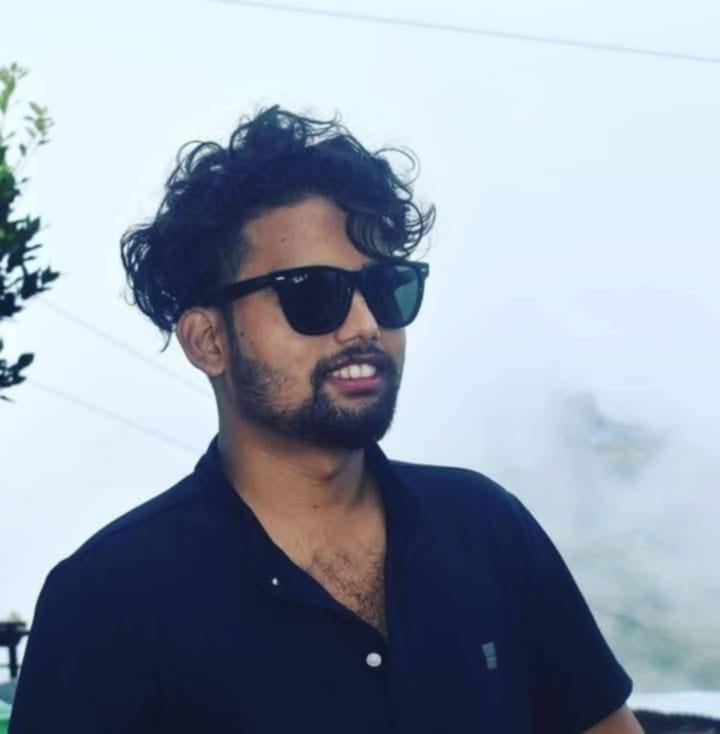
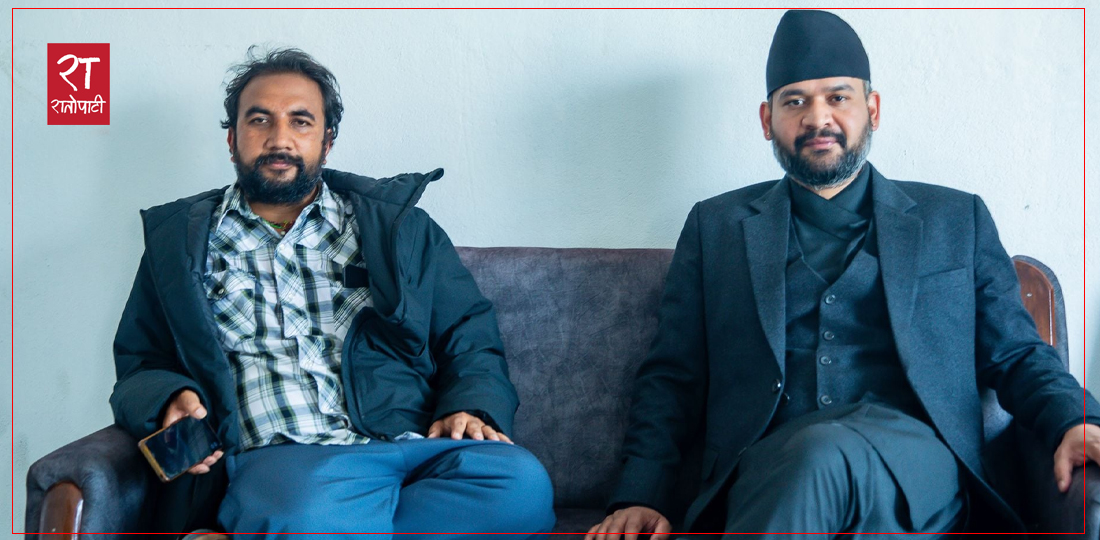
That day, the house of Kumar Byanjankar, also known as Kumar Ben, in Kupandole, Jwagal, became the 'epicenter' for news sources.
Amidst the cooling weather, Kumar Ben, the strategist behind the heating politics in Kathmandu, was largely visible on the surface that day. It was the same day that many media outlets in the capital recognized Kumar's Newari-style house nestled within the core Newari settlement of Jwagal.
It was like a declaration assembly for the failure of Kumar's long-standing effort to merge the Rastriya Swatantra Party (RSP), led by Rabi Lamichhane, with Balen Shah's team. Many analyses were emerging in the political market, but Balen's 'Chanakya', Kumar, was crafting the strategic layout for the final battle with Rabi.
....
After the Gen-Z movement caused political upheaval on Bhadra 23 and 24, Kathmandu Mayor Balen Shah was established as its supreme leader.
After the movement ousted the government led by Prime Minister KP Oli, Balen Shah was the Gen-Z's first choice for the new Prime Minister. If anyone held sway over the Gen-Z movement, its decisive moments, and the institutionalization of the movement, it was Balen Shah.
As always, sitting in the background, Kumar Ben played a decisive role in determining what message to send and when from Balen's social media handles. The decision to reject the most sought-after Prime Ministerial position by the Gen-Z was taken more by Kumar than by Balen. While depriving Balen of the Prime Ministership served on a platter, Kumar had perhaps reassured Balen—you should not be Prime Minister for six months, but for five years.
The Gen-Z were satisfied after Balen's team agreed to form an interim government led by former Chief Justice of the Supreme Court, Sushila Karki. In that government, Kumar had hand-picked his followers to become ministers.
...
The government led by Sushila Karki moved forward rapidly with the singular focus of holding general elections on Falgun 21, to which Balen/Kumar had 100 percent agreement. When political forces, including KP Oli, began focusing on a strategy to make the Sushila Karki government fail by preventing the election scheduled for Falgun 21, Kumar Ben and his associates became quite active in ensuring its success.
Many things were happening in the political background to show the Gen-Z that a government according to their wishes had been formed and that political consensus had been reached at the national level. For this, former Chief Justice of the Supreme Court, Kalyan Shrestha, was brought forward as an alternative to Sushila. In fact, while Kalyan Shrestha was making final preparations to secure Western support and then New Delhi's support, Balen/Kumar stood like a rock in favor of Sushila Karki and supported the stance of ensuring the election was held on Falgun 21.
...
On Bhadra 24, led by Rastriya Swatantra Party leaders, protesters broke into Nakkhu Jail, freed party chairman Rabi Lamichhane, and demonstrated in Kathmandu in the style of a victory celebration. After attempts were made to establish Rabi as the leader of the Gen-Z movement, the Balen group immediately expressed intense dissatisfaction informally. Rabi, who felt he was riding a victory chariot while leaving jail, had reached the status of a fugitive by the time he reached home.
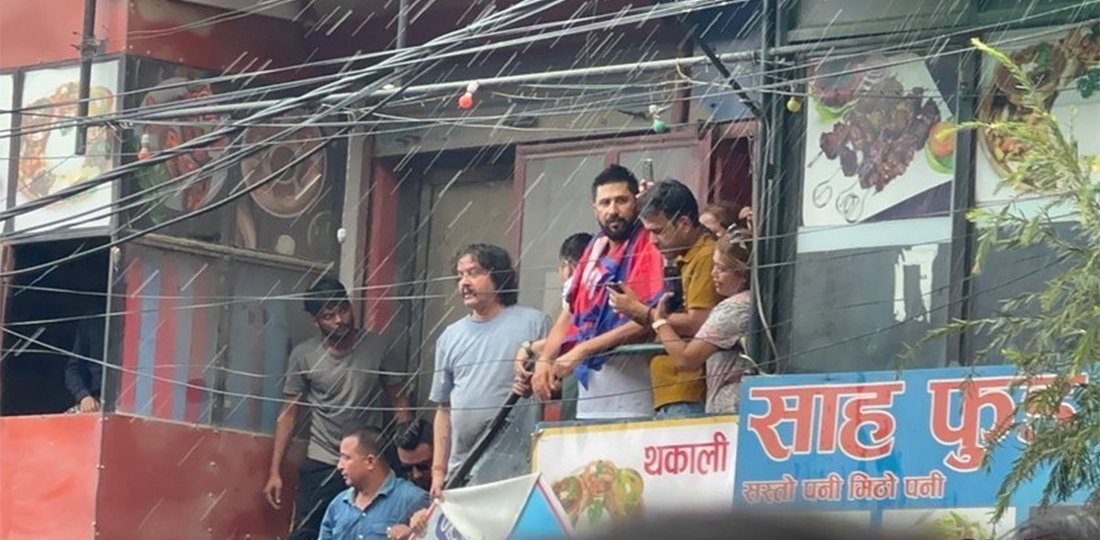
Balen's team reacted against Rabi on social media in such a way that he turned from a hero to a villain in an instant. Kumar's strategy to establish only Balen as the supreme leader of the Gen-Z movement did not let Rabi sleep peacefully on the very first night of his release from jail.
A few days later, Rabi himself carried his bag and went to surrender at the jail. The graph of RSP's popularity, which had peaked on Bhadra 23 and 24, was felt to be declining along with the narrative that Rabi had fled from jail. After Rabi returned to jail, Balen alone dominated the center of politics. The narrative that Balen is the only option now was established through social media in such a way that the public opinion, which had become focused after the Gen-Z movement, remained stable with Balen as the focal point.
...
Sushila Karki, who understood well that she would be forced to resign as a failed Prime Minister if she could not complete the election in six months, moved forward with the sole goal of holding the election on the specified date. Sushila, who spewed hatred towards old political parties, became soft even towards them. She lifted the travel ban imposed on then-Prime Minister KP Oli. She stayed away from the reactions that old parties could have by extending the term of the Gauri Bahadur Karki Commission formed to investigate the repression of the Gen-Z movement. As Mangsir ended and Poush began, she prepared an environment where everyone, from old parties to new forces, was assured that the election would be held on Falgun 21, focusing everyone on the election.
Balen/Kumar were helping the Prime Minister to conduct the election on Falgun 21, but they had not clarified how they would participate in the election. A crowd of Gen-Z activists began to gather at the Kumar residence in Jwagal. Ministers of the Sushila government, including Bablu Gupta, started going to the ministry only after reaching Kumar's house in the morning and being pressured to make a decision on how to proceed in the upcoming election. Their declared leader was Balen, but the real leader of both the Gen-Z and Balen was Kumar. As the election time began to slip away and the pressure from the Gen-Z increased, Kumar reached a point where he had to open the next political path.
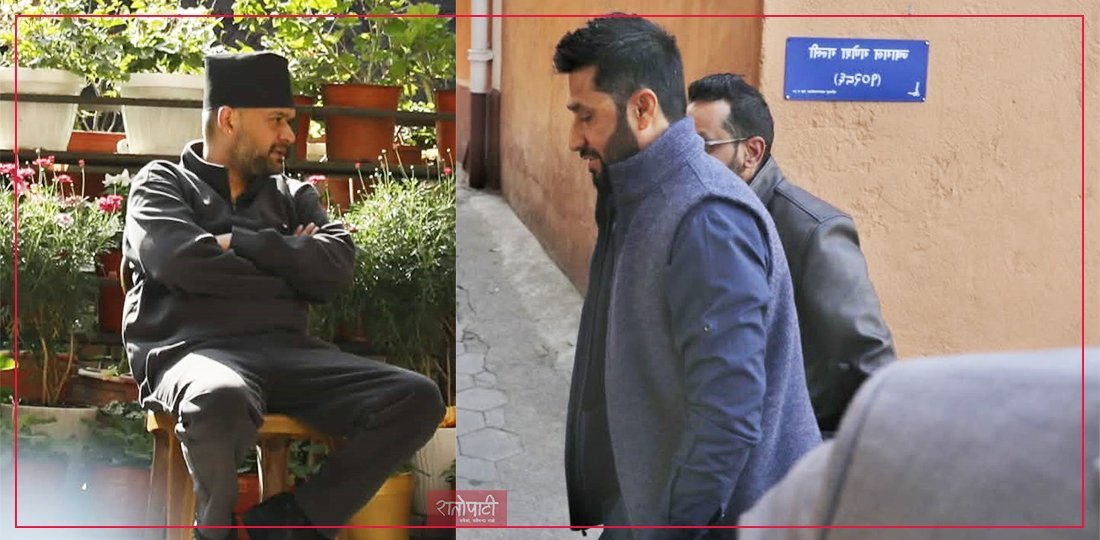
On the other hand, after the old political parties prepared a narrative that Kathmandu Mayor Balen Shah would be ultimately responsible for the Singha Durbar, Supreme Court, Parliament building, business establishments, and private buildings burned on Bhadra 24, the situation led this team towards a state where they had to be actively involved in politics and take the reins of politics themselves. Otherwise, in the event of a Congress-UML victory in the Falgun 21 election, the responsibility for the destruction of Bhadra 24 would have been placed on Balen's head.
Not only Gen-Z activists, but also community leaders fed up with the politics of Congress-UML were asking Kumar—'When will Balen's party be formed?'
Telling him that you cannot run away from politics, the country is looking for Balen, have the courage to take leadership, this group was promising Kumar to support Balen's party unconditionally.
In the meantime, Kumar put forward two strategic plans. First, to go along with the RSP.
Second, if it was impossible to join with the RSP, to form a party under Balen's leadership.
To implement this strategy, he registered a party with the Election Commission in the name of his friends—Desh Bikash Party. Keeping in mind that it might be legally late to register a party if things did not work out with the RSP, he quietly registered the party at the beginning.
Then his journey began towards Nakkhu Jail, where RSP Chairman Rabi Lamichhane was kept.
When going for talks with Rabi, Kumar had clear proposals—first, a merger between the RSP and the Balen team. Even if the Balen team did not have a party, this is like merging two parties. And, this is not like adding 1 to 1 to get 2 in mathematics, it is 11.
The second proposal was—Balen as the Prime Minister after the upcoming election. Rabi as the party chairman. Balen would not interfere in the party, and Rabi would not be allowed to interfere in the government.
Kumar is not of the nature to talk like leaders of other political parties by building backgrounds, beating around the bush, talking about philosophy, or telling stories of the world. He talks straight and sticks to it. He immediately says what he means by what he has said.
While meeting in Nakkhu Jail, he made it clear to Rabi—if the RSP and Balen team do not join, the Congress-UML government will be formed in the upcoming election, and that government will rot both Rabi and Balen in jail like this—Rabi from cooperatives to money laundering and Balen by making him responsible for the destruction of Bhadra 24.
He also placed before Rabi the roadmap that if Rabi and Balen go to the election separately, they will be weak and ultimately the Congress-UML government will be formed.
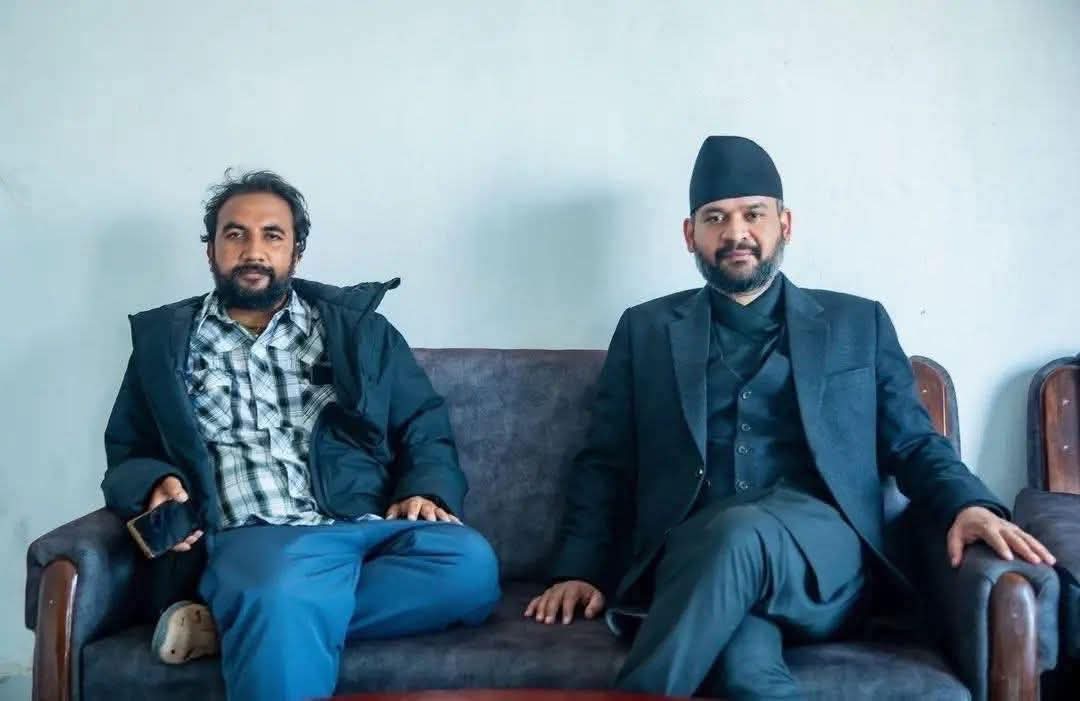
He explained that if the sentiments of the Gen-Z are to be embraced and the opportunity received is to be utilized, there is no alternative to the RSP and Balen team joining.
Kumar's proposal was not acceptable to Rabi. The issue of accepting Balen as Prime Minister after the upcoming election was even less acceptable. Rabi requested to discuss with DP Aryal and Swarnim Wagle, who were handling the party leadership while he was in jail. This was his indirect message that Kumar's proposal was unacceptable.
Kumar also took the discussion forward on this issue with DP and Swarnim. DP sounded soft on Kumar's proposal, but Swarnim was extremely negative. Swarnim had gone several steps further than Rabi and told Kumar—it is not possible to accept Balen as Prime Minister. Such a proposal cannot be discussed.
Our sources claim that in the political dialogue with Kumar, Swarnim could not even show basic political culture. He even displayed an arrogant nature to a large extent.
_1HMZxFwjmi.jpg)
Swarnim held the belief that the Balen team should not be brought into the RSP at all. He had his own strategy—to lead the party in Rabi's absence. To become the parliamentary party leader after the election and to become the Prime Minister himself if a situation arose for the government to be formed under the leadership of the RSP.
It is alleged that in the last election, Swarnim gave tickets to some people of his faction by misleading both Rabi and Balen. It is analyzed that he has about two dozen MPs in the current parliament.
It is natural for Swarnim, who entered the RSP from the Congress with political ambition, to have a strategy for himself. It is said, who does politics to become a hermit? Or the goal of every person doing politics is to become the Prime Minister. If Swarnim had seen a 'golden dream' of taking the Prime Minister's post himself while Rabi was stuck in legal trouble and the RSP was becoming popular, it is not unnatural.
Swarnim's talk with his core team that it is not possible for Rabi to become Prime Minister even if he wins the election due to legal trouble, and it is not possible for Balen to win because he went to fight the election against KP Oli in Jhapa-5, so he himself would lead the next government, had become a topic of discussion within the RSP.
Swarnim is a bit vocal—it is believed that the background for him to leave the Congress was prepared after his negative comments about Dr. Arzu Rana, who was at the center of power while in the Congress, were leaked.
After Rabi was released from jail on Poush 4, 2082, on a bail and bank guarantee of 47.5 million rupees according to the court order, along with the soft behavior of the Sushila Karki government, the political discussion between the Rabi-Balen sides moved forward. With the news that Rabi and Balen discussed all night at the Kamaladi house of RSP MP and Balen's friend Asim Shah on Poush 7 and parted only in the morning, media reports were printed with speculations that the unity between the two sides had been finalized. But in reality, it was almost certain that they could not join after the all-night discussion, and they left for their respective residences at 5 AM.
The election is approaching. Political maneuvering has reached such a state that the history of the winner is being written, while the loser is being handcuffed. Efforts made to win have gone in vain. The facility of losing knowingly is now over for Balen and his team, who are considered responsible for the destruction of Bhadra 24 by the opposition. As Poush entered its second week, a 'do or die' situation was created for the Balen team. The Election Commission has already published the schedule to submit the list of proportional candidates on Poush 14 and register candidacy for the direct side on Magh 6. Yes, amidst this time pressure, Kumar is unfolding his strategic packets one by one.
Kumar does not want to lose the election, and he does not let his agenda fall behind even a bit.
He turns his residence in Jwagal into Balen Shah's office.
Balen's meetings with people who have earned fame in politics and society in the country begin.
Kumar gives a clear message to Rabi—if you do not unite by accepting Balen as Prime Minister, then a separate party will be formed under Balen's leadership, which will wipe out the RSP itself.
At a time when the time given by the Election Commission for party registration has passed, Kumar makes it clear—their party has already been registered with the Election Commission, Desh Bikash Party.
Famous faces in the country, those with established credibility in society, those settled in business, and popular faces from art, literature, and journalism are ready to form a party by accepting Balen as Prime Minister.
Kumar gives another shock to Rabi—60 percent of the leaders in the RSP are coming towards Balen. For that, faces like Ganesh Karki, Asim Shah, and Dr. Toshima Karki have already given the message that they will come towards Balen.
Almost all the youth of the Gen-Z movement have been unified towards Balen.
The government led by Sushila Karki is also tilted towards Balen to a large extent.
Kumar had his uncle's house in Jwagal vacated and established the office of the Desh Bikash Party overnight, as if that party has now become as active as the RSP. Balen started working from that party office.
Kumar made the political scene such that the center of the new political power is revolving entirely around Balen. Rabi Lamichhane's RSP is being pushed towards a crisis. To a large extent, the reality is also the same.
Rabi seems to have melted before this strategy adopted by Kumar. On the morning of Poush 11, he arrives in Jwagal to meet Balen and Kumar.
Rabi is already prepared for unity between the two sides.
The core essence of unity is the same as what Kumar had simply told Rabi after reaching Nakkhu Jail—Party Chairman Lamichhane. Prime Minister after the election, Balen.
Balen will not interfere in the party. Rabi will not interfere in the work of the government.
He did not even bargain for any position for Balen in the party. He did not ask for any position.
Ultimately, the RSP entered the strategy drawn by Kumar. A new wave was established in politics.

Kumar also wanted to include Kulman Ghising in the party, but Kulman's ambition grew so much that it was not possible to manage him. Kulman had his eyes on the post of Prime Minister, which was unanimous for Balen.
The ambition to have a status above Rabi and Balen in the RSP sank Kulman.
...
After succeeding in this strategy of party management, Kumar brought another wave—Balen to fight against KP Oli.
The suspicion spread everywhere that the 'conspiracy' to pit the future Prime Ministerial candidate against Oli was done by Rabi, but Kumar himself clarified through social media and media that this desire was not Rabi's, but Balen's own.
Even Balen's close friends were confused about this step—what will happen to Balen if he loses the election against Oli?
His close friends and well-wishers were secretly in the heat of dissatisfaction—this is all a conspiracy against Balen.
After this issue really created confusion among his friends, Kumar shed detailed light on what the real thinking behind this was to his close friends.
We are not going to the election for the sake of the election. We are not going to the election to become Prime Minister by any means. We are going to the election to win across the country and form a single-party government. We are going to the election to show something, to truly bring change in the country. For that, Balen must fight against KP Oli. The single message that Balen is fighting against KP Oli and defeating Oli will make us win the election across the country. The atmosphere across the country will come in our favor. More importantly, if we can defeat Oli in Jhapa-5, the RSP will get a clear majority and our government will be formed. If we cannot defeat Oli in Jhapa, the RSP will not get a majority. Balen does not want to be the Prime Minister of a coalition government. Like the old parties and leaders, Balen does not have to become the Prime Minister of this country by any means. If anyone has such a thing, I do not agree with it. There is no point in becoming such a Prime Minister. If the election is lost, one should just do their work, sit. There is no need to do forced politics. Now you must have understood, right?
What Kumar said happened on Falgun 21. Balen achieved a spectacular victory in Jhapa-5. Not just a majority across the country, the RSP got nearly a two-thirds majority.
Today, Balen is the Prime Minister of the country with a thumping majority. Kumar Ben is the main advisor to the Prime Minister.

From Independent Mayor to Independent Party Prime Minister
On the day of the 2074 local election (May 14, 2017), Balen wrote on his Facebook—
I dint vote today
I was not the candidate.
I did my bachelor in Civil Engineering, I am on half way to masters of Structural Engineering.
I know how to build a Nation.
I’ll vote next time, and vote myself
I will develop my nation.
I don't rely on anyone else
At that time, who cared what Balen posted. Even when he became a candidate for the post of Mayor of Kathmandu Metropolitan City in the 2078 local election, Balen was not considered a competitor in the metropolis where the CPN-UML and Nepali Congress had dominance. As the local election approached, while opinion polls were showing Balen as the main competitor, and ultimately after winning the election for the post of Mayor by getting more than 23,000 votes more than the competitor, only then did the search begin, who is Balen's strategist?
The Facebook post above, which gives the message that I am the Mayor of Kathmandu after five years, shows that Balen had a serious political plan. And it is equally well-known that he believes more in independent politics. From this, it can also be understood that he had made a subtle plan about his independent political journey in the meantime.
Lalitpur Metropolitan City Ward Number 10 has made such a history, where a ward chairman had won the election as an independent candidate 10 times. He was—Narsingh Byanjankar, a resident of Kupandole, Jwagal.
Four months before the 2078 local election, Balen had reached his residence to meet Narsingh Byanjankar.
In a conversation with the BBC, Byanjankar said—'I don't have a long acquaintance with him. He came to me about four months ago with the enthusiasm to fight the election. I sent him after saying that before doing politics, one must understand Kathmandu.' (BBC 27 May 2022)
Balen considers Narsingh Byanjankar his political guru.
It seems that at that time, before announcing his candidacy for Mayor of Kathmandu, Balen went to seek blessings from Narsingh Byanjankar.
Rather, it seems that Balen had already had a long association with Narsingh's son Kumar Ben in the background, who was actually Balen's political strategist. He was an architect who understood the strength of social media and was confident that his father's independent politics could be spread not only in the ward but in a metropolis like Kathmandu.
Kumar works by staying behind the curtain. He is not even seen on the public stage. He adopts a simple lifestyle. He travels on foot in casual dress-up. He stays away from the media. And, he also does not like to interact with the media.
Before Balen's journey to the Prime Ministership was determined, there were very few people who knew Kumar publicly. Even now, they are relatively few.
For this story, we had requested time with the curiosity to know from him—how did his journey with Balen begin? How did they get to know each other? Why did he not come forward himself and put Balen forward? How did he play a role in making Balen a hero on social media? And much more information. But he did not want to come to the media. He did not want to share anything. This strategist brushed us off by speaking sweetly.
Therefore, we have not been able to present these intimate matters between Kumar and Balen even in such a long story.
Kumar, a student of Little Angels School Hattiban, is a pioneer who started the digital movement in Nepal. He is a bug of social media. When probably only a few people in Nepal knew about social media, he had already dreamed about its future.
Around 2011/2012, Kumar and his friends started updates by making social media pages.
Gathering friends interested in digital media and IT, they made four separate pages under Kumar's leadership.
Troll Nepal,
Meme Nepal,
Routine of Nepal Banda,
Nepali adult jokes
Kumar himself handled Troll Nepal, in which posts were made by mocking social evils and politics. Meme Nepal was run by Manoj Sapkota, Routine of Nepal Banda by Victor Poudel, and Nepali Adult Jokes by Sanjiv. Nepali Adult Jokes is now run as Naaj entertainment.
Through Troll Nepal, Kumar mocked contemporary Congress-UML leaders a lot. As this page became popular against evils, inconsistencies, and wrong political decisions, the Congress-UML started feeling threatened. Many times, the page, which had reached thousands and thousands of followers, had to be shut down. There was no law regarding social media. There was no awareness either. It was a situation where this was considered directly illegal activity. To avoid arrest and months of detention, Kumar and his friends had shut down Troll Nepal many times.

'Routine of Nepal Banda', started in Victor's name to record Nepal Banda when it was a common thing, is now established as a leading page of Nepali media. All four pages are equally active now. And, from making Balen the Mayor of Kathmandu, providing information on the Gen-Z movement, to making Balen the Prime Minister of the country, these pages have been working from the roots. Among these, the most effective role is of 'Routine of Nepal Banda'. Whether it was yesterday when Balen became Mayor or now as Prime Minister, the main people found in his office are the owners of these pages. Now Kumar is Balen's main advisor, while Vivek Mishra of 'Routine of Nepal Banda' is the IT advisor. Victor Poudel is Balen's eternal advisor/friend.
Currently, Kumar is at the center of new media developed in Nepal. Whether it is a matter of effective use of Facebook, X, YouTube, TikTok, or networks like MRR (network of boys), WRR (network of girls), Dahri Gang, which have thousands and thousands of members internally. Everyone connected to this network is a youth, who today relies not on traditional media, but on new media. The youth run their own media in their own way, but the common pilgrimage site where they come to seek blessings is Jwagal.
Kumar is considered to be in the role of the 'Godfather' of social media.
Have you noticed? Balen does not give importance to mainstream media. He knows that his core supporters are in new media and he has almost a monopoly on it, who consider Kumar their guru.
When Balen became Mayor, the opposition often made an accusation—he sits by closing the door with two/four friends. It is also true that he prefers to sit with his friends in his own office rather than being active in public activities except for special work and purpose. Among those friends, the main ones are Kumar Ben, Sunil Lamsal, Victor Poudel, and Bhupdev Shah. They focused on their plans. They made decisions on what to do and what not to do. And, when they went out to implement—no one could stop them. Their bulldozer had to run.
The main work that this team could not complete even if they wanted to is removing the squatter settlements of Kathmandu. In which the then Prime Minister KP Oli had the main role to make it fail. Whether it is the quiet environment of the Mayor's office or the social media status issued from a restaurant at midnight, it has hardly ever been issued without Kumar's approval.
Among these friends, Kumar is the main advisor, Sunil is the Minister of Physical Planning, Victor is an informal advisor as he did not want to fight the election. Among those in the team, Bhupdev Shah has lost the election from Achham-2. But still, he is Balen's main collaborator.
Balen participated in the Cannes Film Festival on May 13, 2024, with his two main advisors, Kumar and Sunil. KP Oli, who could not find any smell of corruption in the billions of rupees budget mobilized by the Mayor, tried to make this very festival, where Balen participated with advisors, a case of misuse of government funds. By preparing a narrative that spending about 2 million on two advisors is an abuse of authority, Oli also activated the authority. In this case, Oli tried to melt Balen, Kumar, and Sunil. But Oli could not get success.
Due to not being able to join this team, former Home Minister Om Prakash Aryal had to stay away from them. While he was the legal advisor to Mayor Balen, Aryal, who had a slightly different nature, resigned expressing dissatisfaction with the working style of Balen's team. Even though he became the Home Minister as the main confidant of Sushila Karki after the Gen-Z movement, this team did not support Aryal. They had even pressured the Prime Minister to remove Aryal from the Home Minister post, but because Sushila Karki's 'sons' kept the mother's word, he was able to complete his term as the Home Minister of the election government. While leaving the post of Prime Minister, Sushila Karki recommended her confidant to the National Assembly. But because this team did not support, her recommendation is lying in limbo.
What kind of proof Kumar will give of himself as the main advisor tomorrow is in the womb of the future. It is no exaggeration to say that Kumar has proven to be a 'Parthasarathi' in Balen's political leap until today.
Kumar has a deep interest in football. Kumar had taken ownership of the Butwal Lumbini football team in the Nepal Super League.
Kumar is also a close friend of the cinema industry. He is the one who started the chapter of digital marketing of cinema. And, he is also a cinema producer. As the heat of the election was increasing, the cinema produced by Kumar was being screened in halls—Jharipachiko Indreni, which Rabi-Balen had also reached the hall to watch. This cinema made on the story against corruption did not do well, but in Kumar's political journey, a seven-colored rainbow is shining after the rain.
This specific news has been automatically translated by AI. As a result, there may be some inaccuracies or language errors.