Colombia approves plan to cull invasive hippos

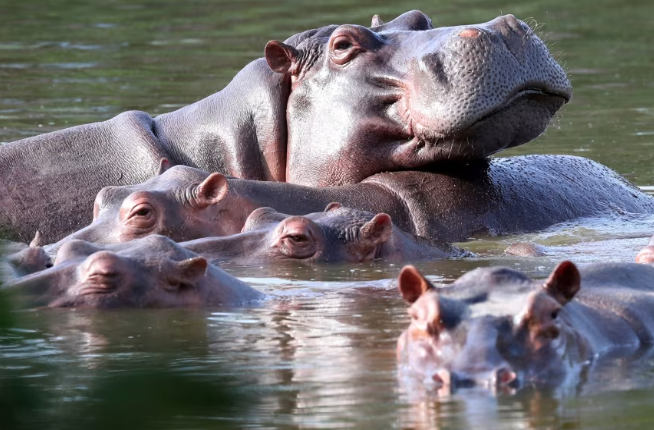
Bogota. Colombia has approved a plan to control the hippos that have spread uncontrollably across the country. Under the new plan, approximately 80 hippos are set to be culled, though no specific timeline has been established for the operation.
These hippos were originally brought to the country by notorious drug lord Pablo Escobar in the 1980s. According to Environment Minister Irene Velez, the new plan was introduced after previous methods, such as sterilization or relocation to zoos, proved to be expensive and ineffective.
Minister Irene Velez stated, “If we do not take this step, the hippo population cannot be controlled. This is necessary to protect our ecosystem.”
Colombia is the only country outside of Africa where wild hippos are found. These animals are descendants of four hippos that were kept on a massive farm called Hacienda Napoles, located near the Magdalena River region.
According to a study, by 2022, approximately 170 hippos had spread across Colombia. In recent years, they have begun to roam more than 100 kilometers away. Local authorities report that the hippos are posing a threat to the safety of villagers and are competing with native species for food and habitat.
On the other hand, these hippos have also become a tourist attraction. Tours to see the hippos and the sale of hippo-related merchandise are common in the villages around Hacienda Napoles. The area is currently under government control and operates as a theme park.
The plan has faced strong opposition from animal rights activists. Animal rights activist and lawmaker Andrea Padilla has criticized the decision, calling it cruel.
She wrote, “Killing is not a solution; these animals are victims of government negligence.” Over the past 12 years, three governments have made various attempts to control the hippos, but due to high costs and risks, those efforts have had limited success.
Additionally, plans to return them to Africa have been deemed impractical due to limited genetic diversity and the potential for disease.
This specific news has been automatically translated by AI. As a result, there may be some inaccuracies or language errors.