Lokendra Bahadur Chand: The Last Prime Minister of the Panchayat Era Reflects on Nepal's Political History

Kathmandu. On the morning of Chaitra 24, 2046 BS, a royal proclamation by the then King Birendra was broadcast on Radio Nepal. As the People's Movement for the restoration of democracy reached its peak, he called for the dissolution of the Council of Ministers led by the then Prime Minister Marich Man Singh and the formation of a new cabinet under the chairmanship of Lokendra Bahadur Chand.
In the royal proclamation, the then King Birendra stated, '...Understanding the tradition of public consensus, the current Council of Ministers failed to maintain peace and security in the country, leading to significant loss of life and property. Therefore, in accordance with the Constitution of Nepal, we have dissolved the current Council of Ministers. In the context of this special situation arising in the country, according to Article 81, Sub-section 1 of the Constitution of Nepal, we hereby command through this royal proclamation that the Honorable Lokendra Bahadur Chand be called upon to form a Council of Ministers...'
Seeing that the Panchayat system could not be saved by any means, Birendra had called a meeting of former Prime Ministers and high-ranking officials at the Mangal Sadan of Narayanhiti Royal Palace the previous night. Participants included former Prime Ministers Surya Bahadur Thapa, Kirti Nidhi Bista, Nagendra Prasad Rijal, Lokendra Bahadur Chand, former ministers Bishwa Bandhu Thapa, Rajeshwar Devkota, Ram Hari Sharma, Vedananda Jha, and Chairman of the Rastriya Panchayat Navaraj Subedi.
_M1oQyREdUS.jpg)
In the meeting, Birendra proposed removing the non-party system from the Panchayat constitution and forming a cabinet under his own chairmanship. The meeting lasted until late at night as the issue of forming the cabinet had to be resolved.
Disagreeing with the King's proposal, Surya Bahadur Thapa and Ram Hari Sharma walked out. Former Prime Ministers Kirti Nidhi Bista and Lokendra Bahadur Chand supported the King's move. During the meeting, former Prime Minister Kirti Nidhi Bista and Rastriya Panchayat Chairman Navaraj Subedi suggested that a cabinet should not be formed under the King's chairmanship.
After discussing many options, it was finally decided to make former Prime Minister Chand the Prime Minister and hold talks with the supporters of the multi-party system. Following this decision, the King's address was broadcast on Radio Nepal and Nepal Television the next morning.
On Chaitra 24, a four-member cabinet was formed under the chairmanship of Chand. Chand became Prime Minister, Minister for Royal Palace Affairs, and Defense; Nain Bahadur Swanr became Minister of Home and Law; Pashupati Shumsher Rana became Minister of Finance, Water Resources, and Foreign Affairs; and Achyut Raj Regmi became Minister of Education.
That Council of Ministers was given the authority to hold talks with leaders of various political ideologies involved in the movement and to form a Constitution Reform Commission to reform the constitution according to the people's wishes.
During Chand's lifetime, not only the Panchayat system where he started his politics, but the monarchy itself ended.
Chand, the last Prime Minister of the Panchayat system who witnessed all these events, managed to become Prime Minister twice even after the restoration of the multi-party system. Now 88 years old, he currently resides at the residence of his second son, Arun, in Lokanthali, Bhaktapur.
He is the only surviving Prime Minister from the Panchayat era. Born on Falgun 3, 1996 BS in Kurkutia village of the remote Baitadi district in Far-Western Nepal, Chand had the fortune of becoming Prime Minister four times. Suffering from weak eyesight and neurological issues, Chand spoke to Ratopati on Monday about his entry into politics, the end of the Panchayat system, the 2062/063 movement, and the Gen-Z uprising in Bhadra.
Chand shared his experiences with Ratopati regarding the end of the Panchayat system, the 2046 movement led by the supreme commander of the United People's Movement, Ganesh Man Singh, the interim government formed in 2047 under the leadership of Nepali Congress leader Krishna Prasad Bhattarai, and the active rule of King Gyanendra after the massacre of King Birendra's family in 2058.
On Poush 26, 2046 BS, the royal family went to Pokhara during a tour of the then Western Development Region. Meanwhile, in Kathmandu, on the occasion of Democracy Day, the Congress and the United Left Front started a nationwide People's Movement from Falgun 7. As the movement intensified, the royal family returned to Kathmandu on Chaitra 10.
At that time, the government's Foreign Minister Shailendra Kumar Upadhyaya resigned from his post. Following Upadhyaya's resignation, Prime Minister Marich Man Singh Shrestha went to the Royal Palace to discuss a cabinet reshuffle. King Birendra, Prime Minister Shrestha, and Chairman of the Panchayat Policy and Investigation Committee Navaraj Subedi participated in the discussion.
With the cabinet reshuffle, the street movement intensified further. The government imposed a curfew in Kathmandu and other places. Instead of calming down, the movement became even more aggressive.
At that time, the King wanted to dissolve the Council of Ministers and form a cabinet under his own chairmanship. Due to government repression in areas like Kathmandu, Lalitpur, and Bhaktapur, the street movement became increasingly aggressive. Because of the harsh repression of the movement, Prime Minister Shrestha and Rastriya Panchayat Chairman Subedi were unpopular.
The movement began to focus on the Royal Palace. However, Prime Minister Shrestha, convincing the King that the movement was weakening, reshuffled the 26-member cabinet on Chaitra 19, including 11 ministers, 7 state ministers, and 7 assistant ministers. Shailendra Nath Upadhyaya, Dr. Prakash Chandra Lohani, Badri Prasad Mandal, and Lila Raj Bista did not participate in that cabinet.
With the cabinet reshuffle, the street movement intensified further. The government imposed a curfew in Kathmandu and other places. Instead of calming down, the movement became even more aggressive. There was a lot of loss of life and property. However, no exact statistics on how many people were martyred in that movement have been made public to date.
As the movement intensified, Birendra held discussions with the then Army Chief Sachit Shumsher Rana, Chairman of the Panchayat Policy and Investigation Commission Navaraj Subedi, and others. Concluding that the Panchayat could not be saved, Subedi suggested dissolving the Shrestha-led cabinet and appointing a person with a clean image as Prime Minister to save the monarchy.
_xSVXrYhn4m.jpg)
On the night of Chaitra 23, Birendra held high-level discussions at the palace to decide whether to dissolve the government and form a cabinet under his own chairmanship or to form a government under the leadership of another trusted person and hold talks with the leaders of the agitating parties. Former Prime Minister Chand says he was called to the discussion to remove the word 'non-party' from the Panchayat constitution and form a cabinet under the King's chairmanship.
Chand recalls suggesting that a cabinet should not be formed under the King's chairmanship. He says he gave that advice because if a government formed under the King's leadership failed, there would be no other option.
'The King called me because he had a desire for change. Others were also offered the Prime Ministership. The King said, "I will form a cabinet under my own chairmanship, you have to sit in it,"' Chand said. 'Surya Bahadur-ji did not agree to sit, saying his mother was ill. Others also did not agree to sit in a cabinet under the King's chairmanship. I said I would help.'
'Later, a four-member cabinet was formed under my chairmanship. Talks began. The King granted the multi-party system,' he recalled.
He recalls that there was a discussion until late at night about who among Surya Bahadur, Kirti Nidhi, Nagendra Prasad Rijal, Rajeshwar Devkota, and Navaraj Subedi should be made Prime Minister.
Chand said that in the end, the King asked him, 'You won't sit either?' Hearing the King's words, he felt a little hurt and said, 'Yes, Your Majesty, I will sit.'
'Later, a four-member cabinet was formed under my chairmanship. Talks began. The King granted the multi-party system,' he recalled.
However, Chand asserted that Birendra did not speak about the lack of cooperation from those close to the King. Immediately after the formation of the government, Prime Minister Chand requested Dr. Devendra Raj Pandey and Padma Ratna Tuladhar to hold talks with the agitating parties.
But Ganesh Man Singh, the commander of the United Movement, said that since the royal proclamation was not according to public expectations, the movement would continue until the multi-party system was restored. Along with the movement, discussions were held with Ganesh Man and other opposition party leaders at Bir Hospital. It was decided to hold talks with the government with the sole option of declaring a multi-party system and forming an interim government.
As soon as Prime Minister Chand left Bir Hospital, opposition party leaders gathered at the place where Singh was staying to decide on making the movement more powerful.
'Their demand was that the Rastriya Panchayat should be dissolved. But I did not agree. I said, "Do whatever you want, I will not agree to this." Because this is not a matter for the Prime Minister's level. The authority to form, call, and dissolve the Rastriya Panchayat belongs to the King. After that, I said, "Call from here." I said I would not do that. There was a lot of argument about this,' said Chand.
On Chaitra 26, the then Prime Minister Chand reached Bir Hospital to meet Ganesh Man. In the meeting, Ganesh Man replied that there was no point in discussions and meetings because of the huge loss of life and property. Chand recalls telling Ganesh Man that the King was also positive about the multi-party system.
As soon as Prime Minister Chand left Bir Hospital, opposition party leaders gathered at the place where Singh was staying to decide on making the movement more powerful. During the discussion, Prime Minister Chand reached Bir Hospital again with the King's message to address the demands of the movement supporters. After receiving the King's message, Ganesh Man sent Krishna Prasad and Girija Prasad to the palace for talks.
_BBblf68Bd2.jpg)
Sahana Pradhan and Radha Krishna Mainali from the United Left Front participated in the talks. On the night of Chaitra 26, all four members of the negotiating team reached the Prime Minister's residence in Baluwatar from Bir Hospital. From Baluwatar, the members of the negotiating team, including Prime Minister Chand, went to the Royal Palace. That same night, King Birendra announced the lifting of the ban on political parties.
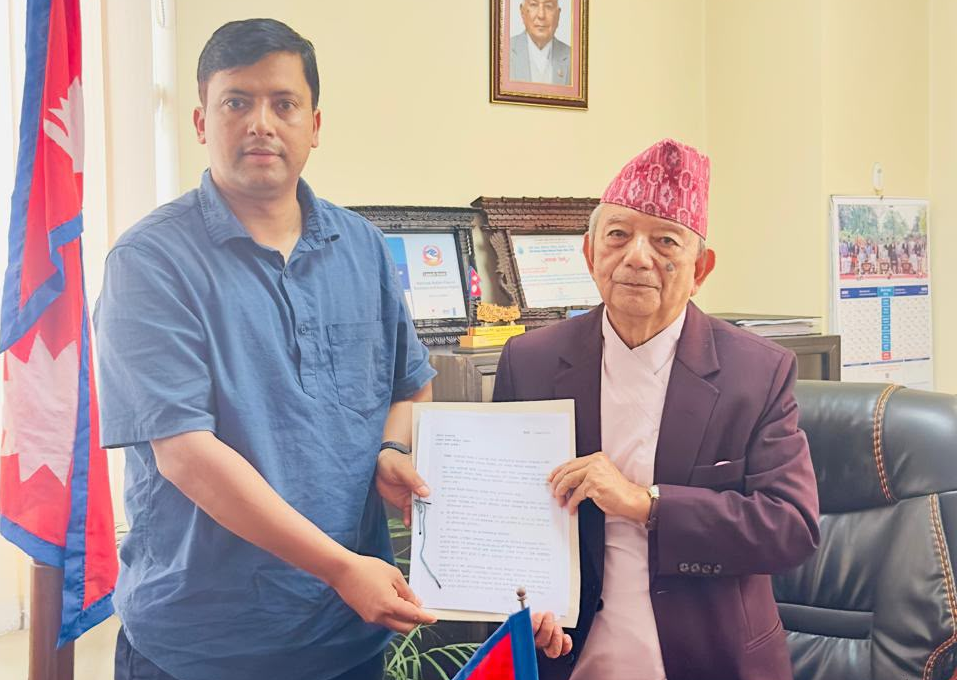
A few days after the restoration of multi-party democracy, Prime Minister Chand went to the palace to meet the King with a resignation letter. Chand says that in that meeting, Birendra brought a proposal to dissolve the Rastriya Panchayat. But he says he reminded the King that while the Panchayat constitution was still alive, one should act according to the constitution.
'When asked who to make Prime Minister, the King expressed his desire to make Ganesh Man-ji. I said that because he is ill, he probably won't sit, and the government should appoint whoever they recommend,'
'He said, "I will dissolve the Rastriya Panchayat myself." I said, "If we start acting illegally from now on, we won't get anywhere." After I said it must be according to the constitution, the King did not say anything,' said Chand. 'I showed him, "Your Majesty, this is the resignation letter," but he did not accept it. He said, "You have to stay for a few days." I said, "If it is your command, I will stay."'
Chand says that at that time, the King showed a desire to make Ganesh Man Singh the Prime Minister of the interim government. He recalls that since it was said that Singh would not become Prime Minister due to his illness, he suggested that it would be appropriate for His Majesty to appoint whoever they recommended.
'When asked who to make Prime Minister, the King expressed his desire to make Ganesh Man-ji. I said that because he is ill, he probably won't sit, and the government should appoint whoever they recommend,' said Chand.
On Baisakh 6, 2047 BS, King Birendra accepted the resignation submitted by Chand and appointed Bhattarai as Prime Minister. An 11-member cabinet was formed under Bhattarai's leadership. Towards the end of the Panchayat system, Chand was Prime Minister for 13 days. Although the Panchayat system ended, Prime Minister Chand played an important role in saving the monarchy.
- This is why the talks with the Maoists failed
After the restoration of multi-party democracy, the first general election was held in 2048 BS. The Congress won a clear majority in the election, and a government was formed under the leadership of the party's then General Secretary Girija Prasad.
The UML, which won 69 seats in parliament, remained in the role of the main opposition. The United People's Front, the parliamentary wing of the then CPN (Unity Center), won 9 seats. Claiming that the agreement with the King was a betrayal, the CPN (Maoist) declared an armed rebellion in 2052 BS.
Meanwhile, the Congress-led government became entangled in internal strife. In 2051 BS, a vote of thanks could not be approved by parliament. After 36 MPs from within the Congress failed the proposal, Prime Minister Girija Prasad dissolved parliament and announced mid-term elections. In the mid-term, the UML became the largest party by winning 88 seats. The Congress became the second party by winning 83 seats.
A minority government was formed under the chairmanship of the then UML Chairman Man Mohan Adhikari. But the main opposition party, Congress, toppled the Adhikari-led government, and on Bhadra 27, 2052 BS, a Congress-RPP coalition government was formed under the leadership of Congress leader Sher Bahadur Deuba.
On Falgun 29, 2053 BS, RPP parliamentary party leader Lokendra Bahadur Chand formed a government with the support of the UML. In 2054 BS, another RPP leader, Surya Bahadur Thapa, toppled the Chand government with the support of the Congress and formed a government under his own leadership. After the establishment of the multi-party system, frustration grew among the people as political parties remained busy with the formation and dissolution of governments due to the struggle for power. Taking advantage of this, the general election was held in 2056 BS when the rebel Maoist movement was at its peak.
In that election, the Congress won a clear majority, but it could not last the full term. On the night of Jestha 19, 2058 BS, King Birendra's family was wiped out in the palace massacre. After that, Gyanendra Shah was declared the new King. One year and four months after becoming King, on Ashoj 18, 2059 BS, Gyanendra dismissed the democratically elected Prime Minister Sher Bahadur Deuba and made Lokendra Bahadur Chand the Prime Minister. Chand was given the responsibility of holding talks with the Maoists and solving the problem. Chand asserts that he became Prime Minister at the King's insistence even though he was not willing to become Prime Minister at that time.
_rpkCPmjDXT.jpg)
'Actually, I was not very willing to become Prime Minister. He called me and commanded me to help. I said, "Alright, okay." But the main agenda at that time was to talk to the Maoists and bring them into the mainstream,' said Chand.
He said that after the government was formed under his leadership, a negotiating team of the then rebel side was formed under the leadership of Maoist leader Baburam Bhattarai, and a team including Dr. Ramesh Nath Pandey and Badri Prasad Mandal was formed from the government. 'Talks between the negotiating teams were going well, but I realized that they had started talking to other bodies separately without our knowledge. Seeing that the talks were likely to fail, I resigned.'
He hints that the neighboring country India was involved in the game of not letting the talks succeed at that time.
Chand's understanding is that even though Dr. Tulsi Giri and Kirti Nidhi Bista were made vice-chairmen in the cabinet, the accident happened because they could not fulfill their responsibilities.
Chand's understanding is that the talks did not succeed after seeing the Maoists acting according to their interests. 'India also had an interest in it. They wanted the talks to be settled with their participation. In the end, that happened. Seeing that the talks would not succeed, I resigned in Chaitra. Even though the King kept saying wait, it reached Jestha,' he recalls the event of that time. 'Later, a cabinet was formed under Surya Bahadur-ji's leadership. After that, the Maoists withdrew from the talks. They went back to the jungle. In the end, India brought all the political parties and the Maoists together and made them reach an agreement.'
Chand says that Gyanendra did not show wisdom in taking the step of Magh 19, 2061 BS. He complains that even when he suggested that forming a cabinet under his own leadership would not be good, Gyanendra did not take it seriously.
'When he asked for help, we gave the right advice. We suggested that a cabinet should not be formed under the King's chairmanship. He did not accept it,' he said. 'A person came to meet me. He said that there might be an offer for Prime Minister from the King again, be prepared. At that time, I replied that I could not do anything now. After that, he took it into his own hands.'
Chand's understanding is that even though Dr. Tulsi Giri and Kirti Nidhi Bista were made vice-chairmen in the cabinet, the accident happened because they could not fulfill their responsibilities. Citing the example of Lord Ramchandra, Chand clarified that no one can stop time and destiny.
_kvf1DF91eL.jpg)
'Didn't Lord Ramchandra know that there is no golden deer? He knew, but it was time for it to happen. That's why this happens. Many things are not in our hands. Destiny is not in our hands. No matter how much you try, what is meant to happen will happen. It's not that Gyanendra didn't understand those things. But time and destiny led him there,' he said.
When the Federal Democratic Republic was declared by the Constituent Assembly in 2065 BS, Chand had voted in favor. But reviewing the 20 years after the republic, he clarified that the monarchy is needed as a common guardian to save the country.
Saying that people were arrested in a hurry after the Balen government was formed, Chand called it 'wrong'.
Similarly, he says it is too early to talk about how the situation arose where the government fell in just 27 hours during the Gen-Z movement in Bhadra. 'The Gen-Z movement proved that the state apparatus was so weak that the government could not last even 27 hours. Previously, results would come only after the movement lasted for months. Now it's like magic. From which place did what magic happen? It will take time to figure it out. It will gradually be revealed. It is too early to say now,' he said.
But saying that people were arrested in a hurry after the Balen government was formed, Chand called it 'wrong'. He says that since the Gauri Bahadur Karki Commission gave a report only for Bhadra 23, it was not appropriate to arrest and imprison people based on that. He says that the police should have arrested them only after seeing that it was necessary after the required investigation into the incident, but instead of doing so, it now looks like the Rana regime.
_bD459wCgdP.jpg)
- Chand, who was about to become an advocate, turned to politics
Since his student days, Chand wanted to become a successful advocate. But circumstances led him into politics. Chand entered the legal profession by considering senior advocate Krishna Prasad Bhandari as his mentor. At that time, since one had to be a Panchayat member to become an advocate, he was forced to enter politics.
'I was practicing law. I felt that one should be within the Panchayat for some development in one's area. So I became a member of the District Assembly. I thought that by staying there, I would also have links with this side. Later, friends insisted that I had to be the chairman. After becoming chairman, there was no place to return. After that, I came to the zone, from the zone I came to the Rastriya Panchayat. And then I didn't have to look back, I just kept moving forward,' said Chand. Photo/Video Krishna Khadka
This specific news has been automatically translated by AI. As a result, there may be some inaccuracies or language errors.
_Vh1wedG2Zd.jpg)