Trump threatens 50% tariffs on nations supplying weapons to Iran

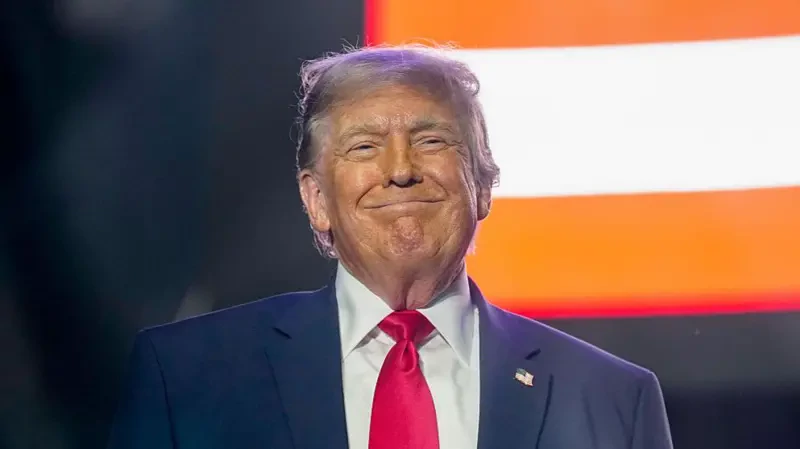
Washington D.C. | US President Donald Trump has warned of strict trade measures against countries that provide military weapons to Iran. In a social media announcement, he stated that all goods entering the US from such nations would immediately face a 50 percent tariff with no exemptions.
He made this announcement just hours after a two-week ceasefire agreement was reached with Tehran. However, he did not clarify what legal authority he would use to implement such tariffs.
Previously, the US Supreme Court in February rejected the authority to impose broad tariffs under the International Emergency Economic Powers Act (IEEPA) used by Trump. The court ruled that while the law could be used for economic sanctions, using it for trade tariffs exceeded his authority. Subsequently, a lower court had even ordered the refund of approximately $166 billion collected in tariffs.
Trump stated in his post, 'Any country that supplies military weapons to Iran will immediately face a 50 percent tariff; there will be no exemptions or exceptions.' However, experts suggest that implementing such a move is legally complex.
Rachel Ziemba, an adjunct senior fellow at the Center for a New American Security, told Al Jazeera, 'With the IEEPA effectively sidelined, there is no clear legal basis to impose such tariffs immediately. This would require either Congressional approval or the adoption of alternative trade tools.'
Although Trump did not name any specific country, there have been persistent allegations that China and Russia provide missiles, air defense systems, and other military technology to Iran. Both countries, however, have recently denied supplying weapons.
Josh Lipsky, senior director of the Atlantic Council's GeoEconomics Center, suggests this warning is primarily aimed at China. He noted that because this could impact a potential visit to China and a meeting with Chinese President Xi Jinping, it is unlikely that Trump will implement such tariffs in the near future.
This specific news has been automatically translated by AI. As a result, there may be some inaccuracies or language errors.