Nepal's Maternal Health Crisis: Constitutional Rights vs. Harsh Reality

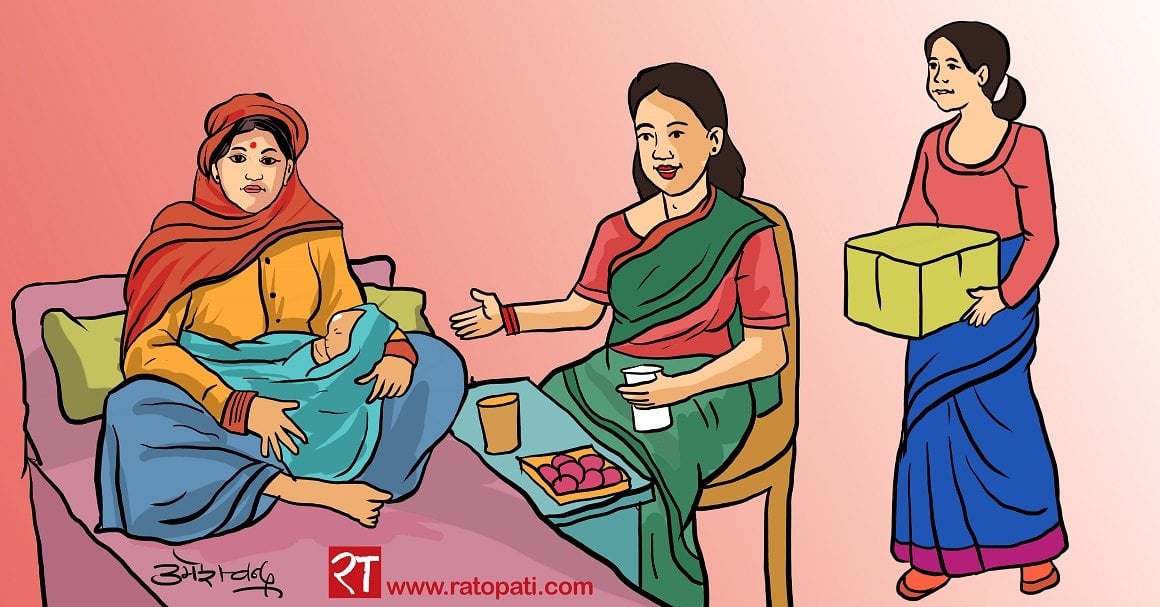
Kathmandu. Although the Constitution of Nepal guarantees safe motherhood and reproductive health as fundamental rights for women, the reality remains dire. The Women's Rehabilitation Center (WOREC) recently issued an appeal drawing the government's attention to the fact that Nepali women remain deprived of basic health services due to remote geography, weak health infrastructure, and a lack of manpower.
Due to a shortage of skilled personnel and the absence of effective emergency services, pregnant women continue to face the tragic fate of dying on the way to hospitals or giving birth on the road. National statistics highlight the severity of the safe motherhood situation.
According to the Nepal Demographic and Health Survey, the maternal mortality rate stands at 151 per 100,000 live births. Only 79 percent of deliveries occur in health institutions, and just 57 percent of women receive the recommended four antenatal check-ups. The fact that 17 percent of girls aged 15 to 19 become pregnant and the use of modern family planning methods is limited to 43 percent underscores the poor state of reproductive health.
The situation in Karnali Province is even more pathetic. Over the past 9 years, 172 women have died due to lack of access, and in districts like Jumla, Dolpa, Mugu, and Bajura, women giving birth on the road has become a common occurrence. In Bajura alone, 12 pregnant and postpartum women have died in the last four years.
In Jumla, 152 out of 184 approved doctor positions remain vacant, reflecting extreme negligence in the health system. Recent incidents, such as the one on Chait 9 in Bajura where a woman had to give birth on the way to the hospital and both mother and child died due to complications, have raised questions about the accessibility of safe motherhood services.
According to WOREC, the lack of access to health services is driven not only by remote geography but also by socio-cultural discrimination and gender-based violence. Among those who arrived at WOREC's shelter in 2025, 9 cases involved adolescent pregnancies, all of which were affected by gender-based violence. While some work has been done at the policy level regarding safe abortion and uterine prolapse, ineffective implementation continues to cause suffering for women.
In this context, WOREC has placed specific demands on the newly formed government. They have called for the expansion of quality emergency maternal health services in remote and marginalized areas, the assurance of skilled manpower and equipment in health institutions, and the implementation of effective emergency rescue services, including free airlifts for pregnant women.
Furthermore, WOREC has emphasized the need for strict legal enforcement to end child marriage, sexual violence, and gender discrimination, as well as the expansion of mental health and psychosocial counseling services down to the local level.


This specific news has been automatically translated by AI. As a result, there may be some inaccuracies or language errors.
_shBQSnE9IK.jpg)
_fkg5u05PqN.jpg)