Kathmandu's Waste Crisis: A Test of Balen Shah's Political Maturity


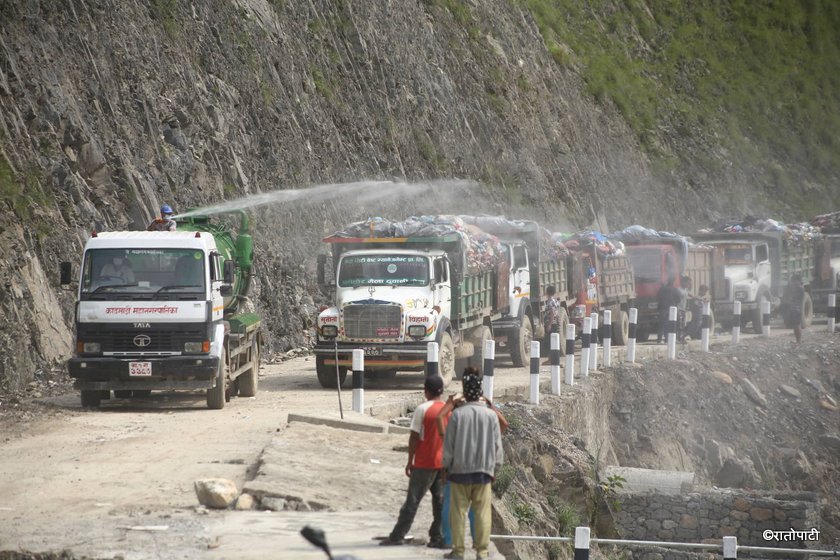
Kathmandu. Waste management in the Kathmandu Valley has become a complex political and social wound that has festered for decades, mocking every new leadership. The cycle of local protests at the Banchare Danda landfill site on the border of Dhading and Nuwakot, followed by mountains of garbage piling up on Kathmandu's streets, has become a grim reality.
This problem is not merely a lack of technical management, but a pile of persistent neglect and unfulfilled commitments by the state toward its own citizens. In 2062 BS, waste disposal began at Sisdol in Dhading, initially intended for three years; ironically, it continued for 17 years.
The massive mountain of waste at Sisdol did not just spread stench; it destroyed the local ecosystem. Now that Sisdol has reached capacity and dumping has shifted to Banchare Danda, the grievances and anger of the residents remain unresolved.
Since the operation of this new landfill site built by the Ministry of Urban Development, locals have been creating obstructions based on their demands, frequently bringing Kathmandu's sanitation system to a standstill.
Meanwhile, the Kathmandu Metropolitan City and the federal government have reached agreements with the locals repeatedly. Statistics show these agreements have reached 177, but the lack of implementation has fueled deep distrust and anger toward the state. 'We do not want agreements, we want solutions,' the voices of the locals continue to haunt both Singha Durbar and Bagh Durbar.
- Balen's 'Sin' Label and Evolving Role
With the emergence of Balendra (Balen) Shah as the Mayor of Kathmandu Metropolitan City, the issue of waste management took a new turn. Immediately after being elected, even before taking the oath, Balen visited Sisdol and Banchare Danda to observe the dire situation, offering the locals a glimmer of hope.

He labeled the suffering of people living in the stench of waste for years as a 'sin' and pledged that waste would no longer be disposed of in the traditional manner, promising scientific management.
At that time, as the head of the local government, he appeared to be fighting alone against the lack of cooperation and administrative hurdles from the federal government, but the cycle of time has changed. Now in the role of Prime Minister, Balen no longer has the excuse of 'non-cooperation.' More importantly, Sunil Lamsal, known as Balen's confidant and the chief planner of the metropolis's waste management, has now reached a position to oversee the federal Ministry of Urban Development.
As Balen, who once questioned Singha Durbar from Bagh Durbar, now reaches the highest level of policy-making and implementation at Singha Durbar, a serious question arises: will these complex problems be solved, or will they also get trapped in the vortex of the old system?
- The Incomplete 18-Point Agreement and Local Bitterness
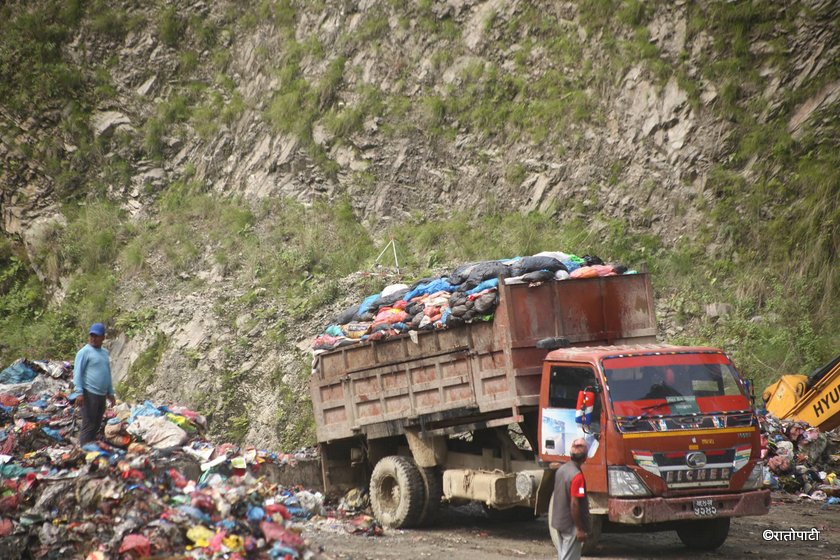
Balen Shah made waste management a matter of prestige from the early days of his tenure in the metropolis. The 18-point agreement reached between the metropolis and the locals on Jestha 26, 2079 BS, was considered a historic start, signed by Mayor Balen and Deputy Mayor Sunita Dangol. The agreement clearly stated that the stench would be removed within a month, the lethal leachate from the waste would be scientifically managed within two months, and arrangements would be made to prevent leachate from leaking from garbage trucks on the road.
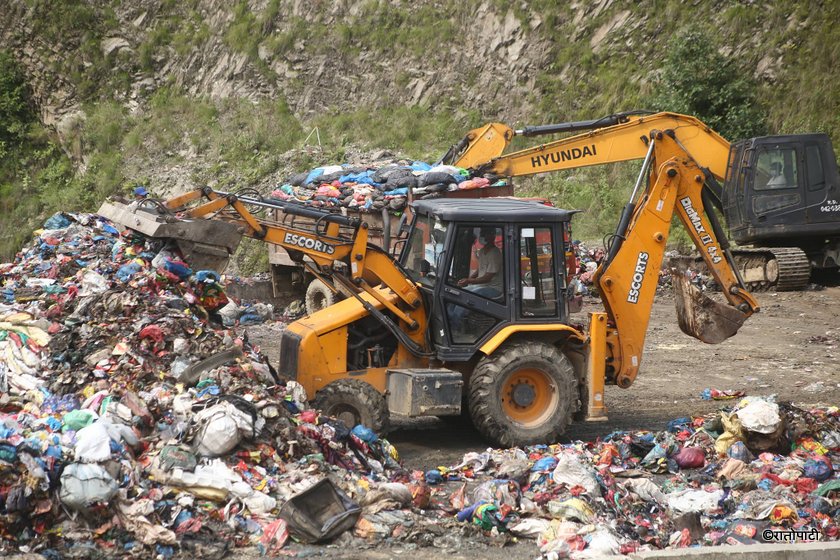
However, the experience of the residents in the affected areas of Kakani Rural Municipality and Dhunibesi Municipality remains bitter. According to local representatives, except for some minor physical improvements and road repairs, none of the points with long-term impact have been fully implemented. Neither the effective segregation of waste at the source into biodegradable and non-biodegradable categories happened, nor did the 'post-closure' of Sisdol (the process of covering the dump site with soil to create a green area) and health insurance for affected residents reach completion.
According to locals, leachate and sludge still flow on the roads during the rainy season, which has severely affected their agricultural produce and livestock farming.
- From Rebellion to the Center of Power
Balen Shah's working style was quite aggressive and rebellious in the past. He even used waste as a political weapon. When he felt that the federal government or the Ministry of Home Affairs was not cooperating with the metropolis's work (especially regarding the removal of squatter settlements or sidewalk management), Balen took the stern step of not collecting waste from Singha Durbar. He was forced to resume waste collection only after an order from the Supreme Court in Baisakh 2080 BS.
Similarly, in protest against the arrest of the metropolis's garbage truck drivers, he demonstrated his power by sending garbage trucks to the headquarters of the then-ruling party, the Maoist Center in Parisdanda, and the office of the Rastriya Swatantra Party in Banasthali.
Although many labeled this style as 'populism' and 'anarchy,' it was discussed among the general public as a new way to pressure the state apparatus. A local government head challenging the country's administrative center and political party offices by dumping waste highlighted the massive gap and lack of coordination within the system. Today, that same 'rebel' character is in the driver's seat of the system.
- Opportunity or a Mountain of Challenges?
In the current political landscape, with Balen himself leading the federal government, political analysts interpret this as a 'historic opportunity and an equally great challenge.' According to analysts, it was easy to sit at the local level yesterday and blame the center or point to a lack of resources, but if results do not come today when he and his people are at the policy level of the center, it could deal an irreparable blow to Balen's political credibility.
According to young political analyst Simanta Baral, the anger Balen showed yesterday and the shift in the power structure today have put him under immense pressure to 'deliver.' 'If the demands of the residents of Banchare Danda are not addressed now and a sustainable solution for waste is not found, the lifespan of Balen's populism could end,' said Baral.
According to him, waste management should be based on a strong legal, technical, and institutional structure rather than the whim of an individual or a social media status. The time has come for Balen to transform the rebellious image he built yesterday into administrative efficiency and diplomatic coordination.
- Expectations of the Administrative Mechanism and Bureaucracy
Metropolitan employees seem quite enthusiastic about the current power equation and departmental leadership. In the understanding of the Environment Department officials, some tasks that the metropolis could not do even if it wanted to yesterday, such as land acquisition, compensation distribution, and inter-agency coordination, required the approval and budget of the federal ministry, which always faced political delays.
But now, with Balen's main ally Sunil Lamsal in a leadership role at the Ministry of Urban Development, they believe the fear of files being stalled has ended. This issue has also been prioritized in the executive meeting of the metropolis. Ward chairmen feel that a strong bridge has been built to directly convey the problems of the metropolis to the ministry and ensure the budget.
However, working within the complex web of bureaucracy, the hassles of the Public Procurement Act, and the circle of vested interest groups that have been entrenched for years is certainly not as easy as it seems.
- How Long Will the Dam of Patience Hold?
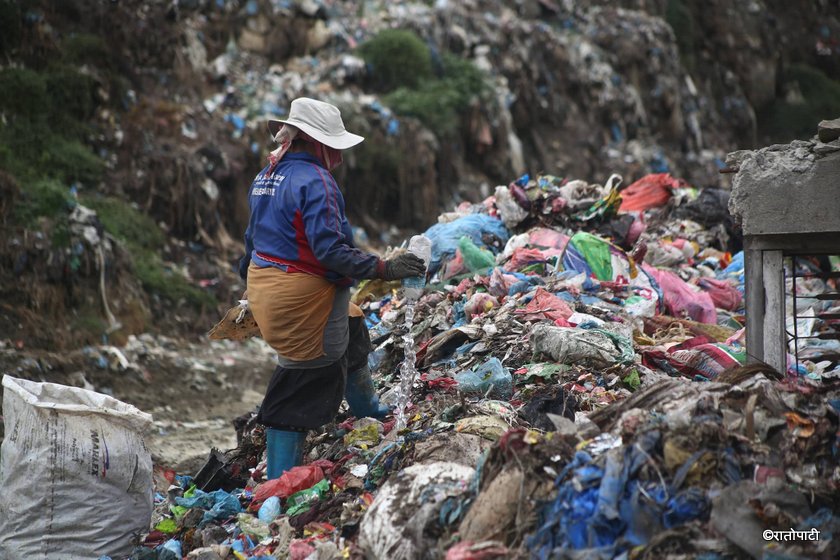
The dam of patience of the locals of Banchare Danda is now on the verge of breaking. Having endured the pain of Sisdol for 17 years, they are adamant about not letting Banchare Danda become another Sisdol. Kakani-3 Ward Chairman Ghananath Bajgain says that now, rather than development and general compensation, the protection of their homeland and the human right to live must be prioritized.
According to him, the locals have a clear stance: 'We cannot be kept in a pile of garbage forever just to keep Kathmandu clean.'
They have started to consider the 177 agreements made so far as mere 'scraps of paper.' 'The state has treated us not as citizens, but as security guards for garbage,' says Bajgain.
According to Banchare local Namraj Dhungana, if waste is not disposed of scientifically, leachate is not properly treated, and the health risks to residents in the affected areas are not mitigated, the locals will announce a decisive movement at any time.
- Not Talk, We Need Results
According to young political analyst Prasuj Mainali, who is also active in the environmental sector, this is a 'turning point' for Balen Shah where he must face the final test of his political future and competence. If he used waste as a weapon to threaten Singha Durbar yesterday, today the key to that same Singha Durbar is in his hands.
He says that unless concrete plans are implemented to make waste segregation at the source mandatory, establish processing centers within Kathmandu, and use Banchare Danda only as a 'place to dump residues,' the problem will continue to fester.
However, Sarita Rai, head of the metropolis's Environment Department, says the metropolis is working on this issue. Political analysts watching Balen's activities believe that Balen must now rise above cheap popularity and social media reactions to work as a mature politician and administrator.
Citizens of all 18 municipalities of the Kathmandu Valley and the affected areas are hoping that the rebellion Balen led from Bagh Durbar yesterday can be turned into a sustainable solution by the same Balen from Singha Durbar today.
This specific news has been automatically translated by AI. As a result, there may be some inaccuracies or language errors.