Karnali Province Administrative Restructuring Stalls Amid Political Deadlock


Surkhet. The administrative restructuring report in Karnali Province has been left in limbo before it could be fully implemented.
According to the expert study report, the Ministry of Internal Affairs and Law was merged into the Office of the Chief Minister and Council of Ministers in the first phase. No other progress has been made since then.
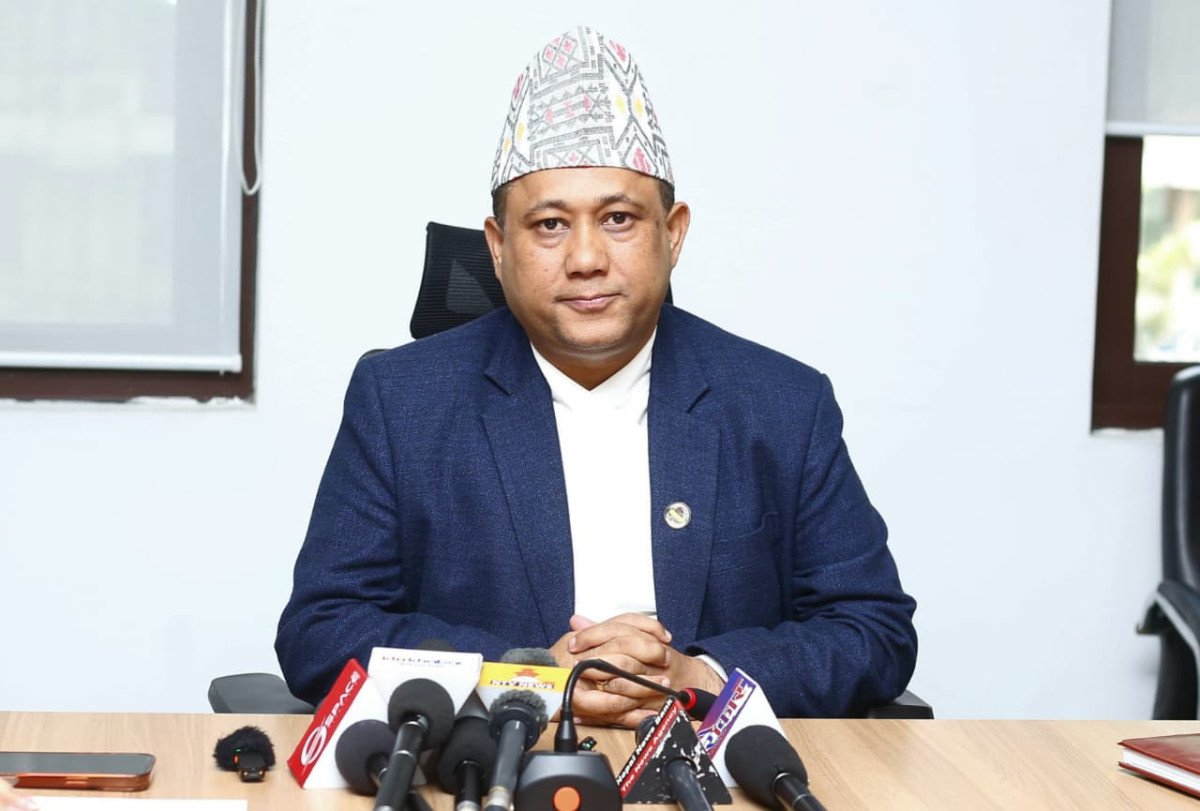
Chief Minister Yamlal Kandel formed a 'High-Level Organization and Management Survey Committee' last Baisakh, led by retired secretary Laxman Aryal, with the aim of making the province's administrative structure lean and effective. The committee included former Chief Secretary of Karnali, Dr. Gopikrishna Khanal, and Dr. Suresh Tiwari as members.
The committee submitted its report to the government on Ashar 15. Following the report's release, it faced opposition from the ruling Nepali Congress, the opposition Maoist party, and even the bureaucracy.
Consequently, Chief Minister Kandel formed an 'Implementation and Facilitation Committee' in Ashar, led by Laxman Kumar BK, Secretary of the Governance Reform Division at the Office of the Chief Minister and Council of Ministers, to conduct further studies and ensure implementation. The committee was tasked with working in phases, starting with the reduction of the Ministry of Internal Affairs and Law in the month of Mangsir.
Since then, most of the planned tasks have not only been stalled but have also faded from discussion. According to officials from various ministries, there are rumors that the high-level expert committee's report may no longer be implemented.
The expert team suggested reducing the number of ministries from 8 to 6. For the immediate term, it was recommended to abolish the Ministry of Internal Affairs and Law, transferring all its functions to the Office of the Chief Minister and Council of Ministers, and to merge the Ministry of Water Resources and Energy Development into the Ministry of Physical Infrastructure and Urban Development.
According to the coordinator of the 'Implementation and Facilitation Committee', Laxman Kumar BK, no work is currently moving forward. 'We merged the Law Ministry in the first phase. Since it was within our own office (Chief Minister's Office), it was easy to execute,' he told Ratopati. 'The subsequent tasks were planned but could not be carried out.'
According to BK, the work was essentially supposed to be an O&M (Organization and Management) survey. 'This is also a matter of political consensus,' he added, hinting that the lack of political agreement is hindering the implementation of the report.
Although the Chief Minister has expressed a commitment to implementing the report, other political parties do not appear to be cooperating, making it difficult for Chief Minister Kandel to proceed with other aspects of the restructuring.
Coordinator BK stated, 'We provide suggestions for O&M, but it is the ministries themselves that must carry it out.' He noted that there is a felt need for comprehensive discussions regarding which agencies should be restructured.
Chief Minister Kandel had been raising the issue of restructuring since he was in the opposition. Upon becoming Chief Minister, he immediately sought to advance this work.
He initially formed a study committee led by Finance Minister Rajiv Bikram Shah, but due to a lack of support from the Congress party, Minister Shah could not move the work forward.
Subsequently, Kandel formed the 'High-Level Organization and Management Survey Committee' led by retired secretary Laxman Aryal. Now, with the ruling Congress party failing to support the implementation of that committee's report, Kandel's plan appears set to fail.
The expert team suggested reducing the number of ministries from 8 to 6. For the immediate term, it was recommended to abolish the Ministry of Internal Affairs and Law, transferring all its functions to the Office of the Chief Minister and Council of Ministers, and to merge the Ministry of Water Resources and Energy Development into the Ministry of Physical Infrastructure and Urban Development.
The expert team suggested limiting the structure to 6 ministries without exceeding a total staff quota (permanent and contract) of 2525. After the ruling Congress party did not support it, the implementation committee began working in a manner different from the expert team's suggestions. The Ministry of Water Resources and Energy was not abolished; instead, the Law Ministry, which Kandel himself held, was merged.
Currently, there is a coalition government of Congress and UML. The ministry has been held by Bijaya Budha of the Nepali Congress. As a result, Chief Minister Kandel could only reduce the Law Ministry, which he himself held, while maintaining the Water Resources Ministry.
In fact, the Ministry of Water Resources and Energy did not exist at the time of the province's establishment. Former Chief Minister Mahendra Bahadur Shahi had split the Physical Infrastructure Ministry to create the Water Resources Ministry to manage power-sharing and sustain his government. Before that, there were only 7 ministries in Karnali.
After the 079 elections, when the Maoist-UML coalition was formed, it was decided to merge the Water Resources Ministry back into the Physical Infrastructure Ministry, but following the change in coalition, the Water Resources Ministry was separated from the Physical Infrastructure Ministry due to the Congress party's stance.
Currently, there is a coalition government of Congress and UML. The ministry has been held by Bijaya Budha of the Nepali Congress. As a result, Chief Minister Kandel could only reduce the Law Ministry, which he himself held, while maintaining the Water Resources Ministry.
Stakeholders say, 'Actually, the Water Resources Ministry should have been abolished rather than the Law Ministry. It is a ministry in name only; there is hardly any work there. There are only irrigation projects and embankment schemes. Those tasks can be done by the Physical Infrastructure Ministry. No work related to energy has been done.'
Sources say the main reason for keeping the Water Resources Ministry while reducing the Law Ministry is the lack of consensus within the ruling coalition. Work had begun on the second phase regarding the abolition of directorates, but four months have passed, and that work remains stalled.
Although the Congress is currently in power, sources close to the UML state that its role is similar to that of the opposition, and it is not cooperating with the work the government intends to do.
The Kandel-led government had sought to proceed with the abolition of all provincial-level directorates, including the Health Services Directorate and the Education Development Directorate. The Congress did not want to abolish the Education and Health ministries. Former Chief Minister Rajkumar Sharma had prepared to abolish the Education Development Directorate. At that time, after the Congress did not agree, it was maintained.
Although the Congress is currently in power, sources close to the UML state that its role is similar to that of the opposition, and it is not cooperating with the work the government intends to do.
The report implementation committee stated that Chief Minister Kandel would take the lead on matters of political consensus, while the implementation committee was given the authority to study technical aspects.
The Chief Minister had the authority to provide directives on what our political agenda is and how to implement it, and the implementation committee had the authority to conduct further studies accordingly. After submitting the studied subjects, it was said that the Chief Minister would present them to the Council of Ministers.
'If the ruling party had cooperated, the report would have been fully implemented long ago,' says a source close to Chief Minister Kandel, 'but there was no cooperation.'
Provincial government spokesperson Binod Kumar Shah stated that the government still intends to implement the remaining parts of the report.
'There is nothing like the remaining tasks will not be implemented or will not be done; they are to be implemented,' he told Ratopati. 'It is just about removing some remaining structures. That work has not been done for various reasons right now.'
He mentioned that there were disturbances due to reasons including elections. He added, 'For various reasons, we haven't even been able to discuss it right now. We had planned to reduce one ministry, and that was done. The rest will happen over time.'
This specific news has been automatically translated by AI. As a result, there may be some inaccuracies or language errors.