CIAA appeals to Supreme Court over Pokhara International Airport corruption case bail orders

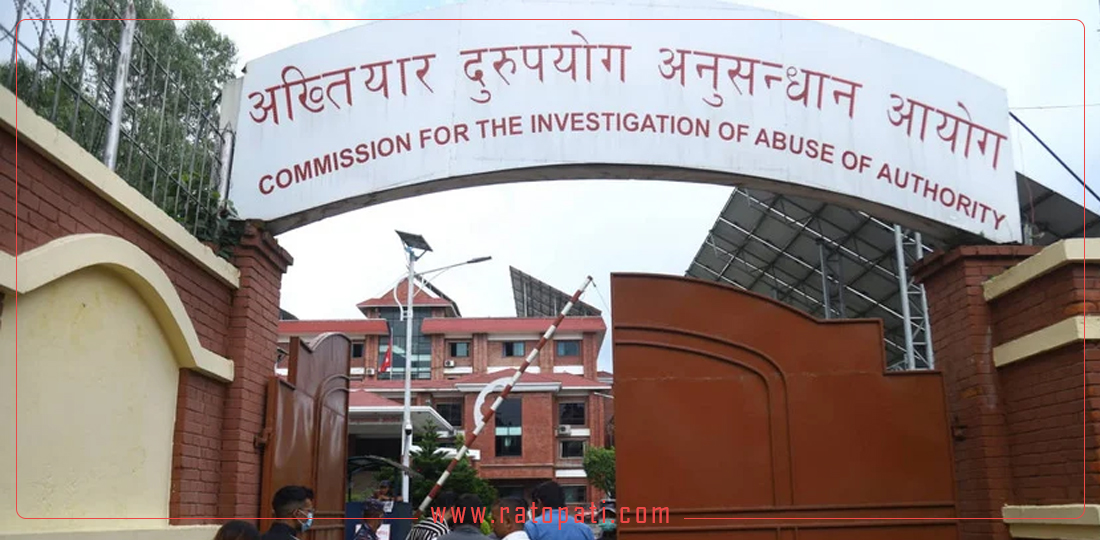
Kathmandu. The Commission for the Investigation of Abuse of Authority (CIAA) has filed a petition in the Supreme Court, expressing dissatisfaction with the Special Court's order regarding the corruption case involving the construction of the Pokhara Regional International Airport.
Dissatisfied with the Special Court's decision to release the accused on general dates and minimal bail, the CIAA approached the Supreme Court on Tuesday, demanding that the defendants be kept in custody while the case is being adjudicated.
The CIAA filed a case in the Special Court on Mangsir 21, alleging that the cost estimate for the airport construction was artificially inflated, causing a loss of approximately 8.36 billion 73 lakh rupees (74.3 million USD) to the state treasury.
The CIAA claims that in collusion between the then officials of the Civil Aviation Authority of Nepal and the construction contractors, the cost estimate was increased from 169.6 million USD to 244 million USD, and the cost was revised without any reasonable justification, causing significant financial loss to the state.
While hearing this case, the Special Court in Kathmandu ordered the release of key accused Dr. Punyaraj Shakya, Hari Bahadur Khadka, and Roshan Chitrakar on general dates. Similarly, it ordered the release of Rabin Rijal, a representative of the construction company China CMC Engineering, on a bail of 2.5 million rupees, Ratish Chandra Lal Suman on 500,000 rupees, and Bhim Prasad Acharya on 250,000 rupees.
The CIAA has argued that the Special Court's order is 'irregular' and that keeping those involved in such a massive corruption case outside could lead to the destruction of evidence or affect the administration of justice. According to the Commission's Assistant Spokesperson Ganesh Bahadur Adhikari, a petition has been registered in the Supreme Court demanding that the defendants be kept in custody for the duration of the trial, in accordance with Section 7, Clause (e) of the Special Court Act, 2059.
This specific news has been automatically translated by AI. As a result, there may be some inaccuracies or language errors.