Singer Eleena Chauhan: From Stage Stardom to Social Advocacy

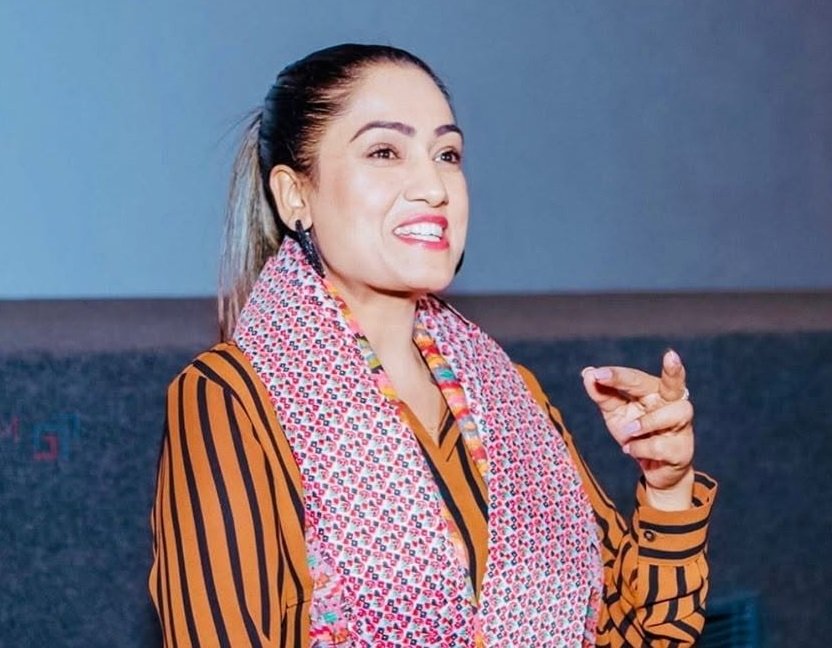
Kathmandu. Singer Eleena Chauhan is currently one of the most successful and busiest singers. Her presence has become almost mandatory at fairs and festivals held from the accessible parts of the country to the most remote corners.
Her demand is equally high abroad, not just within the country. Thousands gather to watch her performances on stage.
Having lent her voice to everything from easy-listening music to folk-pop, many of her songs like 'Dhokebaj', 'Katta Handinchhu', and 'Mineral Water' are hits. At events, however, audiences especially prefer to hear sad songs like 'Dhokebaj' and 'Katta Handinchhu'. Here are the edited excerpts of a conversation with singer Chauhan regarding her programs and music:
- Have the fairs and festivals, which were slowed down by the elections, started again?
Yes, musical programs are being organized one after another since the election results were announced. I am also busy with this musical hustle. Some programs have been halted due to the SEE exams. I managed to attend five festivals just after the election. I returned to Kathmandu on Tuesday after finishing a program in Baglung. Compared to a few years ago, festivals now happen all twelve months. It is not just in winter like before. Whether it is raining or hot, programs are always happening. It gets a bit busier in the season, but otherwise, I find about 15 programs a month happening normally.
- Did you find any change in the enthusiasm and mindset of the audience after the election compared to before when going to festivals?
I have found a huge change. Previously, the audience did not care much about the country's politics and situation. But now, everyone from small children to youth has become aware. I am surprised that our brothers and sisters now keep track of which minister is in which ministry and everything that is happening in the country.
Festivals don't really feature such songs, but when a listener says, 'I found the courage to live after listening to this song of yours,' that is when I feel happy about being in singing.
Earlier, they wouldn't remember even after teachers made them memorize for a whole month, but now they watch the news on TV themselves. This change is also seen because new and young generation people have entered politics. Now, even when I go on stage, the audience asks for songs by connecting them to political contexts.
- You mostly choose 'sad version' songs when singing on stage; is it because they match your personal life?
Many ask me this question. I sing 'Dhokebaj' because the audience demands it. But I don't sing by drowning in those words or feeling the pain. For me, it is just a performance. Even when I sing 'Dhokebaj', the audience is dancing, so I enjoy it. Talking about my personal life, I have forgotten my past as a bad dream. Now, those things do not affect me at all.
- Which of your songs are in highest demand at programs?
So far, 'Dhokebaj' is in the number one spot. This song has never left me. After that, there is equal demand for 'Katta Handinchhu'. No matter how many other songs I sing, the audience won't let me leave the stage without singing these.
- Which songs give you the most self-satisfaction when you sing them?
I feel happy singing songs that change society and touch people's hearts. I sang a song called 'Chhoriko Shirma', which was against domestic violence. Festivals don't really feature such songs, but when a listener says, 'I found the courage to live after listening to this song of yours,' that is when I feel happy about being in singing. In my opinion, it is the songs that stay in the heart, rather than just hits, that make us artists immortal.
The love of the village audience is very selfless and pure. They walk four to five hours on mountain paths to watch a one-hour performance. They cook roti on the way and wait for the artist while eating.
Thousands of people gather to hear and see you; how does it feel to see that craze?
In the beginning, I was scared too. I used to think, 'Is this only for a year or two?' But even after continuously going to fairs and festivals for the last 6-7 years, the audience's love and demand remain the same. I get calls for two to three programs a day. Seeing all this, I consider myself very lucky. This love from the audience always gives me energy.
- What are the main challenges you face while going to fairs and festivals as the heat starts now?
The biggest challenge is the travel itself. Another thing is that it is very difficult to sing in crowds during the hot season. It feels like all the energy is drained. Also, when festivals happen in 15-20 places a month, the audience might not be the same. Sometimes there is the heat of the Terai, sometimes the cold of the hills. The body might not be able to handle travel in fluctuating weather. But even then, after seeing the audience's enthusiasm, all my fatigue vanishes.
- You are performing from cities to remote villages. What difference do you find in the audience of these places?
The love of the village audience is very selfless and pure. They walk four to five hours on mountain paths to watch a one-hour performance. They cook roti on the way and wait for the artist while eating. They treat artists like gods. Their respect comes from the depths of their hearts. In the city, artists keep coming, so they don't give that much importance. But the respect and intimacy found in the village are different.
I find it easier to put my thoughts directly through my own social media rather than speaking through others.
- What things do you see that the organizers of domestic fairs and festivals need to improve?
Many things need to be improved. First of all, festivals have started happening so much that the importance of the artist is starting to decrease. Festivals are happening at a distance of one kilometer. This puts a financial burden on the audience and also annoys the artists. Another serious matter is that it is heard and seen that some organizers lure young girls with the temptation of programs or money and sexually harass them. Such activities must be strictly stopped. Festivals should not just be a means to earn money but a place to preserve art and culture.
- These days, the statuses you post on social media are much discussed. Some also view this in connection with Facebook 'monetization', right?
It has been three years since my Facebook page was monetized, but I don't write just any status for the sake of money. Actually, I barely write two statuses a month. As an artist, I feel it is my responsibility to express my views on the activities happening in the country and spread good things among my fans. I also have the right to protest against things I don't agree with and support the right things.
These days, I have also reduced giving interviews to outside media. When things said in interviews are twisted or video clips are cut to give a bad meaning, it has a negative impact on my mental health. Therefore, I find it easier to put my thoughts directly through my own social media rather than speaking through others. I believe that if someone is doing good work for the country, praising them gives them extra energy. My main desire is for the country to be better, so I don't post unnecessary things without purpose.
It is our desire that the government should arrange a certain 'retirement' plan or social security for artists.
- Your outfits are different in every program. How is that possible?
I don't have much difficulty with outfits. Because I have collaborated with four to five boutiques. Also, I am the brand ambassador of Pokhara's 'Komal Kurta Pasal'. They send me 14-15 sets of kurtas a month. This has made it easier for me and their brand is also being promoted.
- What are the expectations of artists now that people from the arts sector have reached the country's leadership and the Ministry of Home Affairs?
The condition of artists looks as glamorous from the outside as it is painful on the inside. People only see the luxurious lives of popular and 'hit' artists. But many artists have to go abroad after struggling for 10-12 years without success or because they don't see a secure future even after becoming popular. It breaks my heart to see an artist who received royal-like respect in Nepal washing dishes abroad. It is our desire that the government should arrange a certain 'retirement' plan or social security for artists.
We are ready to pay taxes; rather, the government should take a certain percentage of our earnings, but create an environment where we don't have to beg for donations in old age or when we get sick. Here, there is respect only as long as you are popular; as soon as you are not, the artist has no existence.
- What are your future plans?
I will keep bringing songs that I like through my own YouTube channel, whether those songs become hits or not. I especially want to focus on issues of women's sensitivity. No matter how much change has come to Nepal, violence against women has not stopped. I get messages from 20-25 women daily sharing their pain. Some have been raped, some have been beaten by their husbands. Those things disturb my mind. Therefore, in the future, along with singing, my main goal is to be the voice of victimized women and help them.
This specific news has been automatically translated by AI. As a result, there may be some inaccuracies or language errors.
_I0a7yjtDaq.jpg)