Bagmati Province's Residential School Program Faces Implementation and Oversight Challenges

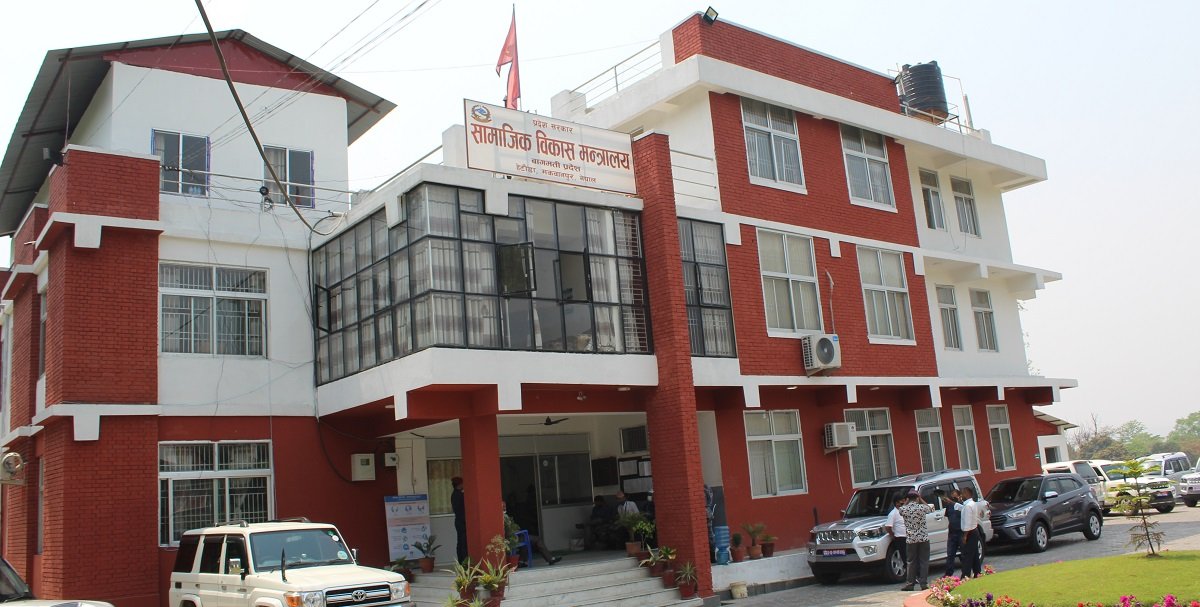
Hetauda. The Bagmati Province government has partially implemented a residential school program in five schools to improve educational quality. This program, operating in one school each in Chitwan, Dhading, Sindhuli, Dolakha, and Sindhupalchok districts, currently serves 662 students.
The 'Residential School Program,' initiated by the provincial government to provide educational access to children from endangered and highly marginalized communities, has failed to expand as intended. Since its inception, there has been no study regarding its effectiveness or outcomes. The Ministry of Social Development itself appears uninformed about the program's impact.
Point number 64 of the Bagmati Province government's policy and program for the current fiscal year 2082/083 states that the residential program in community schools will be continued to ensure access and quality education for children from endangered and highly marginalized communities, with plans to expand as needed in partnership with local levels. It also mentions collaboration with various levels of government to implement compulsory and free education.
Point number 127 of the provincial budget statement mentions continuing the currently operating residential programs in community schools in partnership with local levels. It aims to ensure quality education by increasing access to compulsory and free education for children from endangered and highly marginalized communities, including the Jirel, Surel, Thami, Chepang, Majhi, and Danuwar groups.
Although the subject is included in the provincial government's policies and budgets every year, the program has neither expanded nor has its effectiveness and achievements been measured. The government's strategy to move forward with a residential school model to improve school quality appears weak in implementation.
The ministry has no data regarding the status of the program operating in five schools in the province. Apart from the names of the schools and the number of students, the ministry does not appear to be in a position to provide any concrete data on the results of the program.
Although the provincial government has adopted a policy to 'continue and expand' the program, it is currently limited to six schools across five districts. The program is only operating in Janajagaran Secondary School in Sindhuli, Nilkantheshwari in Dolakha, Ratnarajya in Sindhupalchok, Shankhadevi in Dhading, and Rastriya Secondary School Majwad in Chitwan.
The program has not reached the highly marginalized communities across all 13 districts of Bagmati Province. Although there was a plan to add one school for the marginalized Surel community in Dolakha this year, it has not been expanded. There is no concrete progress from the ministry regarding the expansion of the program or operating the schools in a residential manner.
Neither data nor study of effectiveness
The ministry has no data regarding the status of the program operating in five schools in the province. Apart from the names of the schools and the number of students, the ministry does not appear to be in a position to provide any concrete data on the results of the program. The ministry has not yet conducted any effectiveness study on how the program improved the educational level of students or whether the budget was utilized correctly.
According to Information Officer Chandra Shrestha at the ministry, no evaluation has been received for the program, which is being implemented through the Social Development Office. He stated that only a limited number of students are receiving services through the program, and the ministry has not evaluated the results or performance of the schools.
According to Khubiram Adhikari, Secretary of the Ministry of Social Development, this program, which started in the fiscal year 2076/77, initially provided a grant of 40,000 rupees per student annually. Secretary Adhikari stated that this amount was provided for 10 months to cover accommodation, snacks, and meals for children from endangered and marginalized communities. He mentioned that this amount has now been increased to 50,000 rupees. However, he noted that the entire responsibility for budget implementation has been left to the respective schools.
He stated that the provincial government has been implementing the program based on the standards set by the federal government for residential schools in the Himalayan region. According to him, the schools themselves handle everything from student selection to budget expenditure.
He mentioned that if the budget sent by the provincial government is insufficient, the responsibility for managing it also lies with the school. According to Ministry Secretary Adhikari, a 30 percent cut in the program's budget for the current fiscal year has added to the problems.
Secretary Adhikari stated that although the program is encouraging, some problems have appeared due to the budget cut in the current fiscal year. He mentioned that the ministry is requesting additional budget from the Ministry of Finance to meet the shortfall and is trying to continue the program according to the procedures.
'We have a list of schools and students. But there has been no detailed study on their achievements and the long-term impact of the program,' he said. 'We have given special priority to children from marginalized and underprivileged communities, such as the Chepang in Dhading and Chitwan, the Danuwar in Sindhuli, the Surel, Thami, and Jirel in Dolakha, and the Sherpa in Sindhupalchok. Our school structures are also not residential, which has added challenges to the expansion of the program. The school built in Sindhupalchok has the capacity to provide residential facilities for up to 500 people.'
This specific news has been automatically translated by AI. As a result, there may be some inaccuracies or language errors.
_QgiUA4ADS9.jpg)
_zDgGjQnBk0.jpg)