The Moral Crisis: Confronting Nepal's Rape-Apologist Culture

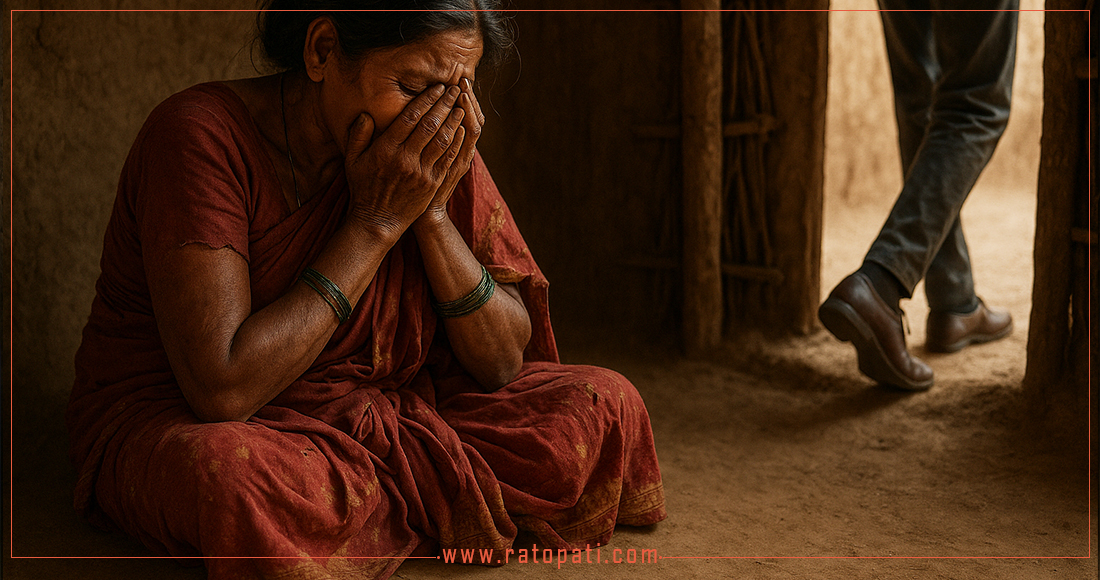
Just as every individual has their own moral crises and limitations, so too does every society. Nepali society is currently navigating a profound moral crisis. From the outside, we appear civilized, cultured, and altruistic, supporting one another in times of joy and sorrow. However, beneath this mask lies a grotesque reality that denies the existence of others through the arrogance of power, access, and masculinity.
When individuals who have maintained a 'clean image' for years—often under the guise of social service or professional success—commit heinous crimes like rape, a segment of society stands as a shield to protect them rather than demanding punishment. This article is not a report on a specific incident, but a challenge against the deep-rooted culture of rape and the social structures that fuel it.
The greatest ailment of our society is hypocrisy. When the true face of a 'reputable' person is exposed, society splits into two camps: one stands for justice, while the other attempts to validate the perpetrator's character, claiming, 'He could never do such a thing.' This latter group often harasses victims on social media, questioning why they spoke up or accusing them of seeking money, yet they lack the courage to question the perpetrator.
This tendency reveals that in our society, 'prestige' is valued over 'justice,' and that prestige is reserved solely for men. In Nepal, rape is often viewed merely as a 'sexual incident,' but it is actually a vile exercise of power. In a patriarchal society, men use rape as a weapon to subjugate women, break them mentally, and assert dominance.
Nepal's Criminal Code 2074 recognizes rape as a heinous crime and mandates strict punishment. However, the gap between having laws and achieving justice in Nepal is vast. The statute of limitations on rape cases has long prevented many victims from filing complaints. Despite recent improvements, practical complexities remain for both children and adults.
Even today, people easily claim that 'women have too many rights, which is why these incidents are increasing.' Does having rights equate to an invitation to be raped? From tea shops to social media, narratives are constructed that portray women as 'slaves' and men as 'masters.' In this echo chamber of perpetrator-friendly discourse, the victim is often treated as the culprit.
Our judicial process, which demands 'physical evidence' in crimes committed in isolation and through the use of power, inflicts further trauma on victims. Questions like 'How much did you resist?' cause as much mental harm as the crime itself. When a victim says, 'I know I won't get justice, and I no longer have the courage to fight,' it is a chilling indictment of our justice system and society's perpetrator-friendly behavior.
In a democratic state, justice must not die. It is the responsibility of the judiciary to ensure victims receive justice. Coincidentally, the responsibility of the judiciary has recently fallen upon the shoulders of a woman. All women in this country are looking toward Acting Chief Justice Sapana Malla Pradhan with hopeful eyes.
We must stop identifying criminals as 'our people' or 'powerful people.' A criminal has no caste, religion, or rank. They must be socially and legally ostracized. Instead of blaming victims for calling out perpetrators, we must say, 'What happened to you was wrong. We stand on the side of your justice.'
This specific news has been automatically translated by AI. As a result, there may be some inaccuracies or language errors.


_6FSvCrCShE.jpg)