Nepal's New Health Screening Policy for Migrant Workers Sparks Debate


Kathmandu. The foreign employment sector, considered the backbone of the economy, has been trapped in syndicates and middlemen for decades. From passport processing to manpower agencies, and labor permits to health screenings, workers have been victims of syndicates at every step.
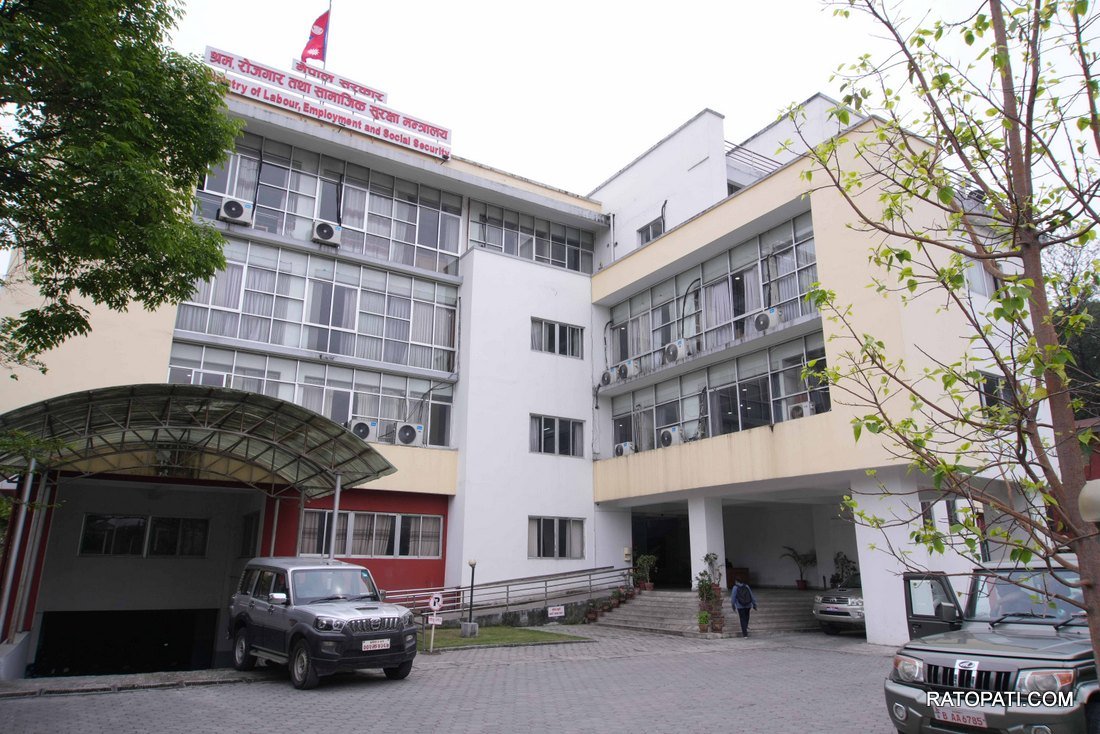
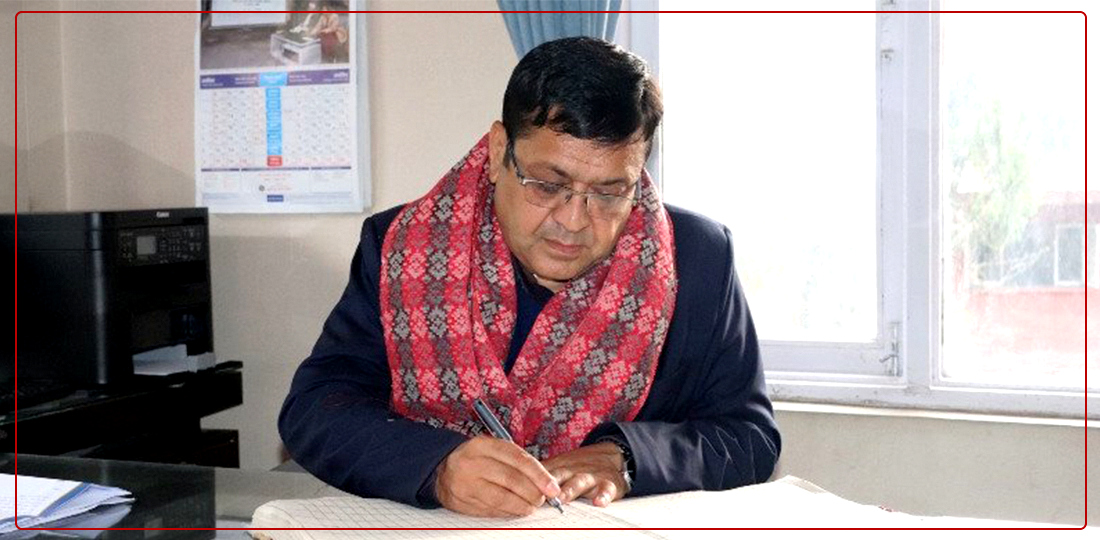
The government, led by senior Rashtriya Swatantra Party (RSP) leader Balendra Shah with a near two-thirds majority, has begun dismantling these syndicates in the labor sector. Within two days of taking office, Minister of Labor, Employment and Social Security Deepak Kumar Sah made a decision regarding this.
The decision to abolish the long-standing health screening syndicate has caused a major stir. Similar decisions in the past were often weak in implementation, leading to concerns about whether this will truly benefit workers or repeat past failures.
While expected to provide financial relief to migrant workers, questions remain whether this move will genuinely facilitate the process or add procedural burdens, given international practices and destination country requirements.
Opinions are divided; some call it a worker-friendly, revolutionary step, while experts and business owners label it impractical, shortsighted, and a move for cheap popularity.
Migrant workers will no longer be restricted to a limited number of private institutions listed by the Ministry of Labor. The new provision allows health screening reports from any government or qualified private hospital to be valid. Ministry spokesperson Pitambar Ghimire stated that the decision aligns with the spirit of the Foreign Employment Act, 2064 and its regulations.
He clarified that the move aims to implement an open, competitive, and reliable system rather than just abolishing the syndicate, allowing both government and private sectors to conduct screenings.
'The government's objective is to reduce the financial burden on migrant workers and make health screening services accessible and transparent. There is no doubt about it. No one needs to panic,' he said.
According to him, workers must undergo health screenings as per the destination country's rules and Nepal's laws, which currently mandate 32 different tests.
'Previously, only a limited number of private health institutions were permitted to conduct these tests, which was viewed as a syndicate. This decision aims to make the system more democratic and worker-centric,' said spokesperson Ghimire. 'We expect this to reduce the financial burden and make services more accessible and transparent.'
With the breaking of the syndicate that charged between 6,500 and 9,500 rupees in collusion with manpower agencies, it is expected that workers will now be able to get reliable screenings for around 3,000 rupees, potentially saving billions for the hundreds of thousands of youth leaving annually.
Business Owners' Rebuttal
Krishna Prasad Bajgain, General Secretary of the Nepal Medical Association, claimed the decision is merely a distraction. He argued that the Foreign Employment Act already allowed for screenings at government hospitals, so there is nothing new.
Bajgain argues, 'This decision was made without study or consultation with stakeholders, driven by the mentality of a new minister wanting to show quick success. It benefits no one—not the country, the people, or the businesses.'
He noted the need to implement the study report prepared by the expert team led by Dr. Dipendra Raman Singh.
Medical entrepreneur Jay Gurung called the decision a move for popularity and questioned its implementation.
He pointed out that systems like GAMCA for Saudi Arabia and Biometrics for Malaysia are based on international standards set by those countries, managed by large mafias. 'The claim of removing the syndicate is just noise. How can it be removed? It is a game played by international mafias,' he said.
Former President of the Nepal Association of Foreign Employment Agencies, Rajendra Bhandari, expressed hope that the move would reduce costs and curb exploitation, though he acknowledged the challenges in implementation.

Bhandari noted that Saudi Arabia and Malaysia have specific medical centers authorized for screenings, raising questions about how the government's move aligns with these international standards.
The State as a Complicit Party
While the law requires workers to prove they are physically and mentally fit, the system has become a source of income for limited health and manpower agencies rather than serving workers.
Previously, only about 171 health institutions listed with the Ministry of Labor had the monopoly, with separate syndicates for countries like Saudi Arabia, Malaysia, Oman, and Bahrain.
This monopoly allowed for fees ranging from 6,500 to 9,500 rupees, whereas the same tests are possible in government hospitals for 2,500 to 3,000 rupees, leading to billions being siphoned from workers.
Private medical institutions claim they only charge government-fixed fees, but they allege the government itself encourages syndicates by allowing charges up to 10,000 rupees for screenings for non-Gulf countries.
General Secretary Bajgain mentioned that for countries like Korea and Japan, fees reach 10,000 rupees, and for Australia, up to 25,000 rupees. 'The state itself is complicit in the syndicate; blaming the private sector alone is not the solution,' he said.
Crisis in Investment and Employment
There are about 200 private institutions currently conducting health screenings, with investments of 2 to 3 billion rupees per institution and 2,500 skilled personnel employed. Business owners fear this decision puts billions in private investment at risk and threatens the loss of skilled jobs.
Former President Bhandari noted that this would hurt small and medium businesses while leaving the 'big mafias' unaffected. 'This government is only causing trouble for honest business owners,' he said.
Government Decision and Legal Basis
The Ministry states that reports from any qualified government or private hospital will now be valid, aiming to implement the Foreign Employment Act, 2064 and its regulations.

Section 72(1) of the Act requires testing at government-approved institutions, and Rule 45(a) sub-rule 9 of the regulations clarifies that there is no obstacle to testing at government hospitals.
Although the law existed, pressure from influential business owners previously prevented government hospitals from participating. The current decision closes that loophole, though government hospitals must now apply for authorization.
Past government monitoring revealed organized fraud, with some institutions allegedly issuing 'fit' reports without even performing blood tests or X-rays.
Implementation Challenges
The decision is well-intentioned, but its implementation is complex. Experts warn that without technical and diplomatic preparation, it could be counterproductive.
Malaysia and Gulf countries require reports through their own online portals (e.g., Bestinet for Malaysia, Wafid for Gulf). If these governments do not recognize reports from Nepal's government hospitals, workers could face visa delays.
The biggest challenge is who will compensate the worker if a destination country rejects a government-issued report.
Spokesperson Ghimire stated that the government expects multi-dimensional benefits, allowing workers to choose convenient locations for testing.
He mentioned that the government will study the capacity and infrastructure of government hospitals. Business owners, however, argue that government hospitals are already overcrowded and lack the dedicated units or fast-track services needed to handle thousands of workers, potentially leading to missed flights or expired visas.
They also raised concerns about the infrastructure and quality of service in government hospitals, suggesting that sending healthy workers to hospitals treating patients increases infection risks.
There is no doubt that the Ministry of Labor's decision is in the interest of workers. However, it must not be limited to cheap popularity. The government needs to engage in diplomatic talks with Malaysia and Gulf countries to ensure reports from Nepal's government and newly listed hospitals are accepted in their systems.
It is essential to establish dedicated desks and state-of-the-art machinery in government hospitals to ensure workers receive fast and reliable reports.
This specific news has been automatically translated by AI. As a result, there may be some inaccuracies or language errors.

-purbadhar-bikas_KNeZmLCOTc.jpg)