
Senior Advocate Baburam Dahal on the Current Political Landscape and Legal Challenges

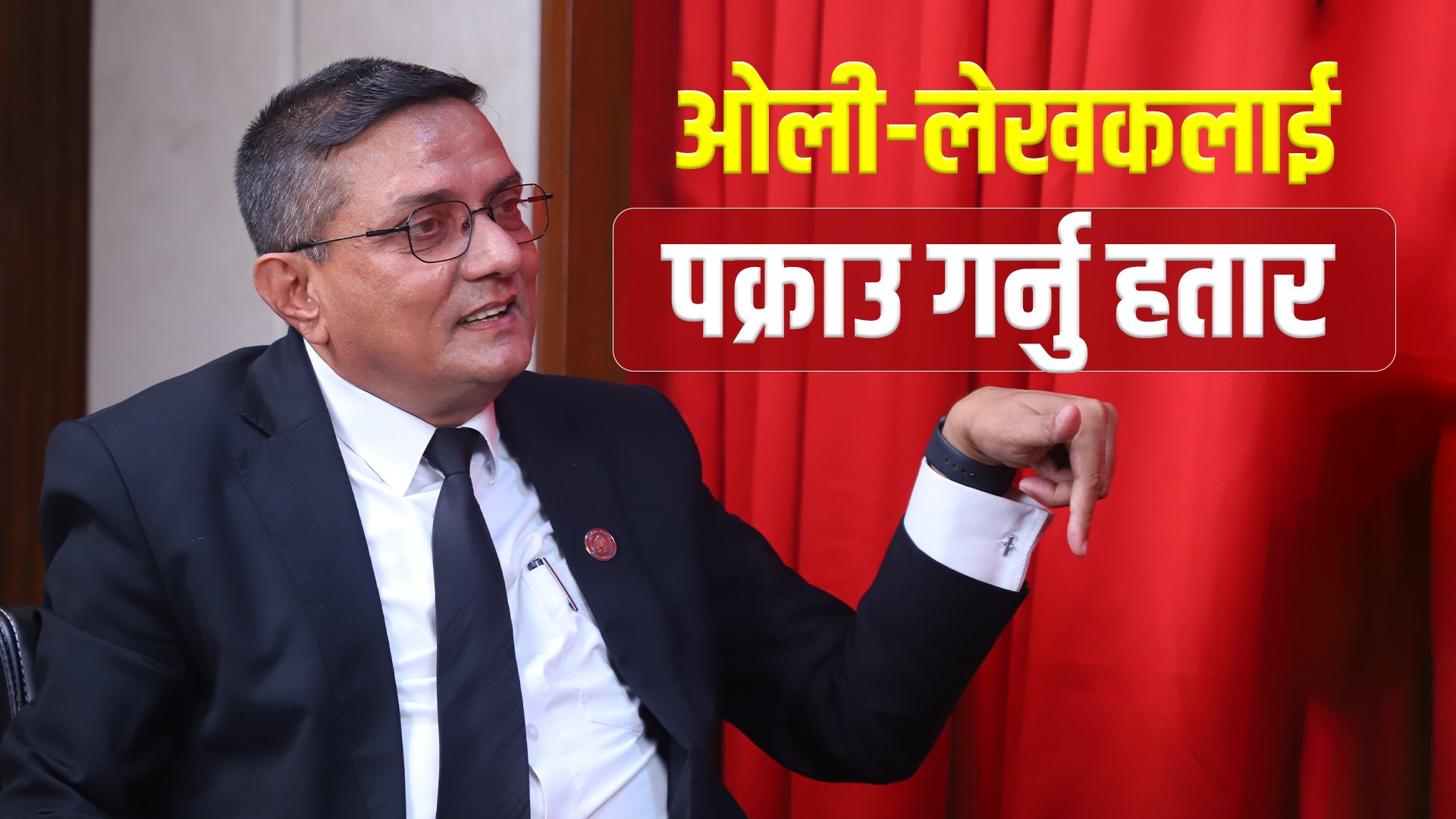
Kathmandu. With a new mandate from the elections, a new government has been formed under the leadership of Balendra Shah (Balen). The government has released a list of tasks to be completed within one hundred days. Meanwhile, former Prime Minister KP Sharma Oli and former Home Minister Ramesh Lekhak were arrested within twenty-four hours of the government taking office, on charges of suppressing the Gen-Z movement.
The pace of the government appears to be very rapid. Are all these actions within the scope of the law, or do they require constitutional amendments? Is the arrest of the former Prime Minister and former Home Minister legal? There are those who praise the arrests, but there is also a significant number of people who believe that while the mandate is one thing, the rule of law must not be violated under any circumstances.
After the court refused to release former Prime Minister Oli even through habeas corpus, a senior advocate called for a simultaneous fight for national sovereignty and democracy. He had stated, 'Do not rely too much on the judiciary at the peak of populism.' At this time, the government formed a committee under the coordination of the Prime Minister's political advisor to prepare a discussion paper on constitutional amendments, which has also begun to face criticism.
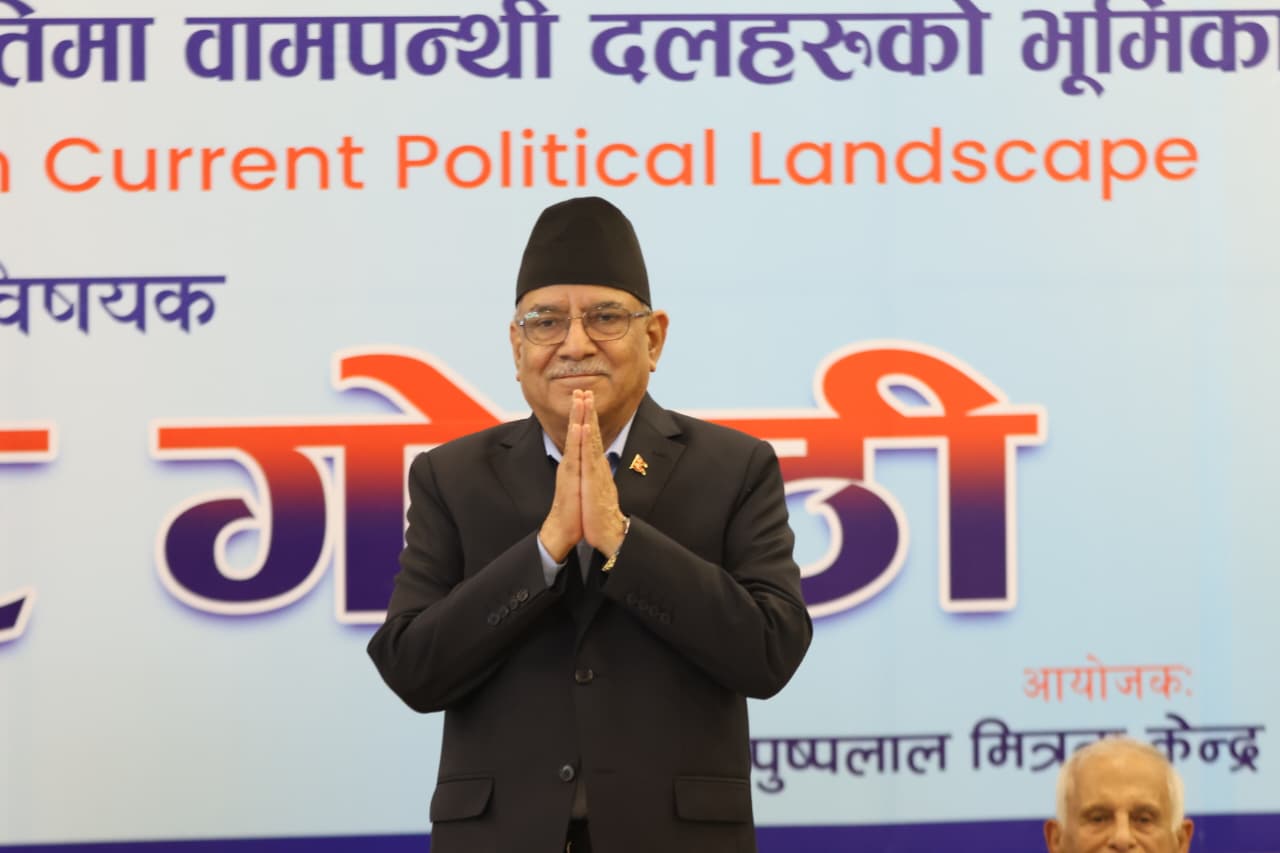
Focusing on these overall issues, a conversation was held with Senior Advocate Baburam Dahal on Ratopati's 'Warpar'. Presented here is an edited excerpt of the interview (the full version can be watched/heard in the video):
How do you evaluate the work done by the government within a week of its formation?
It has been many years since we heard that the state machinery was doing nothing, and we were not hearing anything new. In reality, those in government had not done any new work or said anything novel for the people.
Now, while saying this, some might call me a supporter of the RSP, but one must call good work good. The start they have made so far is commendable. I wish this government well and encourage them to continue in this manner.
But there are also issues of criticism, aren't there?
It seems like they are in a bit too much of a hurry. I request them not to rush too much and to work in a way that they do not have to backtrack on their actions.
Some have also raised questions about the election results. A leader from the UML even said that the ballot papers should undergo a chemical test, right?
I have also heard absurd claims about algorithms deciding the winners. All of this is false. It is not right to say such things. If the UML members had spoken kindly, done good work, and made people want to look for the UML, that would have been different. Therefore, this is the vote cast by the people. I believe questioning this is speaking against the people.
There is a lot of debate currently regarding whether the arrest of former Prime Minister KP Oli and former Home Minister Ramesh Lekhak is legal, illegal, constitutional, or unconstitutional. What is your take?
The Karki Commission report is one level above a formal complaint (Jahiri). It is not a charge sheet, but it is one step higher than a complaint. Once a complaint is filed, it is the discretionary power of the police to decide whether or not to arrest the concerned individual based on that complaint. They felt it was necessary to arrest KP Oli, so they did.
Does that mean the government did the right thing?
The party currently in government had promised during the election campaign that they would catch and take action against everyone named in the Karki Commission report. It was already becoming clear that the commission's report would likely contain such findings. In a way, one could say the public endorsed this.
Does this mean the arrest is lawful and follows due process?
They have been finished off by such a massive vote. After they have received such a significant punishment, I think it is enough. The court will complete its course. If the court finds them to be accused or guilty tomorrow, it will take action; you and I cannot do anything about that. I do not think the state machinery needs to be involved any further than this.
So, did the state machinery go a bit too far in the case of KP Oli?
I was listening to a police interview where they said they received the commission's report on Tuesday. And for the arrest order to be issued five days earlier on Friday, it is clear that the government was in a hurry.
Regarding the way the UML is protesting the arrest of its party chairman, couldn't they have limited it to legal remedies instead of taking to the streets?
One should not view the spontaneous gathering of people on the streets after the chairman's arrest as a major disaster.
I am not saying they shouldn't protest. I am asking about the style of the struggle.
KP Oli is currently in custody. But let me tell you what I see: the CPN-UML itself is in custody.
How?
If KP Oli were outside and some other party official were in custody, the party would not go into custody along with them. The party would move forward in its own way, and KP Oli would have made new decisions stating that the party has made such and such decisions. It would have been decided that the party moves forward in its own way, and whatever happens to the individual is a legal battle. There is no one within the UML with the strength to do that. The remaining 18 members are afraid of what Oli might say. They are trembling in fear.
Senior Advocate Tikaram Bhattarai has said not to rely too much on the judiciary at the peak of populism. Is the court trying to be influenced by the shadow of the executive?
The judiciary abolished the Royal Commission during the King's active rule. This is the same court that released Maoists through habeas corpus when the state had cornered them completely. We are under the protection of such a court.
My question was different.
I do not believe that the judiciary becomes weak because a populist government comes to power, nor do I believe our court is weak. I don't know why he said that. I do not agree with that. We lawyers must work to make the judiciary strong. We lawyers should not speak in a way that weakens the judiciary.
Are there no examples of the judiciary being under pressure when the executive is strong?
No one in the Supreme Court is under 55-60 years of age. No one is lacking for food or clothing. The country comes first, then the Constitution. Without caring about anything else, judges must prove themselves to be of the highest caliber.
But the integrity of our court, the process of delivering justice, and some judges themselves have been exposed before. Doesn't that raise doubts?
Legal practitioners are also at fault. Forming cliques for certain cases, taking judges to sycophancy, and acting as party cadres. Judges also have a role in this. The Acting Chief Justice has arrived today. If they start standing firmly on their own feet and delivering justice, everyone will start to feel it from tomorrow itself.
You mentioned the Acting Chief Justice. What is the possibility of him becoming the Chief Justice?
Constitutionally, the Judicial Council has recommended 6 names. The Constitutional Council will appoint one of those 6. Now, speaking practically, the person Balen-ji and Rabi-ji want will become the Chief Justice.
A senior advocate has expressed the view that such a strong government can restore the monarchy and that it would be good to do so. Is that possible?
No, it cannot. Because they did not ask for votes for the restoration of the monarchy when they were campaigning. The RSP should not go down that path. Whatever scholars you may be, I say do not misuse this scholarship too much.
The current government formed a committee under the leadership of Asim Shah-ji to prepare a base paper for constitutional amendment. But the question raised is, how can a person who doesn't even know the 'A' of the constitution, and has no knowledge about this, do this work?
I felt uncomfortable hearing that. The problem with this country is that the country has reached this state because everyone thinks, 'There is no one as knowledgeable as me, no one as wise as me, and it must be done as I say.' Now, learn to respect others. Therefore, I will not say that this is wrong.
How difficult is it to amend the constitution?
There are plenty of difficulties, but I don't see difficulties for some things. Do the good things immediately. Do not delay. Do what can be done with everyone's consensus, and keep the things without consensus for discussion.
You say it easily, but will the UML and Congress support this government?
If they don't, they will be finished. If they don't support even good work, their faces will be blackened.
Video
This specific news has been automatically translated by AI. As a result, there may be some inaccuracies or language errors.


_cvUCBlwFTZ.jpg)
_QrB2irqZF2.jpg)