Lightning Strikes Claim Over 1,000 Lives in Nepal Over 12 Years

KATHMANDU. According to the latest data released by the National Emergency Operation Center under the Ministry of Home Affairs, Nepal has suffered significant loss of life and property due to lightning strikes over the past 12 years.
According to Senior Hydrologist Rajendra Sharma of the National Disaster Risk Reduction and Management Authority, 3,386 lightning incidents were recorded across the country between Baisakh 1, 2070 BS and the end of Falgun, 2082 BS. These incidents resulted in 1,073 deaths, including 460 men, 303 women, and 312 unidentified individuals.
Lightning strikes have left 3,408 people injured, comprising 1,317 men and 1,633 women. The center reported that 4,294 families have been affected by lightning, with 104 houses completely destroyed and 390 partially damaged.
In terms of infrastructure, 114 sheds were damaged, along with the loss of 4,849 livestock. Senior Hydrologist Sharma stated that the estimated economic loss from these lightning incidents totals approximately NPR 118,218,260.
What is Lightning?
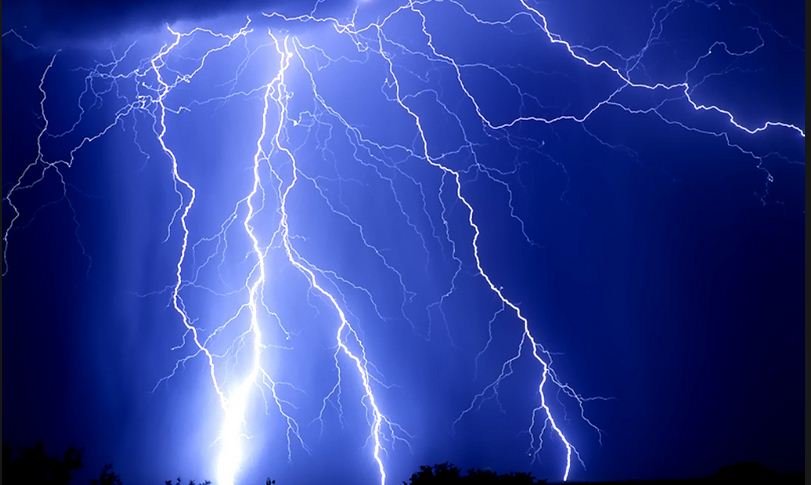
According to the handbook on disaster risk reduction and management published by the National Disaster Risk Reduction and Management Authority, lightning is a massive electrical discharge flowing from clouds to the ground. It occurs when clouds at different altitudes with opposite charges come close, causing a sudden electrical discharge that releases immense energy, resulting in loud thunder and electrical waves reaching the earth's surface. While settlements, vegetation, and geography influence the risk, it is fundamentally an accident. Lightning primarily claims the lives of farmers, laborers, and herders working in open fields. Installing lightning protection technology in tall buildings, schools, hospitals, shopping malls, and electrical and telephone lines can help reduce casualties and property damage.
Call for Preparedness and Caution to Avoid Lightning
The National Disaster Risk Reduction and Management Authority has urged everyone to adopt timely preparedness and awareness to reduce the risks posed by lightning. The authority emphasized the importance of paying close attention to early warnings and information issued by official bodies.
The handbook suggests that it is essential to have prior knowledge about safe locations and behaviors during lightning. It recommends discussing these measures within families, neighborhoods, and communities to spread awareness. It also suggests conducting lightning safety drills in schools, colleges, and at the community level.
It is advised to remove or shorten tall trees around houses and ensure high-quality earthing systems for home electrical circuits. Earthing helps safely conduct lightning currents into the ground. People are also urged to avoid unnecessary use of electrical appliances during active lightning and to avoid gathering in high-risk areas.
Precautions While Outdoors
If caught outside during a lightning storm, it is advised to immediately enter a safe building. One should not stay near trees, utility poles, or towers, should avoid using umbrellas, and should stop work and move to a safe place if working in fields. If no safe shelter is available, one should crouch down, hold their knees, and stay small; if in a group, individuals should spread out. People are warned to immediately exit rivers, ponds, or swimming areas and avoid activities like fishing or rafting. Additionally, those traveling on bicycles or motorcycles should stop, dismount, and avoid touching metal objects.
What to Do While Indoors?
Senior Hydrologist Sharma advises staying in a dry place with windows and doors closed while indoors, avoiding the use of corded telephones, and minimizing the use of mobile phones. He suggests unplugging electrical devices that are charging and turning off and unplugging equipment like televisions and computers.
This specific news has been automatically translated by AI. As a result, there may be some inaccuracies or language errors.
_cvUCBlwFTZ.jpg)
-purbadhar-bikas_OADnJGgqAk.jpg)