The Business Model Behind Populism: How Financial Interests Profit from Chaos in Western Democracies

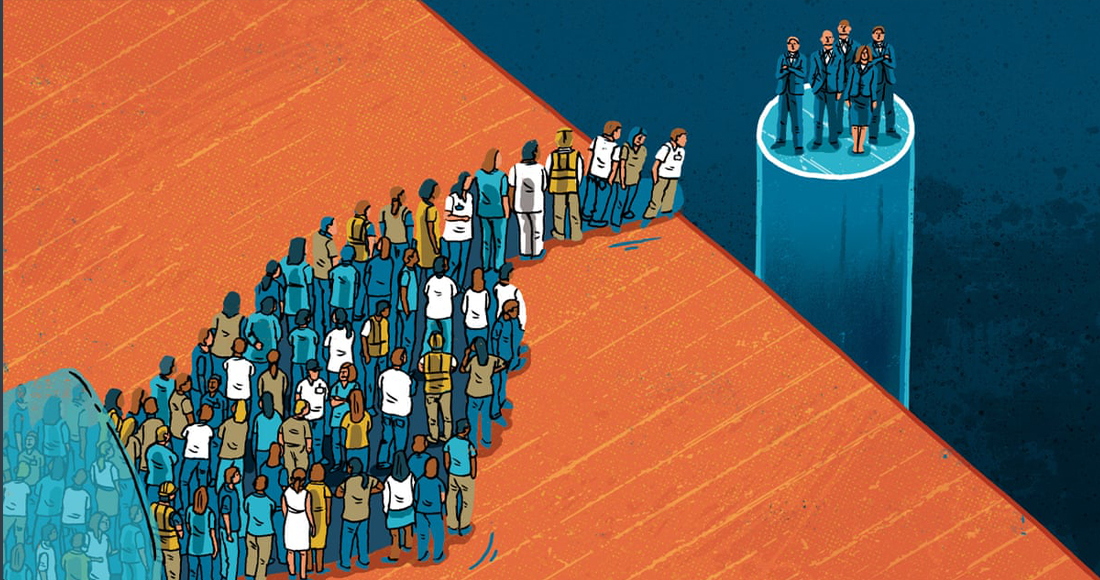
Populist parties are dominating Western democracies, yet we have overlooked the reasons behind their success. Behind them lies a sophisticated entrepreneur-business model that benefits from chaos.
We have already closely examined the 'demand side' of right-wing populism. Countless surveys detail voters who are pessimistic about the future, dissatisfied with chaotic politics, and hopeful that alternative leaders can achieve something, even if it means taking policy risks that could ruin the economy and social cohesion.
The 'supply side' of populists has been studied far less. Little attention has been paid to how the populist message is propagated, the media used for its promotion, how necessary funding is mobilized, and how the complex network or machinery of media-political groups is constructed.
For this, we must look at the network of business activities and financial transactions behind the populists in Europe. Behind European populists, we find various investment funds, financial institutions registered offshore or in tax havens, cryptocurrency traders, and political donors.
The entire structure of this coordination is not just for influencing voters and gathering votes. It also includes a plan to take advantage of the state of chaos.
Their investments or support fund the expenses of political parties, the earnings of leaders and 'think tanks,' and various international meetings and conferences. That same money also shapes the media system to be sympathetic to them.
The entire structure of this coordination is not just for influencing voters and gathering votes. It also includes a plan to take advantage of the state of chaos.
Behind all that money are wealthy individuals. They have invested in various newspapers and media outlets, 'think-tanks,' and demonstrations that promote right-wing politicians. In the case of the UK, this includes 'GB News,' which runs a television channel, and the 'Prosperity Institute,' among others.
Institutions linked to crypto trading firms that promote right-wing leaders are also involved. This is not just about cash flow; interconnected companies are equally responsible. Nigel Farage, the famous right-wing populist leader in the UK, has shares in 'Turn in the Side Ltd,' which owns GB News.
Cryptocurrency has now emerged as a new sector. Some time ago, Farage became an investor in the Bitcoin company of former Conservative Chancellor Kwasi Kwarteng.
Is it merely a coincidence that the wealthy individuals backing right-wing populists come from the world of finance? Investors accumulate wealth by betting on chaos. A segment of them is seen providing funding and placing bets on political upheaval.
This raises the question: How do they profit from populism?
When a populist leader comes to power, they immediately talk about manipulating customs duties. They talk about debt-based distribution.
To understand this, we must grasp the current structure of the financial market. In financial markets, there is a type of speculation called 'straddle,' which is an investment made during unstable conditions. Such speculation wins when prices fluctuate wildly in any direction. When populists win, they create uncertainty or confusion that benefits certain investors.
Populist governments do not crash the market themselves, but they certainly create uncertainty in the market by generating policy confusion. They create an environment of chaos by challenging existing institutions, increasing financial and trade risks, and interfering with the independence of central banks.
When a populist leader comes to power, they immediately talk about manipulating customs duties. They talk about debt-based distribution. They create confusion in existing institutions. They start pressuring the central bank. Consequently, fluctuations occur in bond yields, currency values, and the stock market.
For the magnates running 'hedge funds,' this situation becomes ideal for investment. For this reason, they consider investing in populists to be wise. They are tempted by the possibility of huge profits if the investment works out as planned.
What is strange is that populists use this same rule of chaos in elections as well. Regardless of whether they win or lose, populists need a state of chaos or disorder. Such a state helps them generate outrage. That outrage draws attention away from others and focuses it on them.
Social media algorithms widely spread the most divisive content in society because such divisive content increases social media engagement. Video clips that capture everyone's attention online are posted.
Such posts increase revenue on social networks. Every encouragement given to outrage on social media not only increases political 'followers' but also broadens the 'profile,' which can later be monetized for business deals.
This also rests on the same forces that shape global finance, including the monetization of speed, scale, opacity, and volatility.
None of these actions are illegal; all are done within the limits of the law, but it reveals something very serious. Today's populism is not just a flurry of worries and complaints; it is a major game with investors. It has its own revenue model.
This also rests on the same forces that shape global finance, including the monetization of speed, scale, opacity, and volatility.
The concern for Western democracies is not just the risk that populists might win. Rather, it is that these populists are incentivized to keep countries in a continuous state of chaos because they benefit from doing so. When instability and uncertainty become a product in themselves, peace and tranquility stand on the enemy's side. And a politics of permanent outrage begins to destroy the society's system of trust—the very systems upon which democracy stands.
Governments across the entire Western world must find ways to stop such methods of monetizing chaos. Regulating social media algorithms, as French President Emmanuel Macron suggested, might also be wise.
Similarly, there could be a ban on political donations or gifts from cryptocurrency companies and traders. We should not remain silent at such a time. We should not imitate the speculators' model; we must dismantle it. The responsibility of democracy cannot be left to the mercy of those who profit from its instability.
This specific news has been automatically translated by AI. As a result, there may be some inaccuracies or language errors.