Nepal's Economic Landscape: A Deep Dive into Key Indicators as Balen Shah Assumes Premiership
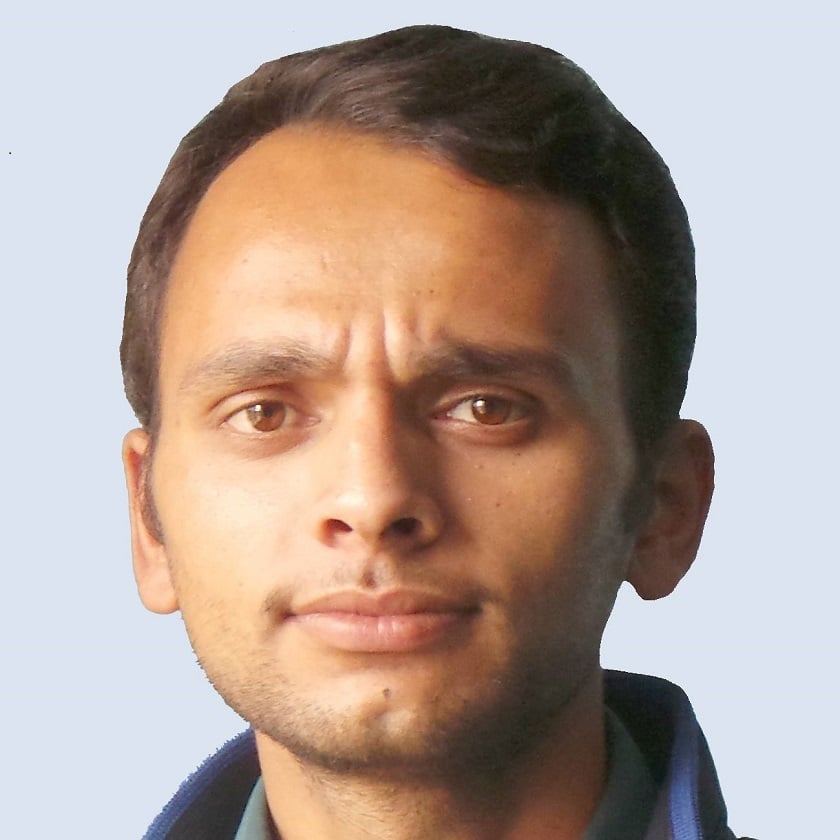

Kathmandu. Balendra Shah (Balen) has been appointed as the Prime Minister of the country. On Friday, the day after the parliamentary party leader of the Rastriya Swatantra Party, which secured a massive majority in the House of Representatives election, was selected, President Ramchandra Paudel appointed him in accordance with Article 76 (1) of the Constitution of Nepal. With this, he is expected to lead the country for the next five years.
As the leader takes charge of the nation, the primary responsibility of the leadership is to improve the lives of the people. Such improvement depends on the leader's willpower and leadership skill, but even more so on the natural, economic, social, political, and administrative environment. But what is the state of these environments that are now in Balen's hands? We will attempt to discuss this here.
What is the current state of the country's economy?
A cursory look at the country's economy includes its Gross Domestic Product (GDP), economic growth rate, per capita income, absolute poverty rate, unemployment rate, state of infrastructure, Human Development Index (HDI), and the state of the fiscal and external sectors. Among these, some statistics are quickly available, while others take a long time to obtain.
Overall Economic Situation
The National Statistics Office estimates Nepal's economy to be NPR 61.07 trillion in the fiscal year 2081/82. The office's latest projection is that the economy will expand by 3.02 percent in this fiscal year, 2082/83. However, the government has set an economic growth target of 6 percent for this year. India is projected to have 7.6 percent economic growth, and China 5 percent.
Furthermore, the World Bank estimates Nepal's per capita income to be US$1,517 in the fiscal year 2081/82. This figure was US$1,456 the previous year. In India, this rate is US$2,818, and in China, US$13,806. Meanwhile, the World Bank estimates the per capita income in the UAE, a major destination country for Nepalis, to be US$51,224.
Moreover, according to data published by the Nepal Rastra Bank for the month of Magh, the inflation rate is 3.25 percent. This includes 2.50 percent inflation for food items and 3.66 percent for non-food items. Nepal's inflation rate tends to be a few percentage points higher than India's.

According to the National Statistics Office, 20.3 percent of the total population in Nepal is currently living in absolute poverty. This category includes the population earning less than US$2.15 per day. India's poverty rate is also around 18-20 percent. However, the income threshold here is set between US$2.15 and US$3.20.
The unemployment rate in Nepal is estimated to be between 3.5 and 4 percent currently. However, the unemployment rate for the 15 to 24 age group is estimated to be around 15 percent. This explains the trend of young people who have just completed their schooling seeking opportunities abroad.
External Sector
As Balen takes charge of the country, the external sector is robust. The total foreign exchange reserves, considered the most important indicator of the external sector, exceed NPR 3.3 trillion for Nepal. According to Nepal Rastra Bank data, this is sufficient to cover 18 months of imports.
Furthermore, Nepal is currently in a positive position regarding the regular flow of foreign currency. According to the latest data (as of Magh end), the current account balance is NPR 493 billion, and the balance of payments position is NPR 572 billion, both of which are positive.
Remittances worth NPR 1.261 trillion entered Nepal in the first seven months of this fiscal year. This is 39.8 percent higher than the same period last year.
Despite a favorable balance of payments situation, Nepal is weak in terms of foreign trade. As of the end of Falgun this fiscal year, imports amounted to NPR 1.289 trillion, while exports were NPR 191 billion. This indicates a situation where imports are worth NPR 6.57 for every one rupee exported. This has been a persistently weak situation.
The government's capacity in terms of expenditure is also weak. Government data shows that capital expenditure has reached only 20.55 percent, with eight and a half months of the fiscal year already passed. Major problems are arising in development construction due to issues like contract processes, payment irregularities, sudden price hikes, and other procedural reasons. It seems unlikely that these issues will improve until there is reform in the Public Procurement Act and in the tendencies of contractors and the government.
Revenue, Domestic Income, and Capital Expenditure
As the Balen government takes office, the state of the country's revenue and expenditure during this period is not very encouraging. As of the end of Falgun, the government has collected NPR 747 billion in revenue. This is 3.74 percent higher than the same period last year. However, this is significantly below the target, which was set at NPR 910 billion for this period.
While revenue collection progress is very weak compared to the target, the sources of revenue are also not strong. A large portion of Nepali revenue is import-based. Customs collected NPR 155 billion out of the total revenue.
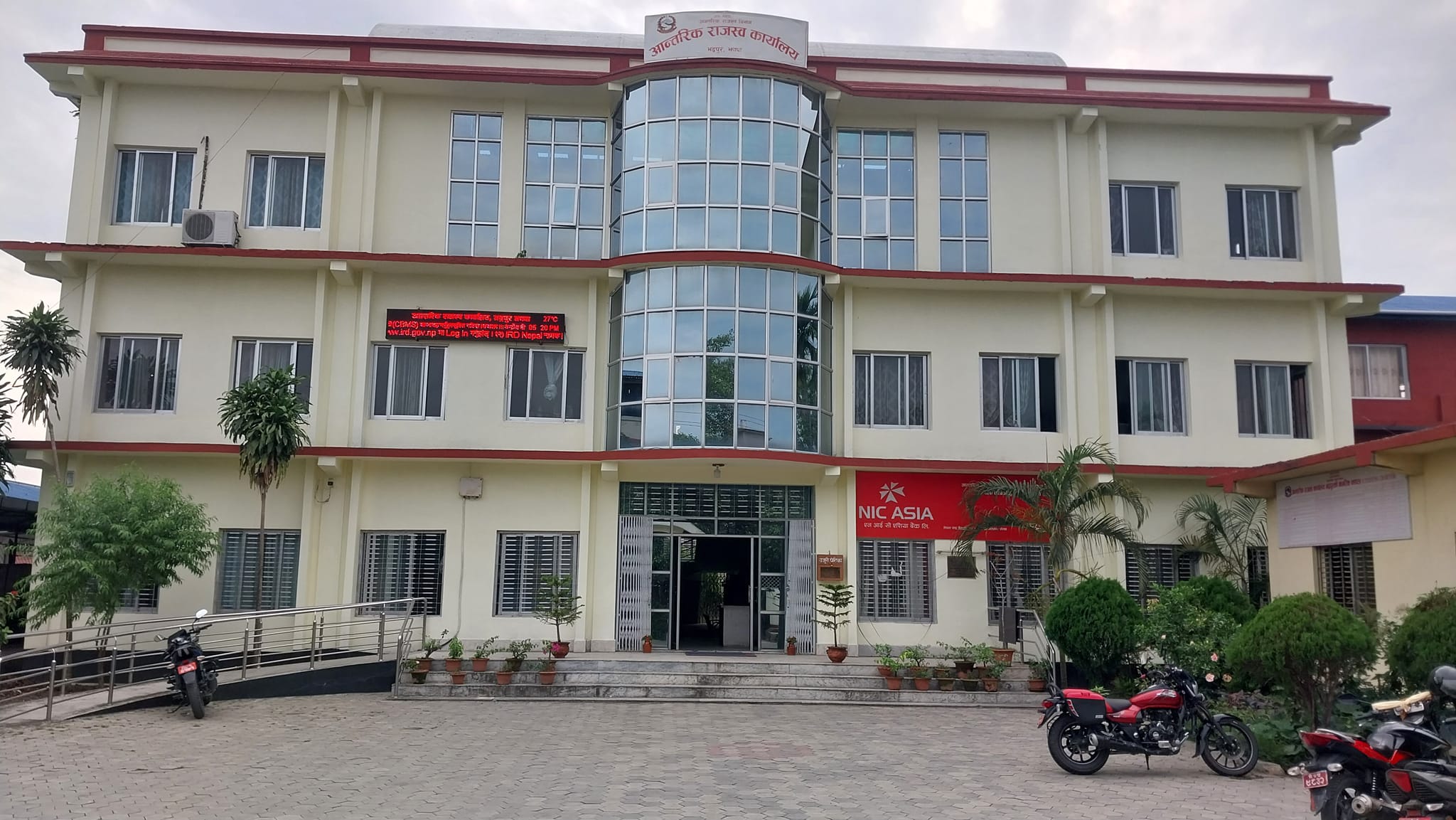
Out of the NPR 225 billion collected as Value Added Tax (VAT), NPR 131 billion is tax collected on imported goods. Out of the NPR 130 billion collected from Excise Duty, NPR 32 billion is seen to be collected from imported items.
Stakeholders state that the government is currently facing a resource crunch due to the sluggishness seen in the economy over the past period.
Financial Sector
As Balen becomes Prime Minister, the country's financial sector is somewhat weak. According to Nepal Rastra Bank data, the Nepali financial sector has collected deposits worth NPR 77.89 trillion, which is 126.54 percent of the GDP. Furthermore, loans worth NPR 58.15 trillion have been disbursed, accounting for 94.94 percent. By this measure, the credit-to-deposit ratio is 73.91 percent.
This situation indicates that there is nearly NPR 1.2 trillion of investable funds available, including those refinanced by the Nepal Rastra Bank. This is why deposit interest rates have fallen significantly. According to Rastra Bank data, as of Magh end, the average deposit interest rate was 3.51 percent, while the average loan interest rate was 7 percent. Despite low-interest rates, the lack of demand for investment in the market shows that the financial sector is trapped in a liquidity trap.

Moreover, the loans already invested are not being recovered. This is causing the non-performing loan (NPL) ratio to rise. As of Magh end, the NPL ratio was 5.42 percent, and it appears to be on an increasing trend.
However, in terms of access and use of financial transactions, the situation is strong. As of Magh end, the population using mobile banking has reached nearly the same level as the total population. However, since the same individual uses multiple mobile banking services, it is difficult to state the exact access rate. Nevertheless, this situation suggests an easy environment for the government to take necessary steps in digitalization.
Social Sector
The social sector includes areas like education, health, transport, communication, electricity, drinking water, and other development infrastructure usage and access. The Human Development Index represents infrastructure and access, while the Gini coefficient illustrates the state of inequality.
The latest data shows Nepal's Human Development Index (HDI) at 0.622. This places Nepal at 145th position among 193 countries. An HDI above 0.80 indicates a very high level, above 0.70 indicates high, above 0.55 indicates medium, and below 0.55 indicates a low level. The world average HDI is currently 0.744.
Furthermore, Nepal's Gini coefficient is 0.32. The lower this figure, the less inequality exists in the country. In this context, Nepal ranks among the best globally. The US index stands at 0.41, while Norway's is 0.25.
Despite these indicators, the social sector does not appear very strong. According to the latest data, Nepal's installed electricity capacity has reached 3,602 megawatts. During the dry season, this drops to around 1,500 megawatts, while the demand reaches 2,100 megawatts during the same period. This shows challenges in supply and consumption management. Nevertheless, the achievement of electricity access in 99 percent of Nepali households is commendable. However, significant investment is needed to improve its quality.
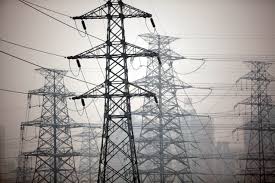
The current per capita electricity consumption is 400 units. The government aims to increase per capita energy consumption in Nepal fivefold in the next 12 years. This requires substantial investment in expanding transmission capacity.
Similarly, out of the total arable land area of 2.641 million hectares, irrigation service has reached 1.766 million hectares so far. Of this, irrigation structures exist in 1.569 million hectares. Even among these, year-round irrigation facilities are available in only one-third of the land area.
Currently, a total of 36,132 kilometers of roads have been constructed in the country, including 19,163 km of paved roads, 8,204 km of graveled roads, and 8,765 km of unpaved roads. Although this road network is sufficient, the upgrading of main highways and paved roads appears to be a major challenge.
Nepal's literacy rate has reached 77.4 percent, according to the Nepal Living Standards Survey data. While this is not excellent, it is a good state, especially the literacy rate among school-going age groups. However, the challenge for the government is to address the disparity between community and private schools and to overcome the over-commercialization of education to bring about healthy competition and change in social attitudes.
Currently, 96.85 percent of the population has access to drinking water, but only 28.50 percent have access to safe drinking water. Furthermore, telephone service has reached about 96 percent of households, and government data shows that internet access has reached about 82 percent of households. However, improving the quality and price of these services is most important, which will require billions in infrastructure investment.
In recent times, rising petroleum prices, tensions in foreign employment destination countries, a chaotic demographic situation, and migration have also created problems for balanced development. Adapting to external environmental impacts while improving internal conditions will be the government's main responsibility and challenge.
This specific news has been automatically translated by AI. As a result, there may be some inaccuracies or language errors.