Sita Wadi Becomes First from Wadi Community to Join Federal Cabinet in Nepal's History
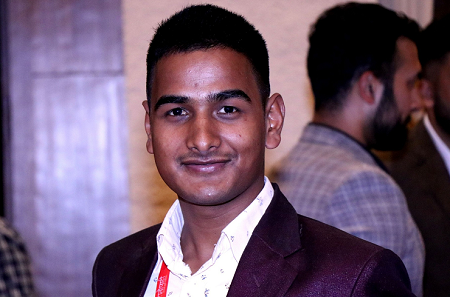

Surkhet. For the first time in Nepal's political history, the Wadi community has gained representation in the federal government. On Friday, Sita Wadi was appointed as the Minister for Women, Children, and Senior Citizens in the cabinet led by Balen Shah.
According to Hekmat Wadi, a leader of the Wadi community, this is the first time the Wadi community has secured a position in the federal cabinet. This is also the first time the Wadi community has gained representation as a federal parliamentarian.
'Our community got the opportunity to become a minister even before getting the chance to become a parliamentarian for the first time,' Hekmat said, 'Although parliamentarians from our community have been elected in the provinces before, in Lumbini and Sudurpashchim, we had not had a federal parliamentarian or a minister.'
Leaders of the Wadi community consider this a historic achievement. 'Today is not just a moment of happiness for us, but an important page in history,' Hekmat said. 'The representation of the Wadi community in the federal parliament for the first time, and then Sita Wadi becoming a minister, is a matter of pride and honor for all of us.'
He states that this achievement is not just of one individual but a victory for the struggle, hope, and identity of the entire Wadi community. He added, 'We hope that effective work will be done for the rights and entitlements of women, children, and marginalized communities.'
He also extended thanks to the Rastriya Swatantra Party (RSP) for this.
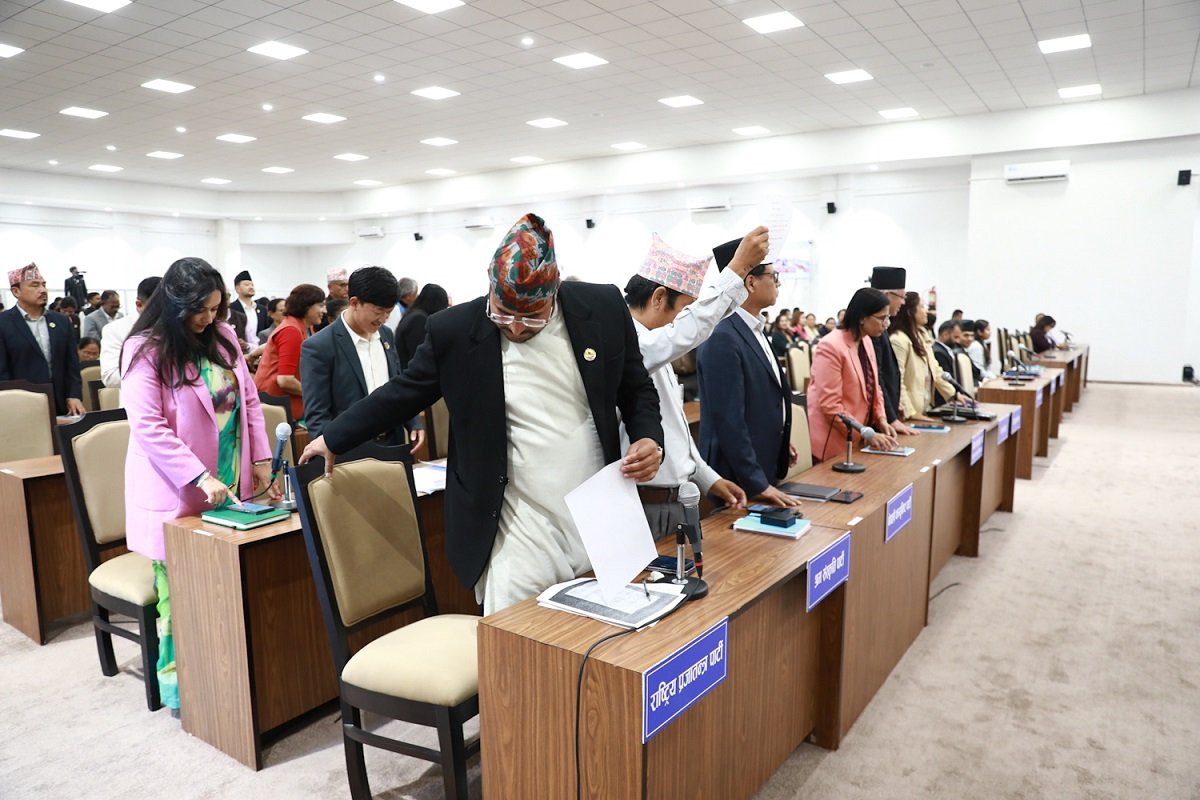
Sita Wadi, who became the first minister from the Wadi community in history, is a struggling woman. The RSP had nominated her as a proportional representative parliamentarian by placing her third in the Dalit cluster. She never imagined becoming a parliamentarian, but the RSP created history by making her not just a parliamentarian but a minister.
She became a parliamentarian from Balen Shah's team. In the past, she was close to figures like Ranju Darshana of Bibeksheel.
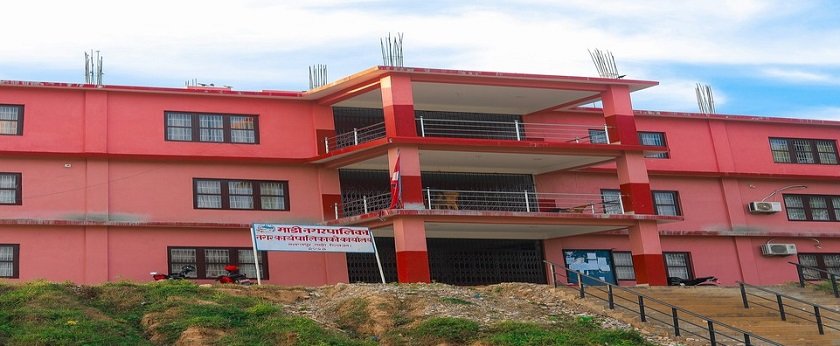
The Wadi community resides in Jhuprakhola, located in Birendranagar Municipality-11, Surkhet. This settlement, near the banks of the Bheri River, began to be inhabited in the 1940s (Bikram Sambat era).
At that time, individuals from the Wadi community started settling near Jhuprakhola with the intention of earning a livelihood by sifting sand and crushing gravel. Bulldozers were not used for sand extraction back then.
Later, a Wadi settlement gradually formed along the Jhuprakhola riverbank, but with the introduction of bulldozers and machinery, their work was taken away. Even now, the residents of Jhuprakhola struggle to make ends meet. This community, used as a vote bank in every election, is constantly neglected by the state and political parties.
Sita Wadi was born in 052 BS in this very settlement. Born as the daughter of Gopal Wadi and Parbati Wadi, Sita's childhood was spent in harsh struggle.
She dropped out of school to sift sand and crush gravel with her family to earn a living. With great struggle, she managed to study up to the 9th grade in Surkhet. She studied from grades 4 to 9 at Janasewa Secondary School, Ghusra.
At the age of 12, with the support of an organization, she got the opportunity to study while staying in a hostel in Kathmandu. With the support of the same organization, she completed her Bachelor's degree in Social Studies and Master's degree in Political Science.
Her family still lives in Jhuprakhola. Her family earns a living by extracting sand. Rising from this harsh struggle, Sita had been active for the past decade in the fields concerning women and children from marginalized communities, alongside her studies.
She married Suresh Purkuti, a resident of Budhanilkantha-8, Kathmandu, two years ago. She is the daughter-in-law of Sundar Purkuti, a member of the National Dalit Commission. She married Purkuti from the Sarki community within the Dalit community through an arranged marriage.
Sita, who moved to Kathmandu after an arranged marriage with the aim of ending caste discrimination within the Dalit community, provides education to children from remote, impoverished communities and vocational training to women.
She has a business in Kathmandu producing and distributing handicraft materials. She has been working in favor of her community for a decade.
She has experience working in the fields of child protection, education, and women's economic empowerment through the organization named 'Sundar Sahaj Nepal'. Under her leadership and that of a few others, the 'Wadi Sustain Company' was established to work in the area of sustainable livelihood for economically backward communities. It is due to this experience that the RSP entrusted her with the responsibility of the Ministry of Women, Children, and Senior Citizens.
Furthermore, an RSP leader stated that by including Sita in the cabinet, Karnali Province has also gained representation.
Sita stated that this is the most significant and proud moment of her life. She affirmed that she would always stand on the side of the people. She also pledged to fulfill her duties with honesty, transparency, and accountability.
This specific news has been automatically translated by AI. As a result, there may be some inaccuracies or language errors.