Dr. Swarnim Wagle Takes Helm as Finance Minister Amid Economic Headwinds


Kathmandu. The debate over whether someone who understands the economy should lead the Ministry of Finance has always been prevalent in Nepal. This voice is often raised when an individual without expertise takes charge of the Finance Ministry.
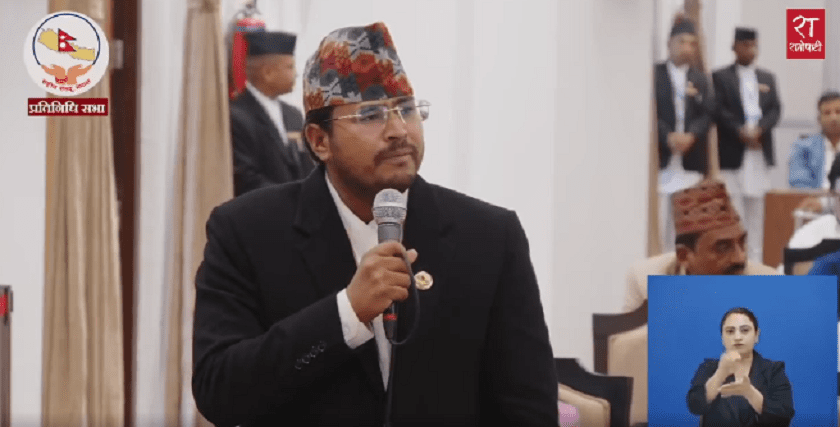
Following the elections on Falgun 21, Dr. Swarnim Wagle has been given the responsibility of Finance Minister in the government led by the Rastriya Swatantra Party (RSP), holding the second seniority after the Prime Minister.
Dr. Wagle, who argues based on data and policy, is the Vice-Chairman of the Rastriya Swatantra Party (RSP) and a member of the House of Representatives elected from Tanahun-1.
The Past of Finance Minister Wagle
Dr. Swarnim Wagle was born in Bunkot, Gorkha, in the year B.S. 2031. Although he spent part of his childhood in Gorkha, his family later moved to Chitwan. Born into a modest middle-class family, Wagle completed his primary education at Budhanilkantha School in Kathmandu. After his studies there, he completed his undergraduate studies at the London School of Economics in the UK.
He completed his Master's degree in Public Administration and International Development from Harvard University in the USA, and successfully obtained his PhD in Economics from the Australian National University in Australia.
International Experience and Return Home
Finance Minister Wagle has worked as a development economist in various international organizations for 25 years. He held several important responsibilities at the United Nations Development Programme (UNDP) and the World Bank.
Specifically, from B.S. 2077 to 2079, he served as the Chief Economic Advisor overseeing 36 countries in the Asia-Pacific region at the UNDP headquarters in New York. While based in Vietnam and New York, he directly contributed to the economic reform agendas of various countries.
After gaining international experience, Dr. Wagle returned to Nepal around B.S. 2071. Immediately after, he became a member of the National Planning Commission. From 2014 to 2018, he served as a member of the National Planning Commission twice.
In B.S. 2074, he was appointed Vice-Chairman of the Commission. As Vice-Chairman, he played a leading role in preparing the framework for post-earthquake reconstruction and drafting the basis paper for the country's 15th Five-Year Plan.
Leaving Congress Background to Become RSP Office Bearer and Parliamentarian
Dr. Wagle's political journey initially began with the Nepali Congress. For about three decades, he provided intellectual and policy support to the Congress party. However, he was dissatisfied after being cornered due to internal strife within the party.
In Chaitra, B.S. 2079, he left the Nepali Congress and joined the Rastriya Swatantra Party (RSP) led by Rabi Lamichhane. Immediately after joining the RSP, he became known as the party's 'brain'.
In Mangsir, 2080, he was nominated as the party's Vice-Chairman, and he currently also holds the responsibility of the Head of the Party's Economic Policy Department. Dr. Wagle's parliamentary journey began with a by-election. He was elected in the Tanahun-1 by-election held in Baishakh, 2080. In the recent election on Falgun 21, he was re-elected from the same constituency and entered parliament.
Dr. Wagle's style of politics is different from that of traditional leaders. In public forums, he has always advocated that 'the job of a parliamentarian is not to distribute petty schemes but to formulate national policy.' He stands in favor of implementing a meritocracy system in state governance.
Challenges for the New Finance Minister
However, as he takes charge of the economy, the country's economic situation is not smooth. Low revenue collection, weak expenditure capacity, and the management of rising public debt are the main headaches for the government. He has to work to meet high public expectations amidst limited resources.
The main responsibility of the government is to accelerate sluggish capital expenditure and development works, create respectable employment opportunities to stop the rampant youth migration, and build an investment-friendly environment by boosting the morale of the declining private sector.
Dr. Wagle, who until yesterday pointed out the loopholes in the economy as an opposition member or an expert, is now in a position to provide solutions himself. His international reputation and academic expertise are expected to make it easier to win the trust of foreign investment and donor agencies.
During his election campaign, he announced various measures, from reducing the rising domestic revenue rate to economic reforms. Balancing resources and needs while implementing prior commitments will be the main challenge for the government. How he implements his reformist agendas amidst bureaucracy and political pressure will determine the success of his tenure.
This specific news has been automatically translated by AI. As a result, there may be some inaccuracies or language errors.