The Maoist Movement's Decisive Role in Establishing Proportional Representation in Nepal
Everyone in Nepal is currently aware of the proportional system and the proportional inclusive arrangement. It is rare to find a political or non-political circle where this is not known or discussed. Especially after the recently concluded House of Representatives election, the discussion around it has intensified.
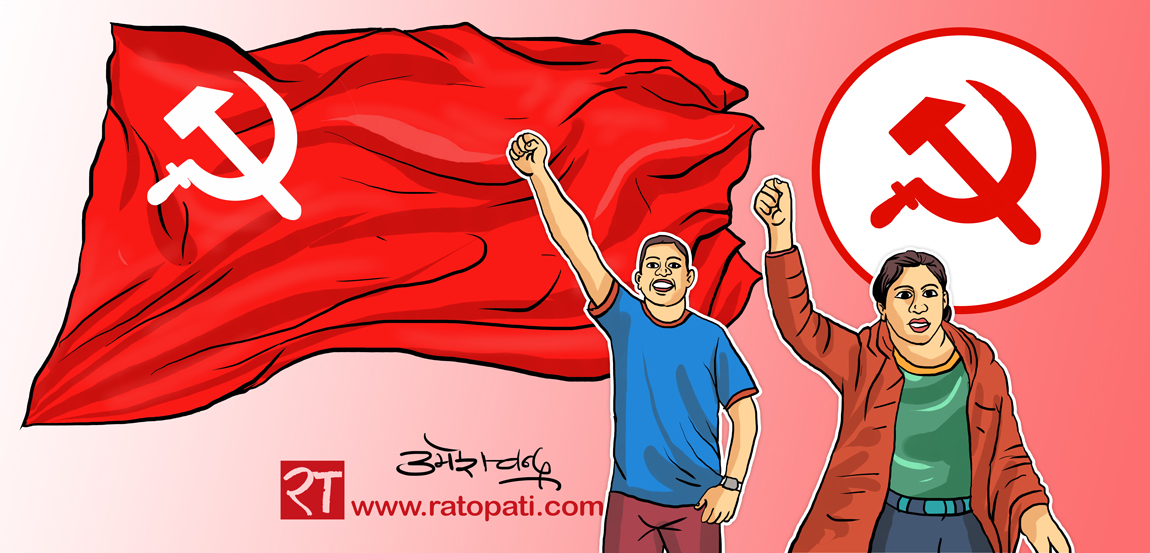
In Nepal's modern political history, the Maoist movement stands at the forefront among the major forces that institutionalized the debate concerning inclusivity, representation, and the restructuring of the state apparatus. Specifically, the People's War that began in 2052 BS and the subsequent political process brought historical agendas such as proportional representation, inclusive democracy, federalism, republicanism, and secularism to the center of national politics.
The system of proportional and inclusive representation currently implemented from the Federal Parliament down to the local level in Nepal is not the result of any sudden political decision. It is the product of long struggle, debate, rebellion, and political pressure. In this context, the role of the Maoist movement in establishing the proportional system in Nepal has been extremely significant, historical, and decisive.
Before the Maoist movement, Nepal's state structure was fundamentally centralized, unitary, and focused on the high-caste, male ruling class. Even after the restoration of the multi-party system through the first historic People's Movement against the 30-year partyless Panchayat system in 2046 BS, a limited class, community, and region dominated major state bodies—Parliament, administration, army, judiciary, universities, and public services.
Representation for Dalits, Janajatis, Madhesis, Muslims, Tharus, backward regions, women, and the working class was extremely low.
At that time, the electoral system was primarily based on direct majority, which failed to reflect the diversity of the population and the reality of the social structure. As a result, many communities remained virtually invisible politically. This structural exclusion generated the need for an alternative political force, which the Maoist movement organized.
The Maoist Movement and Inclusive Agenda
The People's War launched by the CPN (Maoist) on Falgun 1, 2052 BS, was not merely for a change of power. It aimed to transform the very character of the state. From the beginning, the Maoist movement identified class, ethnic, regional, gender, and cultural oppression as the fundamental problems of the Nepali state.
From the outset, the Maoist movement raised the issue of changing the fundamental rules of state governance, not just changing the rulers. This thinking established the necessity of inclusive representation, considering multi-party competition alone as insufficient.
This movement brought marginalized communities of Nepali society to the center of the political movement. Rural poor, Dalits, indigenous Janajatis, Madhesis, women, and youth from backward areas participated in large numbers in the movement. For the first time, it transformed the question of the state and politics from 'Who will rule?' to 'Rule with whose representation?'. This is where the ideological foundation for proportional representation was strengthened.
Before the Maoist movement began, its main starting point was the 40-point memorandum submitted to the then Sher Bahadur Deuba-led government under the name of the Janamorcha, which, although it did not use the term 'proportional electoral system,' included demands such as ethnic, regional, gender, and class equality, local autonomy, rights of oppressed communities, and restructuring of the state, which later formed the philosophical and political foundation for the proportional system.
In other words, the Maoist movement from the beginning raised the issue of changing the fundamental rules of state governance, not just changing the rulers. This thinking established the necessity of inclusive representation, considering multi-party competition alone as insufficient.
The Peace Process and the Proportional System
The People's Movement of 2062/063 BS, the 12-point understanding between the seven parliamentary political parties and the rebel Maoists, and the Comprehensive Peace Accord that followed were the decisive turning points for the formal entry of the proportional system in Nepal.
One of the main demands of the Maoist movement when entering the peace process was the election of a Constituent Assembly and an electoral system that ensured inclusive and proportional representation for it. This challenged the old parliamentary structure.
For the first time, genders and communities oppressed for centuries gained substantial participation in parliament. The representation of women in the 2064 BS parliament serves as proof of this. Women's representation in the parliamentary elections of 2048, 2051, and 2056 BS was limited to around only 2.9, 3.4, and 5.8 percent, respectively.
Consequently, in the 2064 BS Constituent Assembly election, Nepal adopted a mixed electoral system for the first time: direct election on one side, and proportional representation based on the votes received by the party on the other. This historic decision institutionalized the proportional system as a constitutional-political practice in Nepal.
For the first time, genders and communities oppressed for centuries gained substantial participation in parliament. The representation of women in the 2064 BS parliament serves as proof of this. Women's representation in the parliamentary elections of 2048, 2051, and 2056 BS was limited to around only 2.9, 3.4, and 5.8 percent, respectively.
This data shows that the old electoral system failed to represent even half the sky of society. In the 2064 BS Constituent Assembly election, women's representation reached 32.8 percent. Out of a total of 601 members, 197 women entered the Constituent Assembly. Among the 575 elected members, there were 191 women, and among the 26 nominated members, there were 6 women.
Presence of Marginalized Communities in the Constituent Assembly
The first Constituent Assembly election of 2064 BS became the most inclusively represented political structure in Nepal's history. Representatives from women, Dalits, Janajatis, Madhesis, Muslims, and backward regions reached the Constituent Assembly in large numbers.
In addition to 32.8 percent representation for women in the Constituent Assembly, representation for the Dalit community was 8.17 percent, indigenous/Janajati community 33.39 percent, Madhesi representation 34.09 percent, and representation from backward regions was 3.83 percent.
The main reason for this change was the political pressure created by the Maoist movement. If the traditional electoral framework had remained, this level of representation in parliament would not have been possible. The Maoists ensured such a system through agitation, negotiation, and public pressure, which gave excluded communities direct access to parliament and the constitution-making process.
The establishment of the proportional system is the culmination of increased representation, especially for women, the expansion of the presence of Dalit and Janajati communities, and the political empowerment of the Madhesi community.
New Constitution and Inclusivity
Nepal's new constitution has established the principle of inclusive proportional representation in all organs of the state. The mixture of direct and proportional systems in the House of Representatives of the Federal Parliament, representation of diverse communities in the National Assembly, and the mandatory presence of women and Dalits in the Provincial Assemblies and local levels are all directly related to the concept of an inclusive state raised by the Maoist movement.
The influence of the issues raised by the Maoist movement is clearly reflected in the preamble of the constitution, fundamental rights, directive principles of the state, social justice, the provision of inclusive commissions, and the concept of reservation. In particular, the concept of participation in all state bodies based on the principle of proportional inclusivity is a revolutionary turning point in Nepali constitutional history.
The Maoist movement played a direct role in bringing into practice the Constituent Assembly, the mixed electoral system, inclusive constitutional provisions, and the federal structure, based on the principle that the people are sovereign in Nepal and ensuring clear public participation in constitution-making.
The Maoist movement brought the debate that historically marginalized genders, regions, and communities require special representation into the mainstream. This is the ideological contribution of the Maoist movement. The Maoists compelled the old state structure to change through armed struggle, popular movements, street pressure, negotiations, and political alliances.
The Maoist movement played a direct role in bringing into practice the Constituent Assembly, the mixed electoral system, inclusive constitutional provisions, and the federal structure, based on the principle that the people are sovereign in Nepal and ensuring clear public participation in constitution-making.
However, it cannot be concluded that the proportional system is entirely ideal. Although the proportional inclusive system is clearly written in the constitution, there are still distortions in practice, such as control by limited groups within parties, partiality in creating proportional lists, selection of influential people rather than real community representatives, and a growing tendency to limit inclusivity merely to numerical terms. This form was evident in the recently concluded elections following the Gen Z movement.
The Maoist party itself has faced criticism for failing to implement the agendas it raised with full integrity in some instances after entering power politics. However, the then Maoist party has now merged with various parties to form the Communist Party of Nepal. There is also a complaint that proportional representation is sometimes limited to managing party quotas rather than empowering the masses.
But, despite all these shortcomings, one cannot conclude that the proportional system is wrong. Rather, it requires stricter provisions and reforms to make it more transparent, accountable, and community-oriented.
When looking at the history of establishing the proportional system in Nepal, no conclusion can be reached without acknowledging the Maoist movement. This movement seriously questioned the centralized, exclusionary, and monopolistic structure of the Nepali state. It established the voice of marginalized communities in national politics. The Constituent Assembly, inclusive democracy, the mixed electoral system, and the constitutional principle of proportionality—the decisive mark of the Maoist movement is on all these achievements.
The level of representation that Dalits, Janajatis, Madhesis, women, Muslims, Tharus, backward regions, and other excluded communities currently have in state bodies in Nepal is historic progress compared to the past. One should not hesitate to state that the Maoist movement was the foremost among the political forces and movements that laid the foundation for this progress.
Therefore, the proportional system in Nepal is not merely a legal provision; it is a political achievement born from the long struggle of the excluded. And the most influential force that institutionalized that struggle was the Maoist movement. The challenge now is how to make this system more qualitative, publicly accountable, and genuinely inclusive.
Now, with the government formed by the mandate where nearly two-thirds of the seats were given to a single party by the people, the responsibility has fallen on its shoulders to remove the shortcomings seen within the proportional system and further strengthen and refine it.
This specific news has been automatically translated by AI. As a result, there may be some inaccuracies or language errors.


_6FSvCrCShE.jpg)