Madhesi Party Chairman Rajendra Mahato on Election Defeat and Balen Shah's Rise

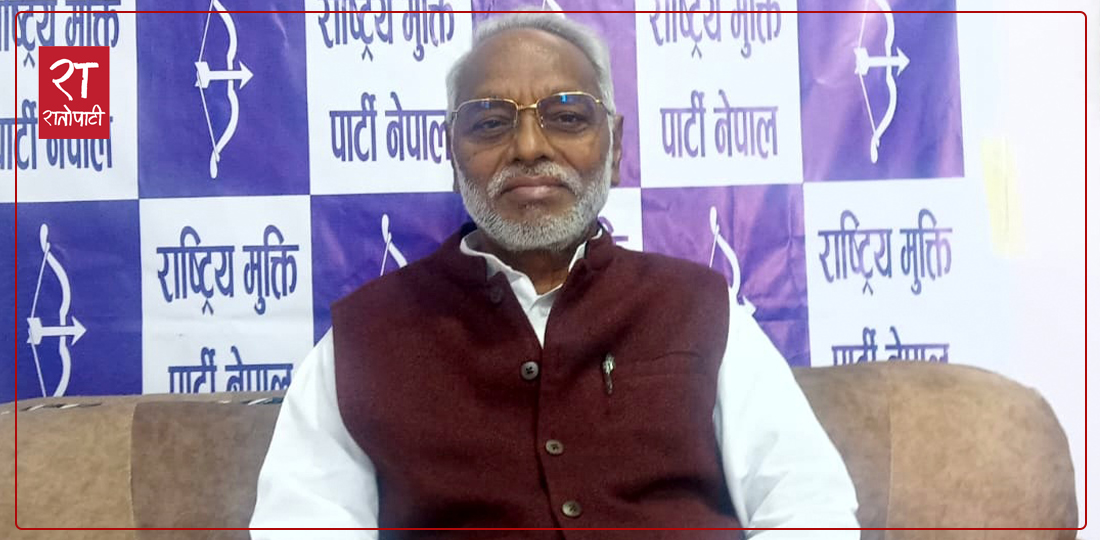
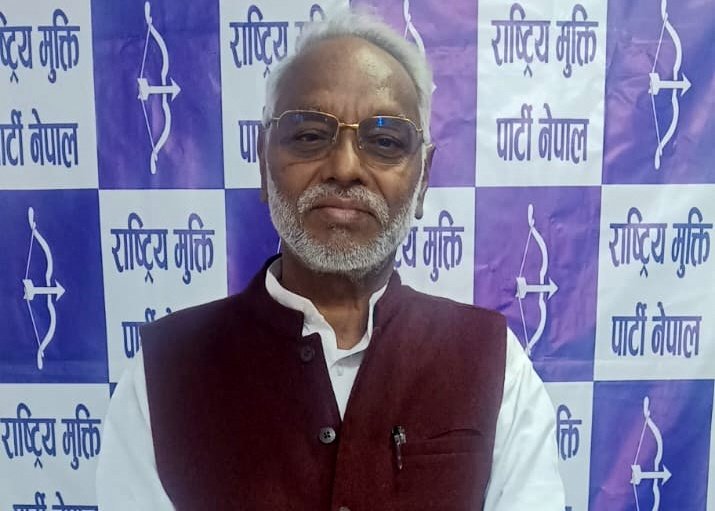
Kathmandu. In the House of Representatives elections held on Falgun 21, Rajendra Mahato, Chairman of the Rastriya Mukti Party, was defeated in Sarlahi-2. Rabin Mahato of the Rastriya Swatantra Party was elected in that constituency.
Chairman Mahato of the Rastriya Mukti Party stated that a huge wave in favor of Balen led to the defeat not only of himself but of all Madhesi parties due to that same wave. Mahato argues that Madhesi people voted for Balen because the Rastriya Swatantra Party put forward Balen Shah as a prime ministerial candidate, meaning a son of the Madhes would become the country's Prime Minister for the first time. On the other hand, Mahato revealed that the lack of unity among Madhesi parties was another reason for the defeat.
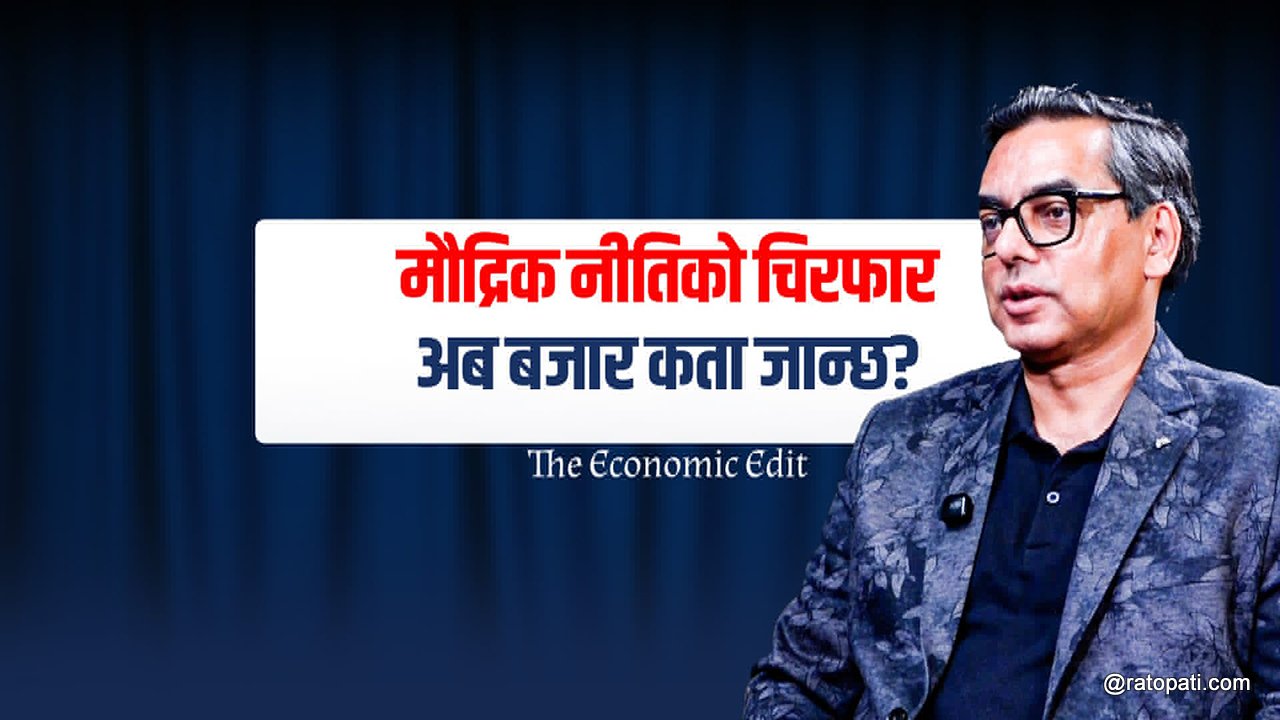
Presented here is an edited excerpt of the conversation Ratopati had with Rastriya Swatantra Party Chairman Rajendra Mahato regarding why Madhesi parties became weak in the Madhes, the plan for moving forward, and the nature of the relationship with the Balen government.
- You have returned to Kathmandu after being defeated in the House of Representatives elections. How are you feeling?
We tried our best for the election results to be in our favor. I dedicated slightly more time to my constituency than in the past. I expected the results to be favorable. The public also gave assurances to that effect, but the results were not as expected.
- Why do you think you were defeated?
Looking externally, one main reason was the attempt to create a storm in the name of Balen in this election, making the Madhes seem Balen-centric. We ourselves are the main reason for this. Will a descendant of the Madhesis ever become Prime Minister in this country? Is this country ours or not? We have been raising the issue of why a Madhesi should not become Prime Minister thousands of times over the last 35 years. This time, the Rastriya Swatantra Party put forward a Madhesi (Balen Shah) as a prime ministerial candidate, and this had a positive impact across the entire Madhes.
It changed the psychology of the Madhes. Madhesi people set aside past values, contributions, identity, and recognition, and focused on making Balen the Prime Minister. I saw a mentality among the people that Balen must become Prime Minister by any means necessary.
- But in the span of 30-35 years, why couldn't you produce a cadre like Balen from your party, whom you could have put forward as a prime ministerial candidate?
Before Balen became Mayor, I had never even heard his name. Although I had a good relationship with his father. When I was the Health Minister, I gave his father the responsibility of Director of the Ayurveda Department. That was a family connection, but I did not know Balen in that capacity. Only after he became Mayor did I learn that Balen was the son of Ramnarayan Shah. Everyone knows how Balen became Mayor and how he was projected. Media, social media, and his rap music—everything came together at once. Social media played a significant role for Balen both before and after this election. Everyone accepts this fact.
This time, the Rastriya Swatantra Party put forward a Madhesi (Balen Shah) as a prime ministerial candidate, and this had a positive impact across the entire Madhes.
Furthermore, why couldn't we make a Madhesi the Prime Minister in 35 years of politics? Or why couldn't we even propose one? Why couldn't we present any Madhesi personality as a national personality? It's not that we didn't present Madhesi leaders as personalities, but how was Balen's name presented? How was he projected as a national personality? He was presented and projected as a personality acceptable to Madhesis, Janajatis, Bahun-Chhetri, and Madhesi-Pahadi alike. Social media played a huge role in that.
A personality projected at the national level can become Prime Minister; this is something everyone believes. Madhesis also trusted and believed in him. All Madhesis voted for Balen with their eyes closed. No one cared who the candidate was. The voter did not recognize the candidate they voted for. Everyone voted for the bell symbol in Balen's name. Only Balen and the bell were known to the voters. The people of the Madhes voted remembering only that the son of the Madhes, Balen, must become Prime Minister. A tsunami arrived. I also fell victim to its impact. When such a storm hits, there is no telling where everyone will end up.
- Did only the Balen factor work there, or did political factors also play a role?
Balen was one factor, but the Madhes could have stopped that factor. It could have been stopped if the politics of the Madhes had been organized properly. We had an investment of 35 years in the Madhes, which could have stopped it, but for that, the Madhes-centric parties needed to be mobilized. They needed to contest the election under a single election symbol by uniting. Even if the parties couldn't merge, if they had all used a single election symbol, the Madhesi wave could have worked there, preventing this kind of result. Madhesi parties lacked this.
I also made efforts in this regard. I proposed that we should contest the election under a single election symbol, but no one was ready for it. Our proposal was—to unite all parties and form one party, or if not, use a single symbol. Using a single symbol would have meant a joint candidate in an electoral constituency. It would have been an identity-based candidate, and the result would not have been like this.
- Why couldn't the Madhesi parties come together?
Was it ego, or overconfidence! Was it the feeling that 'I can do it alone!' or 'I will surely win, let the rest perish!' Various such things must have played a role. But whatever happened was unfortunate. Not going to the election united resulted in sorrow. This one election has taught everyone a lesson.
- But you also contested the election under a single symbol for three parties, yet you couldn't show results, right?
No, how could it show results? What was the standing of three small parties? What could it show? If everyone had united, there would have been some standing. When Upendra Yadav was approached, he said there was no need for it. When CK Raut was approached, he also said there was no need for it. Then the remaining three of us united. That was symbolic. If everyone had followed it, the result would have been different. Being unable to unite even into one, unable to contest together, and unable to form an alliance meant facing the result. This is the result. This was bound to happen.
- After the elections, you held a meeting of the Democratic Front. From that meeting, you sent a message that you also contributed to making Balen the Prime Minister. How do you substantiate this?
We have been raising the voice that a Madhesi should become Prime Minister for 35 years. What we had been raising for so long was ingrained in the minds of the Madhesi people. The Rastra Swatantra Party put forward a son of the Madhes as Prime Minister. The Madhesi people thought—this is the chance, let's seize the opportunity.
Not just the Madhes, the entire country accepted Balen as Prime Minister and voted for him. We congratulated and wished him well because Balen is becoming Prime Minister according to the agenda we have been raising from the beginning. The decision made by the people must be accepted naturally. It is not unnatural. The people have acted upon the agenda we set. In reality, Madhesi parties also have a contribution to Balen becoming Prime Minister.
- But you had already agreed to make Kulman the Prime Minister, so how did you shift towards Balen?
Before proposing Balen for Prime Minister, we had already put forward Kulman Ghising as a prime ministerial candidate. There was practically an agreement. We put forward Kulman because we thought we should put forward a son of a Janajati. But later, Kulman himself joined Balen's party. That's when things went wrong. Our desire was that not just a Madhesi, but a Madhesi Janajati, Dalit, Muslim, Tharu—whoever it is—should become the Prime Minister of this country. Bahun-Chhetri have always been becoming PMs; that's their monopoly! Even if it wasn't Kulman, what is pleasant for us is that the agenda we have been raising for years is now moving forward in the country. The situation where a descendant of the Madhesis can become Prime Minister is a happy development for the oppressed communities of the Madhes.
- But no matter the storm or tsunami, the seed should have been saved. The identity of the Madhesi parties has been wiped out, why did this happen?
There could be two aspects to this. Was the result caused by a real tsunami, or was a narrative created due to the tsunami that arose from the need to make the son of the Madhes, Balen, the Prime Minister? Another point is that there are suggestions that something else besides the tsunami contributed to this result. Some people reported that votes they themselves cast were not found in their own ballot boxes. Our area also had a certain number of votes; where did those votes go? This is a serious question. Votes did not come from places where they were certain to come from home. Where did they go? There is no proof of this yet. People have started suggesting that there might have been rigging somewhere, but no one has provided proof. There is no proof yet.
If Balen becomes Prime Minister, an aspiration of the Madhesi people will be fulfilled—a son of the Madhes has become Prime Minister. If he does good work, he will receive thanks for it. But if he commits dishonesty or fraud, just as the Congress and Communists misused Madhesi votes in the past, if the Rastra Swatantra Party misuses the face of the Madhesis, the Rastra Swatantra Party will face the same fate as the Congress and Communists.
- Whatever you say, you face accusations of not reforming despite the Gen Z movement. It is also said that this happened because you did not reform yourselves and continued with the old thinking and old ways. What do you say to this?
This is absolutely correct. Wherever this sentiment comes from, it is entirely correct. If we had reformed, would such a result have occurred? If we had reformed, we would have gone to the election in that manner, united. Would we have gone to the election insisting on our own way? So, as you sow, so shall you reap. In a way, it was good. The ego has been shattered. It was absolutely right. Now, let this bring good sense to all of us.
- You are the chairman of a party, and you yourself are saying this, why?
It is because I am the chairman of the party that I see and understand everything. If I were not the chairman, how would I know these things? I am still saying we should reform. I am still saying let's sit, consult, and move forward unitedly, but it doesn't look like they will reform. If Madhes-centric parties do not become serious now, the situation will be worse than this.
- So, how will you revive yourselves now?
Until now, we discussed the Madhes and Madhesi parties. How did the Rastriya Swatantra Party emerge from this election? How did Balen emerge? Did they emerge by uniting with which party or by doing what? Madhesi parties failed to assess that. They kept indulging in their own ego. Now, the Madhesi people expect that Balen will become Prime Minister and their standard of living will improve. The Madhesi people have not just made a Madhesi the Prime Minister. The Madhesi people hope that Balen will address their issues. When Balen started his election campaign by giving a speech in Janakpur, he said, 'Now Madhesi people do not have to go to Kathmandu for rights, they will go for a visit. Now they will go for Pashupati Darshan.' He said an empowered, strong province would be built. That message is in the minds of the people. The Prime Minister who is forming now must fulfill that. The expectation of the Madhesi people is that they will no longer go to Kathmandu for rights, but for tourism, receiving all rights in their own province.
- How confident are you that these expectations will be met?
A government with nearly a two-thirds majority is forming. In this sense, we must believe that what he said yesterday will be fulfilled. We must hope and believe. We must wish that what he said comes true. But we also need to consider the character of the country, the character of governance, and the character of his party. Balen alone is nothing, after all. His party (RSP) also has a role. RSP is also a party dominated by a singular ethnic mindset and thought. And how much that party will help address these issues of rights and identity remains to be seen. So far, parties like Congress and Communists have not done so. RSP also holds similar thoughts and mindsets. We must hope that party will do it, but it is difficult to trust.
The government has not even been formed yet. A government will be formed now. If Balen becomes Prime Minister, an aspiration of the Madhesi people will be fulfilled—a son of the Madhes has become Prime Minister. If he does good work, he will receive thanks for it. But if he commits dishonesty or fraud, just as the Congress and Communists misused Madhesi votes in the past, if the Rastriya Swatantra Party misuses the face of the Madhesis, the Rastriya Swatantra Party will face the same fate as the Congress and Communists. We are also in a 'wait and see' situation.
- If Balen's government does good work, won't your party cease to exist forever?
If good work is done, why would other parties and organizations be needed? If it closes down, it doesn't matter. If the problems of the Madhes or the oppressed people are solved by Balen, or by any other party or leader, there is no need for others to open shop for the same purpose. Why is a party needed? What is a party needed for? When someone is solving the problem, why is another party needed for the same thing? If the problem is solved, that's enough!
- You seem overly excited that Balen is about to become Prime Minister, what is the reason for that?
I seem overly excited because I am someone who has been fighting for this for 35 years. In Madhesi politics, I did not come from Congress or Communists like others. I started politics in the Madhes itself, and I am still there. I have been raising the issue that the leadership of this country should be held by a Madhesi. Today, that dream is coming true. That is why I am a bit more excited. I am happy wherever there is a dedicated sentiment towards Madhes-ism, regardless of who it is or which party it is.
This specific news has been automatically translated by AI. As a result, there may be some inaccuracies or language errors.
_Eqo5W0NMVM.jpg)