Footpath Business Resumes as Kathmandu Metropolitan Police Scale Back Operations After Self-Immolation Incident

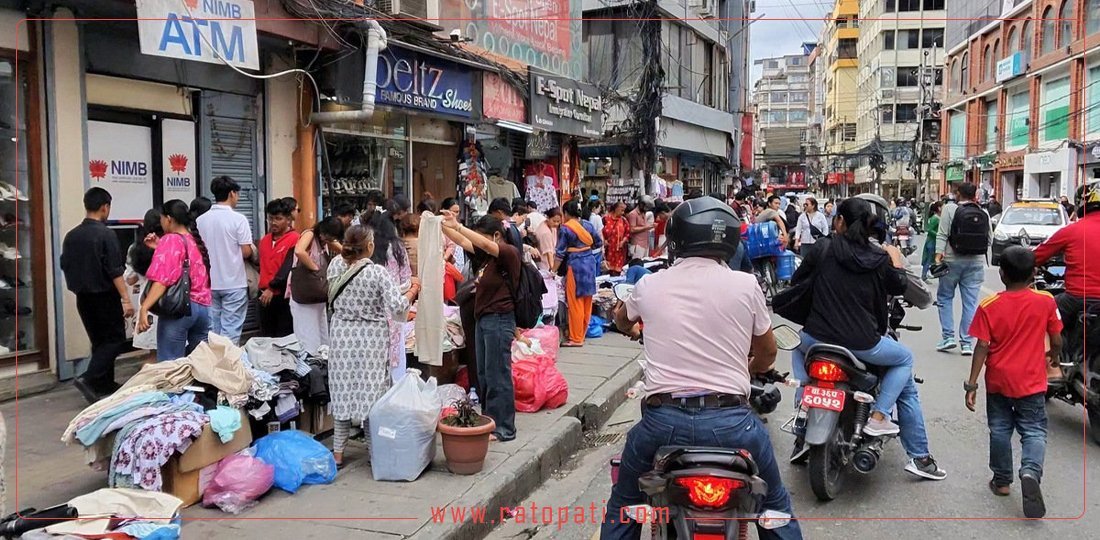
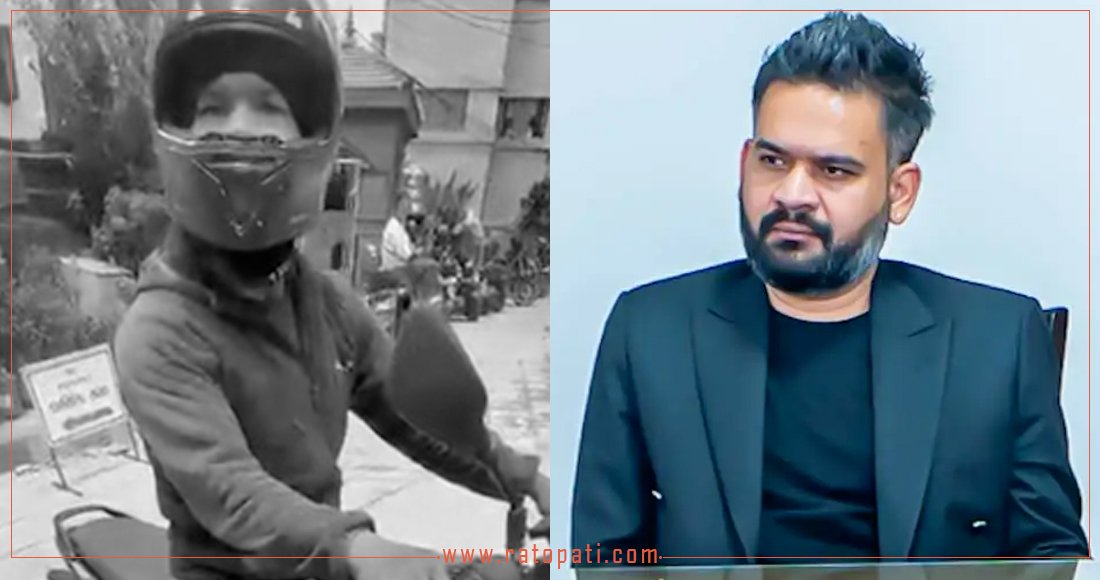
Kathmandu. Business activities have started on the footpaths of main areas within the Kathmandu Metropolitan City, including New Road, Sundhara, and Baneshwor. The roads and footpaths, which appeared very organized, clean, and disciplined just two days ago, now look chaotic. Metropolitan police are absent from the busiest areas of the metropolis. The main reason for the metropolitan police's reluctance to patrol the streets and withdraw from their regular duties is the Ganesh Nepali self-immolation incident. A minor dispute that arose when the metropolitan police, deeming it a violation of rules, 'wheel-locked' a motorcycle parked haphazardly in front of the Passport Department in Tripureshwor, quickly escalated. During that dispute, Ganesh Nepali, a resident of Lalitpur, who became enraged, attempted self-immolation by dousing himself with petrol. Nepali, who was severely burned, tragically died during treatment at the hospital, and this incident garnered significant national attention, outrage, and sympathy. Following this tragic event, the Kathmandu Metropolitan City and the Metropolitan Police Administration have come under immense public pressure, severe criticism on social media, and security risks. Amidst this, a 9-point agreement was reached between the Government of Nepal (including local levels) and the victim's side concerning the incident involving Nepali. According to the agreement reached at the District Administration Office, Kathmandu, an independent investigation committee led by a former judge will be formed to conduct a factual and impartial investigation into the incident. The committee is to submit its report to the government within seven days of its formation. Furthermore, the third point of the agreement states, 'The Kathmandu Metropolitan City will be notified by the District Administration Office, Kathmandu, to suspend the personnel of the Metropolitan Police Force of Kathmandu Metropolitan City who were on the front lines at the scene of the incident on the day it occurred, pending the investigation commission's report/recommendations.' This agreement has further demoralized the city police, according to their reasoning. 'Now, how will we take action? There might be shortcomings, but city police will hesitate to wheel-lock vehicles parked in no-parking zones now,' says one city police officer. _FZ6WhrI5Vt.jpg)
_TeqQUmYkKj.jpg) Home Minister's Statement in Parliament, City Police a Burden The Home Minister's clarification in parliament regarding this serious incident has further chilled the relationship between the Metropolitan City and the Federal Home Administration. Standing at the parliament's rostrum, Home Minister Sudhan Gurung clarified that the act of wheel-locking Ganesh Nepali's motorcycle was not done by the Nepal Police or Traffic Police but purely by the Metropolitan Police. Feeling completely isolated by the federal security apparatus and burdened with all the blame, the city police are in a mood to remain silent. A high-ranking official from the metropolis states that the metropolis is displeased with the Home Administration's style of shrugging off responsibility in parliament and saying, 'It wasn't our police,' while the city police function as a responsible local security agency of the state.
Home Minister's Statement in Parliament, City Police a Burden The Home Minister's clarification in parliament regarding this serious incident has further chilled the relationship between the Metropolitan City and the Federal Home Administration. Standing at the parliament's rostrum, Home Minister Sudhan Gurung clarified that the act of wheel-locking Ganesh Nepali's motorcycle was not done by the Nepal Police or Traffic Police but purely by the Metropolitan Police. Feeling completely isolated by the federal security apparatus and burdened with all the blame, the city police are in a mood to remain silent. A high-ranking official from the metropolis states that the metropolis is displeased with the Home Administration's style of shrugging off responsibility in parliament and saying, 'It wasn't our police,' while the city police function as a responsible local security agency of the state. _7hoI6Lfffe.jpg) Following the Home Minister's statement, metropolis officials have realized that the federal home administration cannot accept the local level's security agency as its subordinate auxiliary body. While peace and order and urban management are possible only through mutual coordination, cooperation, and ownership among all security agencies, the metropolis accuses the central government of trying to evade responsibility. A high-ranking official of the metropolitan police says, 'When the city police are singled out as the sole culprits by the state's leadership, the morale of the employees working day and night in the field is completely shattered. Mistrust has increased insecurity and mental stress among security personnel working on the streets.'
Following the Home Minister's statement, metropolis officials have realized that the federal home administration cannot accept the local level's security agency as its subordinate auxiliary body. While peace and order and urban management are possible only through mutual coordination, cooperation, and ownership among all security agencies, the metropolis accuses the central government of trying to evade responsibility. A high-ranking official of the metropolitan police says, 'When the city police are singled out as the sole culprits by the state's leadership, the morale of the employees working day and night in the field is completely shattered. Mistrust has increased insecurity and mental stress among security personnel working on the streets.' _vtKEV8lM10.jpg) Due to the tense situation and lack of adequate security guarantees, the Kathmandu Metropolitan City Ward No. 8 Chairman and Heritage and Tourism Committee Coordinator, Asaman Sangat, stated that the metropolitan police have been compelled to temporarily reduce their regular presence and activity on streets and public areas. Amidst threats, verbal abuse, and fear of physical attacks from all sides, the metropolitan police maintain their stance of not going to the field without adequate security arrangements. 'Due to the tense environment, their presence has been somewhat reduced keeping in mind the security of the city police. However, it is not that the city police will not come to the streets forever; they will soon return to their regular duties as the situation normalizes,' said Sangat.
Due to the tense situation and lack of adequate security guarantees, the Kathmandu Metropolitan City Ward No. 8 Chairman and Heritage and Tourism Committee Coordinator, Asaman Sangat, stated that the metropolitan police have been compelled to temporarily reduce their regular presence and activity on streets and public areas. Amidst threats, verbal abuse, and fear of physical attacks from all sides, the metropolitan police maintain their stance of not going to the field without adequate security arrangements. 'Due to the tense environment, their presence has been somewhat reduced keeping in mind the security of the city police. However, it is not that the city police will not come to the streets forever; they will soon return to their regular duties as the situation normalizes,' said Sangat. _mmyjtKCh3F.jpg) 'Federal Government Did Not Fulfill its Parental Role' Ward Chairman Sangat expressed dissatisfaction with the statements of the federal government, especially the Home Ministry. He stated that the central government's irresponsible statements, such as 'This is the metropolis's own police matter, we have no concern or responsibility,' regarding disputes and unfortunate incidents during street management have severely demoralized the police working in the field. Sangat believes that the central government, as the guardian of the state, should not evade its responsibilities and coordinating role. He added that this tendency of evasion has reduced the enthusiasm of security personnel working in the field and increased their serious dissatisfaction. Internal discussions and homework have begun within the metropolis regarding street management and the declining activity of the city police. Although no formal proposal has been presented to the metropolis's executive meeting so far, extensive informal discussions and consultations are underway, informed Ward Chairman Sangat. Coordination and dialogue are ongoing between the Chief of City Police and high-ranking officials of the metropolis, and a detailed discussion on this matter is expected in the upcoming executive meeting. 'Traders have started flocking to the main commercial areas again. It is true that traders have started re-occupying the footpaths, especially in New Road, Khichapokhari, Ranjana Galli, Mahabouddha, and Asan areas, considered the heart of Kathmandu. This affects tourism and traffic management,' said Sangat. The areas that the metropolis had previously cleared of footpaths with considerable strictness, making them easily accessible for pedestrians, are now occupied by clothing, shoe, and other material shops to the extent that it is impossible to walk. A high-ranking official from the Kathmandu Valley Traffic Police Office says, 'The problem of disorganized parking has also become widespread across Kathmandu. With no fear of wheel locks, vehicle drivers have started parking motorcycles and cars arbitrarily on the roads. Even in no-parking zones, vehicles are parked haphazardly, narrowing the roads. This forces pedestrians to walk on the main road, leaving the footpaths, which significantly increases the risk of road accidents.' That official adds, 'Due to the obstruction of traffic, there are traffic jams for hours in the main intersections of Kathmandu, causing great mental and physical hardship to the general public.'
'Federal Government Did Not Fulfill its Parental Role' Ward Chairman Sangat expressed dissatisfaction with the statements of the federal government, especially the Home Ministry. He stated that the central government's irresponsible statements, such as 'This is the metropolis's own police matter, we have no concern or responsibility,' regarding disputes and unfortunate incidents during street management have severely demoralized the police working in the field. Sangat believes that the central government, as the guardian of the state, should not evade its responsibilities and coordinating role. He added that this tendency of evasion has reduced the enthusiasm of security personnel working in the field and increased their serious dissatisfaction. Internal discussions and homework have begun within the metropolis regarding street management and the declining activity of the city police. Although no formal proposal has been presented to the metropolis's executive meeting so far, extensive informal discussions and consultations are underway, informed Ward Chairman Sangat. Coordination and dialogue are ongoing between the Chief of City Police and high-ranking officials of the metropolis, and a detailed discussion on this matter is expected in the upcoming executive meeting. 'Traders have started flocking to the main commercial areas again. It is true that traders have started re-occupying the footpaths, especially in New Road, Khichapokhari, Ranjana Galli, Mahabouddha, and Asan areas, considered the heart of Kathmandu. This affects tourism and traffic management,' said Sangat. The areas that the metropolis had previously cleared of footpaths with considerable strictness, making them easily accessible for pedestrians, are now occupied by clothing, shoe, and other material shops to the extent that it is impossible to walk. A high-ranking official from the Kathmandu Valley Traffic Police Office says, 'The problem of disorganized parking has also become widespread across Kathmandu. With no fear of wheel locks, vehicle drivers have started parking motorcycles and cars arbitrarily on the roads. Even in no-parking zones, vehicles are parked haphazardly, narrowing the roads. This forces pedestrians to walk on the main road, leaving the footpaths, which significantly increases the risk of road accidents.' That official adds, 'Due to the obstruction of traffic, there are traffic jams for hours in the main intersections of Kathmandu, causing great mental and physical hardship to the general public.' _wZpboRRF7H.jpg) Fine Fees Were Set During Balen's Tenure Metropolis officials claim that the actions and penalties currently being imposed are not based on personal whims or desires but are in accordance with legal procedures. According to them, these are based on the policies, rules, and laws passed during the tenure of the then-Mayor of Kathmandu Metropolitan City and current Prime Minister, Balendra Shah (Balen). During Prime Minister Shah's mayorship, various strict policies were introduced to make Kathmandu organized, clean, and safe. In accordance with those policies, the Metropolitan City received full legal authority to manage parking and footpaths within its jurisdiction, and the metropolitan police have been implementing those policies according to the law.
Fine Fees Were Set During Balen's Tenure Metropolis officials claim that the actions and penalties currently being imposed are not based on personal whims or desires but are in accordance with legal procedures. According to them, these are based on the policies, rules, and laws passed during the tenure of the then-Mayor of Kathmandu Metropolitan City and current Prime Minister, Balendra Shah (Balen). During Prime Minister Shah's mayorship, various strict policies were introduced to make Kathmandu organized, clean, and safe. In accordance with those policies, the Metropolitan City received full legal authority to manage parking and footpaths within its jurisdiction, and the metropolitan police have been implementing those policies according to the law. _910sPF5DkD.jpg) To maintain urban order and strengthen local peace, the Kathmandu Metropolitan City issued the 'Metropolitan Police Act' in 2080 BS. This act clearly defines the work, duties, rights, and scope of the city police. The fine fees for the current fiscal year were passed through the Financial Act in Shrawan 2082 BS during the tenure of then-Mayor Balen Shah. The metropolis's laws regarding fines and actions are revised each fiscal year, considering the needs and circumstances. After Balen resigned, new fine rates according to the new financial act for the fiscal year 2083/84 are in the process of being implemented from the upcoming July 1st. Legally, the constitution grants the Metropolitan City the autonomous right to manage local peace and security, parking, and footpaths within its geographical boundaries.
To maintain urban order and strengthen local peace, the Kathmandu Metropolitan City issued the 'Metropolitan Police Act' in 2080 BS. This act clearly defines the work, duties, rights, and scope of the city police. The fine fees for the current fiscal year were passed through the Financial Act in Shrawan 2082 BS during the tenure of then-Mayor Balen Shah. The metropolis's laws regarding fines and actions are revised each fiscal year, considering the needs and circumstances. After Balen resigned, new fine rates according to the new financial act for the fiscal year 2083/84 are in the process of being implemented from the upcoming July 1st. Legally, the constitution grants the Metropolitan City the autonomous right to manage local peace and security, parking, and footpaths within its geographical boundaries.
This specific news has been automatically translated by AI. As a result, there may be some inaccuracies or language errors.