Nepal's Security Printing Center Faces Deadline Pressure to Print 1.2 Million Driver's Licenses

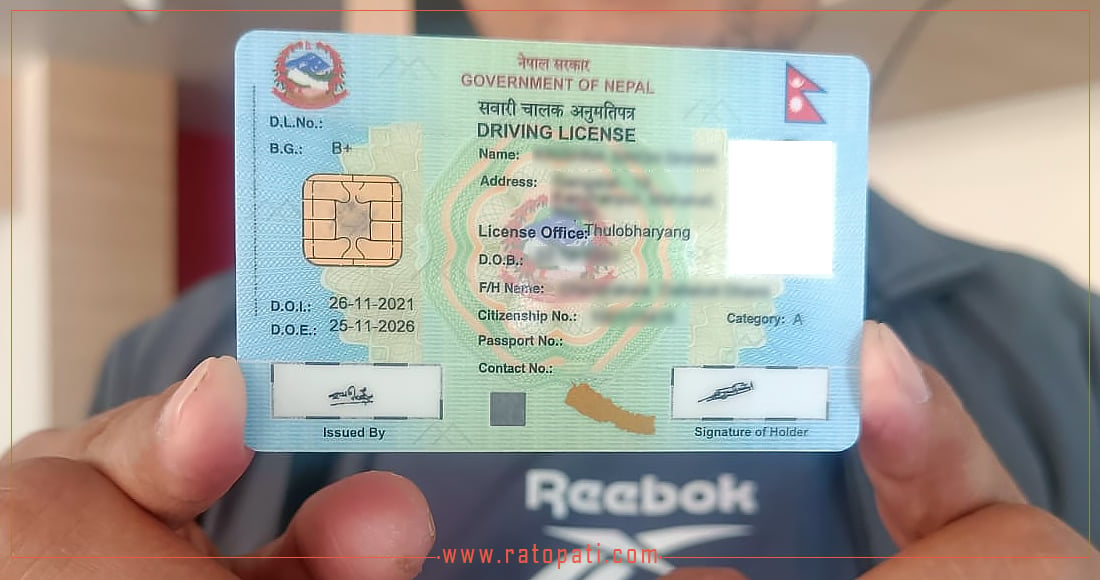
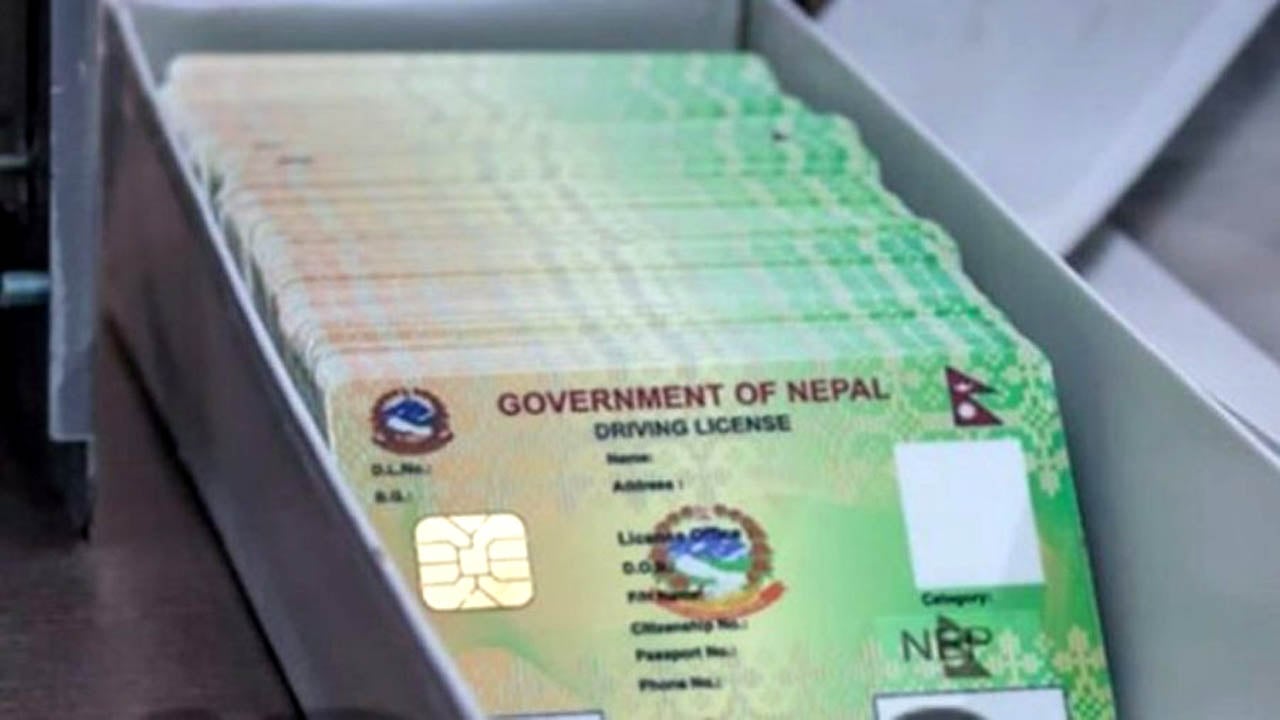
Kathmandu. Only one month remains for the Security Printing Center to complete the agreement to print 1.2 million smart driver's licenses. Although the agreement stipulated printing 1.2 million licenses within six months, the Security Printing Center has printed only 28,000 in five months.
According to the Department of Transport Management, the Center has printed 28,000 units and handed them over to the Department. A total of approximately 2.8 million licenses are yet to be printed. Due to the delay in printing licenses on time, service recipients have been forced to carry receipts from 'trial pass' for years in their pockets.
During the 'Janjati' agitation on Bhadra 23 and 24, an angry mob set fire to the Department of Transport Management office in Minbhawan, completely damaging the old license printers, servers, and other technical equipment present in the department's office. After the department itself lost the physical capacity to print licenses, it handed over the full responsibility of printing to the Security Printing Center as an alternative and permanent solution.
After the legal provision in the Security Printing Center Act allowed the Center to print driver's licenses, the Department expedited preparations. An initial agreement for printing was made between the Department and the Center in the first week of Asar. Despite the agreement, printing could not start immediately due to technical preparations and a shortage of raw materials.
Finally, on Kartik 12, a formal and final agreement was signed between the Department and the Center to print 1.2 million licenses within six months.
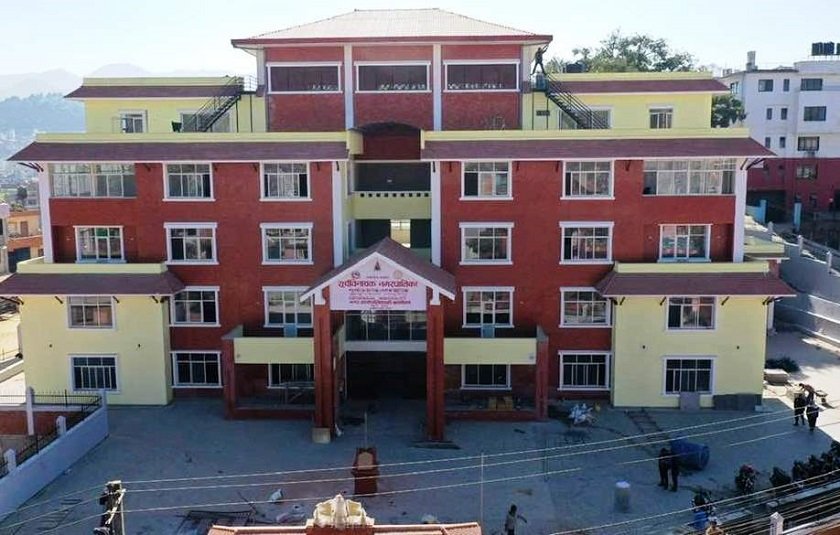
The license printing officially began on Kartik 21 in the state-of-the-art building of the Security Printing Center located in Panauti Municipality-5, Kavrepalanchok. The then Minister for Communications and Information Technology, Jagat Bahadur Vishwakarma, inaugurated it by pressing the button of the printing press. At that time, the Executive Director of the Center, Devraj Dhungana, announced a target to complete the printing of a total of 1.2 million licenses, with 100,000 units per month for the first three months and 900,000 units in the remaining three months.
However, only 28,000 units have been printed in five months. The delay in printing has been attributed to the import and procurement process of raw materials.
As the 'deadline' of Baisakh 12 approaches, Executive Director Dhungana of the Center claimed that they would complete the printing within the deadline by printing 25,000 to 50,000 cards daily.
The printing, which started at 500 units per day in the initial phase, has now reached 25,000 units per day. Dhungana informed that 117,000 licenses were printed in the last 5 days alone.
'We have intensified the printing work after receiving the data, and we will be handing over 117,000 licenses to the Department within the next two to three days,' he said, adding, 'The delay in printing was due to the import and procurement process of raw materials.'
Meanwhile, Keshav Khatiwada, Director at the Department of Transport Management, also claimed that the Printing Center has increased its capacity. According to Khatiwada, the Department has been informed that the Center has mobilized systems and manpower to print up to 50,000 cards daily.
Currently, work is being carried out in two shifts at the Center, and the goal is to print 1.2 million cards within the stipulated time frame (Baisakh 12) by running the machines in three shifts if necessary.
The most crucial aspect for license printing is data availability. According to Director Khatiwada, the Department has so far sent data for 200,000 licenses to the Center. An additional 400,000 data sets are kept ready.
'We have no shortage of data; we can provide it immediately if the Printing Center requests it,' Khatiwada stated.
Although technical problems were observed in data exchange between the Department and the Center some time ago, it is reported that these issues have now been resolved. Executive Director Dhungana stated that data is currently being received regularly from the Department, and printing and finishing work is underway at the Banepa-based Printing Center.
Why the Delay?
Both agencies admitted that the main reasons for the years-long delay in license printing were the international bidding (tender) process and the shortage of raw materials.
According to Director Khatiwada, the initial slow printing was due to the time taken for the international tender for card procurement and material transportation.
Dhungana also cited the procurement process and raw material management as the main reasons for the delay even after five months of the agreement.
He said, 'It took time to finalize the procurement process initially. Some time was also spent importing raw materials from abroad and setting up the machinery. Now all materials are available, so there will be no obstruction in printing now.'
In the initial phase, when only limited cards were available, the Department distributed essential licenses only to those going for foreign employment, students going abroad for study, diplomatic missions, and those going on peacekeeping missions. Khatiwada informed that approximately 28,000 such essential licenses have been printed and distributed so far.
The Department of Transport Management stated that the 'backlog' of licenses accumulated over the past 3-4 years is about 2.8 million. The claim is that 1.2 million licenses as per the agreement will be printed by Baisakh 12.
After that, the Center plans to print and complete the approximately 1.2 to 1.3 million pending licenses from the past 3-4 years, besides the 1.2 million licenses under the agreement, within the next three months.
'We have started preparations to ensure that all the licenses held up for a long time reach the hands of the general public within the next 3 months,' Dhungana said.
This specific news has been automatically translated by AI. As a result, there may be some inaccuracies or language errors.
_Sw2x64Nala.jpg)