Koshi Province Overhauls Planning Process, Mandates Project Bank for Budget Inclusion


Biratnagar. The Koshi Provincial Government has formulated a working procedure to transform the traditional style of project selection and budget formulation to institutionalize, make transparent, and results-oriented the overall development process of the province.
Following widespread public complaints about the misuse of limited resources due to the practice of inserting projects based on access and influence in previous years, the Provincial Planning Commission has established a new legal and technical arrangement mandating that projects must only be included in the budget through the Project Bank.
To achieve this, the Provincial Planning Commission has issued the 'Project Classification, Basis and Criteria Determination, and Project Bank Management Working Procedure, 2082'. The Commission argues that this new procedure aims to tie together all 137 local levels, the District Coordination Committee, and all ministries in Koshi Province under a single formula to chart a common development roadmap.
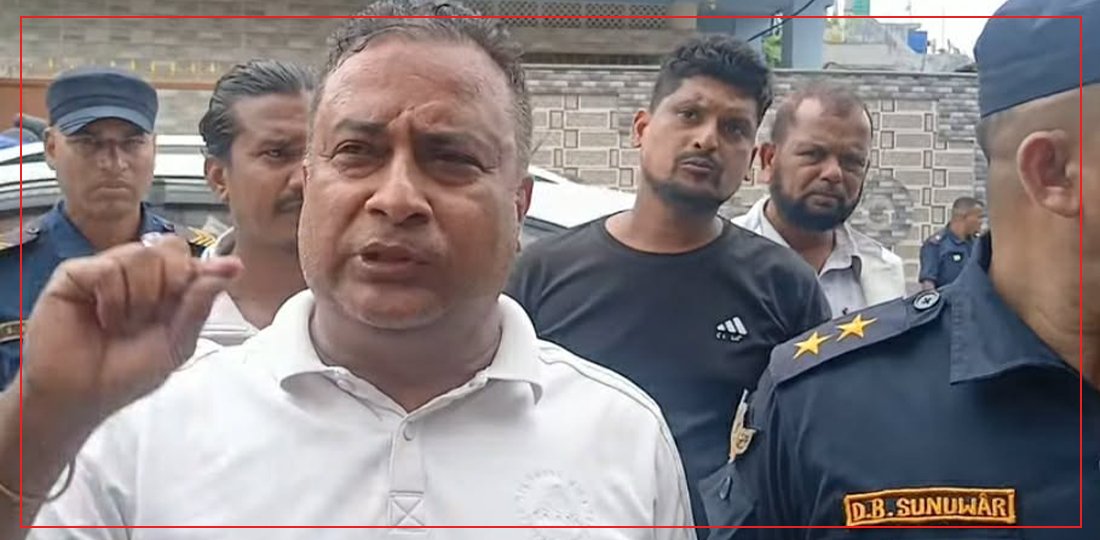
Tara Nath Niraula, Vice Chairman of the Provincial Planning Commission, expressed confidence that this new arrangement will prove to be a milestone for the planned development of Koshi Province. According to him, two separate working procedures have been merged and integrated to be scientific, eliminating the technical complexities and duplication seen in past project selection processes.
'Previously, the province had two separate working procedures, one for project selection and classification, and another for the project bank management system,' he said, 'and those two procedures caused a lot of confusion. Therefore, we have developed an integrated system while correcting that aspect.'
According to Vice Chairman Niraula, local levels previously did not have the opportunity or provision to enter projects into the Project Bank system. He clarified that now all 137 municipalities can manage their projects using this same software. He added that this saves the municipalities lakhs of rupees they would have spent on developing separate software.
This new system has also digitally linked coordination between local levels, the province, and the federal government. If municipalities need to send selected projects to the province, the software will automatically forward them, and projects to be retained by the local level will be secured in a separate section.
According to Vice Chairman Niraula, this system will completely prohibit the duplication of projects. The government has already started preparations for the budget of the upcoming fiscal year (2083/084) from now on.
In this context, the Provincial Planning Commission had already written to all subordinate ministries and local levels on Chaitra 9, 2082, inviting them to enter project details through the Project Bank Information System.
The letter, signed by Section Officer Navdeep Rai, clearly stated that any project or program to be operated by the province for the fiscal year 2083/084 cannot be included in the budget unless it is entered into the Project Bank system.
The working procedure sets very strict and objective criteria for project classification and priority setting. The province has now adopted a policy of not allocating budgets to small and fragmented projects.
Under the new criteria, road and bridge projects must have a minimum cost of NPR 1 crore, while physical infrastructure projects such as suspension bridges, irrigation, education, health, sports, and drinking water must have a minimum cost of NPR 25 lakhs.
A limit of NPR 50 lakhs has been set for tourism promotion projects, and NPR 25 lakhs for sewerage and drainage construction in urban areas. This ensures that small projects are implemented by the local levels, and only large and strategically important projects fall under the purview of the provincial government.
However, the provincial government has reserved the right to include small but important projects in special and exceptional circumstances, but such projects must also come through the Project Bank process.
The Commission states that project selection will now be decided based on score weightage rather than arbitrarily. The working procedure has developed an evaluation system of a total of 100 marks, with 70 marks allocated for general criteria and 30 marks for sectoral criteria.
Under the general criteria, aspects such as the project's contribution to the province's economic growth, alignment with Sustainable Development Goals, potential for job creation, and social inclusion will be considered.
Similarly, for the 30 marks under sectoral criteria, the project's preparedness, assurance of land acquisition, and the status of the Detailed Project Report will be taken into account. Projects scoring above 75 marks will be placed in 'High Priority', those scoring between 50 and 74 marks will be classified as medium priority, and those scoring less than that will be low priority.
This will make it easier for both the bureaucracy and political leadership to make objective decisions regarding which projects to prioritize given the limited budget situation, said Vice Chairman Niraula.
The working procedure has imposed even stricter conditions for multi-year projects. Before any project is taken for multi-year contracting, its Environmental Impact Assessment, resource assurance, and technical feasibility study must be mandatorily completed.
Previously, there was a problem where many projects started arbitrarily and were left incomplete midway due to budget shortages or technical reasons. This new arrangement aims to end that problem.
Vice Chairman Niraula stated that henceforth, proposals for multi-year projects can be up to NPR 30 crore, and proposals for social infrastructure programs cannot exceed NPR 15 crore. The Commission claims this will help maintain financial discipline for projects.
The working procedure issued by the provincial government has divided projects into six main categories: economic, social, infrastructure, forest and environment, good governance, and interrelated sectors.
Furthermore, the single and concurrent jurisdiction lists specified by the Constitution of Nepal have also been made the main basis for project selection. This is expected to reduce potential jurisdictional disputes between local, provincial, and federal government projects in line with the spirit of federalism.
The provision requiring the mandatory disclosure of the local level's name and ward number when proposing new projects is expected to help maintain a balance in the geographical distribution of projects, according to the Provincial Planning Commission. Additionally, the system is designed to filter out budget duplication from more than one provincial ministry or office for the same project.
The working procedure mandates that proposals must be entered into the Project Bank by the end of Kartik every year, after which ministry-wise and district-wise formulation workshops will be organized. These workshops will involve extensive participation from experts, elected representatives, and stakeholders in the relevant sectors to discuss the rationale and necessity of the projects.
Projects selected from the workshops will be recommended by the concerned line ministries to the Provincial Planning Commission, and only after the Commission's final certification will those projects be included in the budget's Red Book, Niraula stated.
The Provincial Planning Commission's letter sent to all local levels and District Coordination Committees mentioned that user IDs and passwords for accessing the Project Bank system have also been provided. The Commission is also preparing to provide immediate assistance for any technical problems and training to staff if necessary. With the start of this digital system, the compulsion to carry files to Biratnagar for projects has also ended.
Municipalities will be able to register project proposals online from their own offices. This will save both time and resources. This system will also promote transparency, as the public can find out the status of any project and how it was evaluated.
If the strict criteria and scoring system set by the working procedure are implemented, the old habit of selecting projects based on political pressure will be eliminated, ensuring that development projects in Koshi Province move forward based on their rationale, necessity, and technical readiness, rather than on anyone's favor or grace.
This specific news has been automatically translated by AI. As a result, there may be some inaccuracies or language errors.

_Sw2x64Nala.jpg)