Gandaki Lawmaker Criticizes Prime Minister-Elect for Past Stance on Provincial Structure

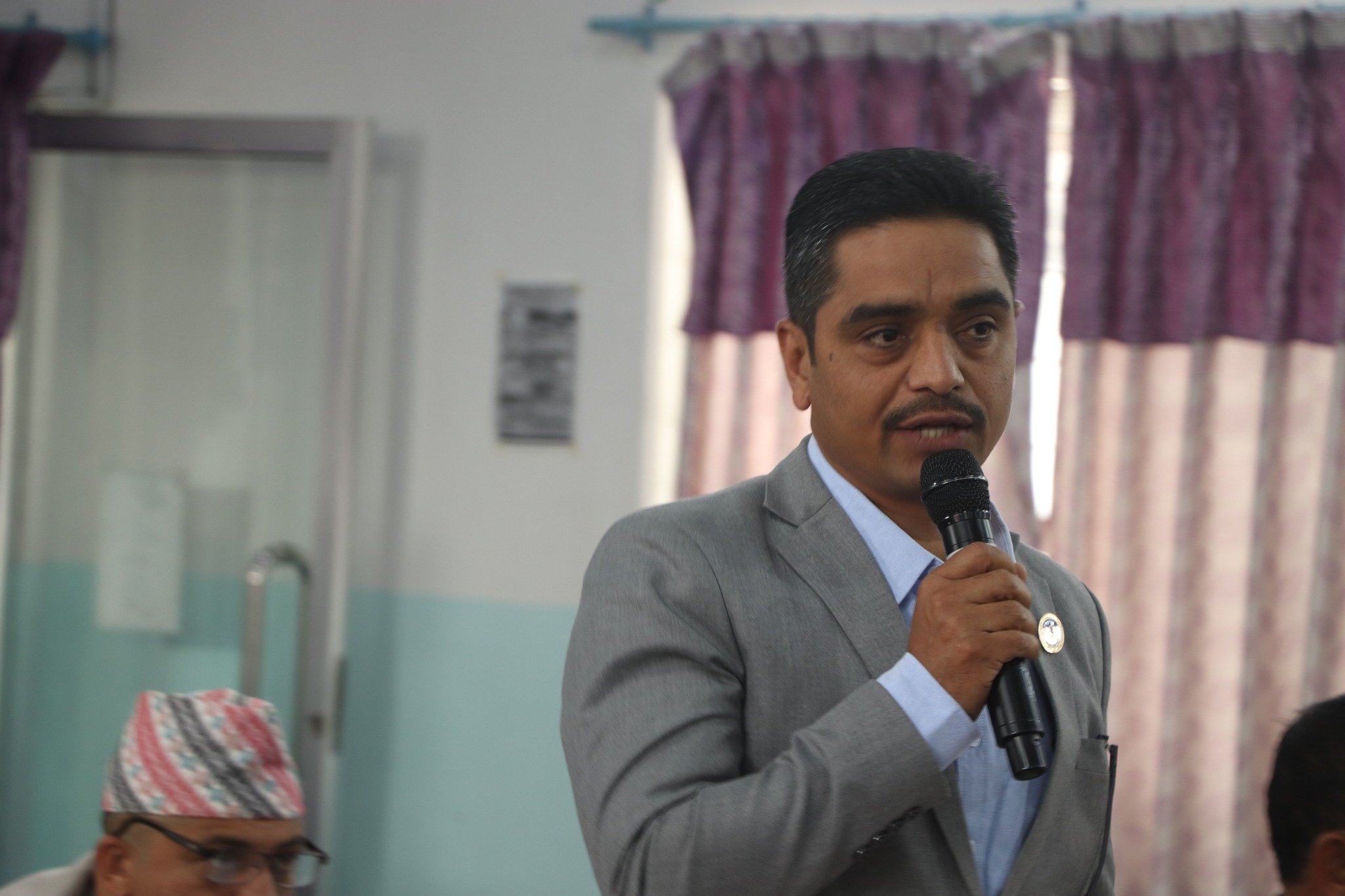
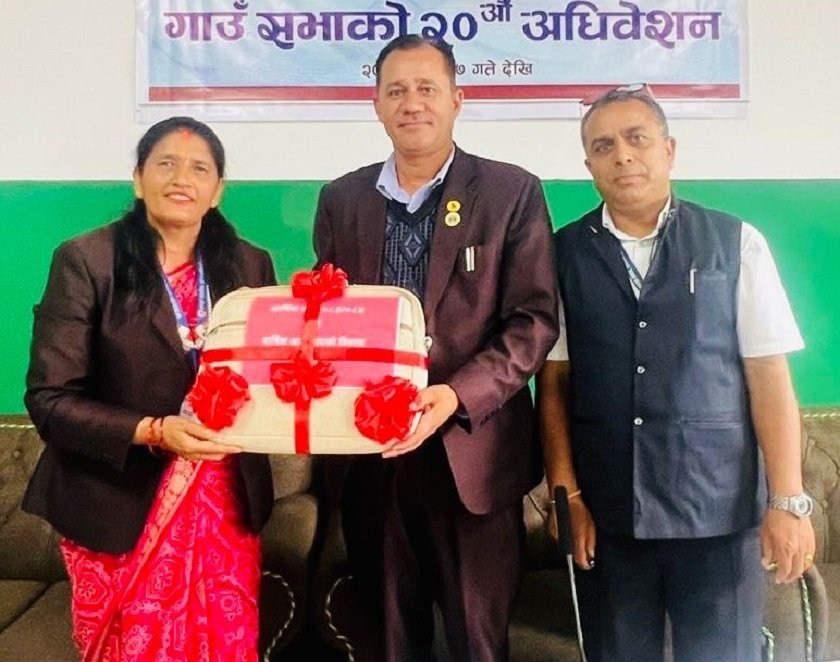
Pokhara. Gandaki Province lawmaker Dilliram Subedi has criticized the individual who is set to become the Prime Minister for having previously boycotted voting and discarded ballots, arguing that the province was unnecessary, yet is now on the verge of becoming PM. Addressing the Gandaki Provincial Assembly, he remarked that the person who previously stated the province was not needed, but later advocated for strengthening the province during elections, has been taught a lesson by the school of time. This referred to Balendra Shah (Balen), who argued that the provincial structure was redundant before being presented as a candidate for Prime Minister and joining the Rastriya Swatantra Party.
However, while addressing his first rally in Janakpur after being presented as a PM candidate and joining the Rastriya Swatantra Party, Balen stated that provinces are necessary and should be further strengthened and implemented. Subedi expressed hope that issues concerning provincial rights, which have been shelved for years, will be addressed following the formation of the new government.
‘The personality who did not vote, arguing that the province was not needed, and walked away discarding the ballot paper in the previous provincial assembly election, is becoming the Prime Minister of this country. The hope lies in the fact that he has stated, having gone through the school of time, that the province must be strengthened,’ he said. ‘Let us hope that the issues of provincial rights, which have been shelved for years, will now be addressed.’ However, Subedi also commented that it is unfortunate that the report of the Karki Commission, formed after the movement against good governance and 'Nepo-Baby' culture, has not been made public.
‘The movement rising against good governance and Nepo-Baby, the report of the Gauri Bahadur Karki Commission should be immediately made public as is, and action should be taken upon it,’ he stated. ‘On Bhadra 23, 22 unarmed youths lost their lives; on the 24th, another 54 citizens lost their lives. The history and accountability of those tens of thousands of prisoners who escaped from jail are what the Nepali people want to know. Who fired the shots? Who set fire to Singha Durbar?’
His address verbatim:
Honorable Speaker,
We are in the winter session. Discussions on bills will certainly take place. And in the meantime, there have been many upheavals in national politics. In a specific situation, the House of Representatives election has been completed, and the country is on the verge of moving onto a new path. Certainly, it is desirable and natural to discuss the discourse, deliberation, and the impact it will have on us surrounding this moment.
If we look back around the 'Gen-Z' uprising that occurred on Bhadra 23 and 24, let us recall those days, those moments, that time of terror. Immediately after that, within a span of just six months, holding new elections peacefully and harmoniously, and moving the country forward on a new path according to the highest democratic process, and transferring power—many countries observing the world might not have expected this. Many questions might have arisen among some of us too. But amidst numerous questions, we must view this as a victory for Nepali culture and tradition, and for Nepal's democratic movement.
Members of the House of Representatives have taken the oath, and a new path is beginning. From this platform, I wish to extend my best wishes to the new House of Representatives. The tenure of the House of Representatives in Nepal has never run uninterrupted for a full five years. Even after the achievement of democracy in 2047 BS, it could not complete five years. From the day the people's leader Bishweshwar Prasad Koirala started the struggle saying that Nepal needs a system of governance elected by the people in 2063 BS until today, the House of Representatives has not completed five years. I wish this parliament to run for a full five years and to establish a stable government to move the country on a new path.
This struggle is the conflict between the old and the new, the fight between the old and the new. I wish that the political discourse, which has been framed with the narrative that everything old is bad and we new ones will do well, can achieve creative power. Time is the greatest teacher. I have both hope and questions. The hope is in the sense that the personality who did not vote, arguing that the province was not needed, and walked away discarding the ballot paper in the previous provincial assembly election, is becoming the Prime Minister of this country. The hope is that he has stated, having gone through the school of time, that the province must be strengthened. Let us hope that the issues of provincial rights, which have been shelved for years, will now be addressed.
The movement rising against good governance and Nepo-Baby, the report of the Gauri Bahadur Karki Commission should be immediately made public as is, and action should be taken upon it. On Bhadra 23, 22 unarmed youths lost their lives; on the 24th, another 54 citizens lost their lives. The history and accountability of those tens of thousands of prisoners who escaped from jail are what the Nepali people want to know. Who fired the shots? Who set fire to Singha Durbar?
Stories of social media and algorithms are widespread. Algorithms show sad people a sadder world. They show angry people material that makes them angrier. They make the disappointed even more disappointed. People stop searching for what is true; they start considering what they like as the truth. We are amidst this challenge.
We have had too much arrogance that we have done good deeds. Now, all of us must say Namaskar, Thank You, and Excuse Me. I believe that the public, who are like gods, will understand. When the time comes, the people themselves will speak out on the streets.
Finally, I would like to borrow a line from the poem by writer Basanta Basnet:
Those who were spewing anger yesterday are now beginning to see the need for civic duty and harmony. Those who promised to change overnight are now saying that change does not happen overnight. If we all gain this much wisdom, the days ahead can be pleasant. Thank you, Namaskar.
This specific news has been automatically translated by AI. As a result, there may be some inaccuracies or language errors.
_Yq85YOxh21.jpg)