Basana Thapa Makes History as First Woman to Win Direct Federal Election Seat in Karnali Province
_aXvP1Z3gpj.jpg)
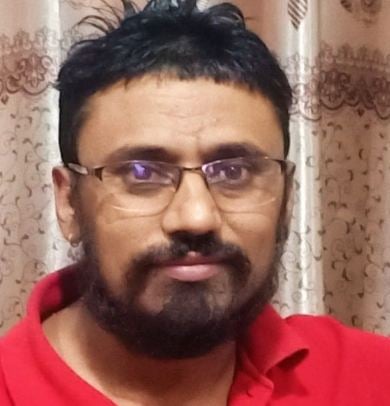
"Can a woman also win an election?" This was the question Nepali Congress youth leader Basana Thapa faced most frequently before the elections. Winning a direct election and reaching parliament amidst Karnali's remote geography, complex social structure, and entrenched patriarchal tendencies is truly like "chewing on iron chips." But Basana has passed this difficult test with ease, setting aside all these obstacles.
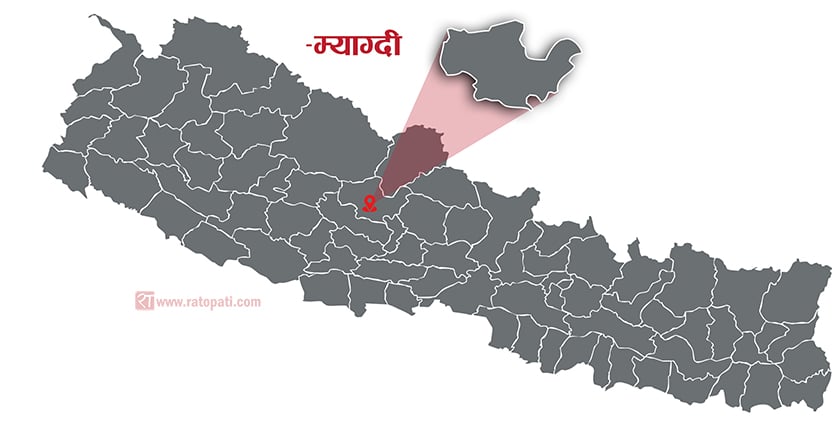
She has been elected as a member of the House of Representatives from Dailekh Constituency No. 1. Her victory was not just ordinary; she also created history as the first woman to win a direct election in Karnali. She is very happy that a record was set with her victory. She states that the public endorsed her social service and personality by electing her.
"The voters of Dailekh Constituency No. 1 have proven that women can also do it," she said while sharing her joy of victory. "I must now live up to their trust." She believes this victory is not just hers but a victory of confidence for all women in Karnali. Her closest competitor was UML leader Rabindra Raj Sharma.
Basana's victory not only wrote a piece of history for women in Karnali but also succeeded in planting the Congress flag in a constituency known as an impenetrable fortress of the UML for the last 12 years.
Her victory was only possible when Congress dared to give a ticket to a woman from Karnali for the first time. This is because no woman from this province has ever won a direct election to reach the House of Representatives.
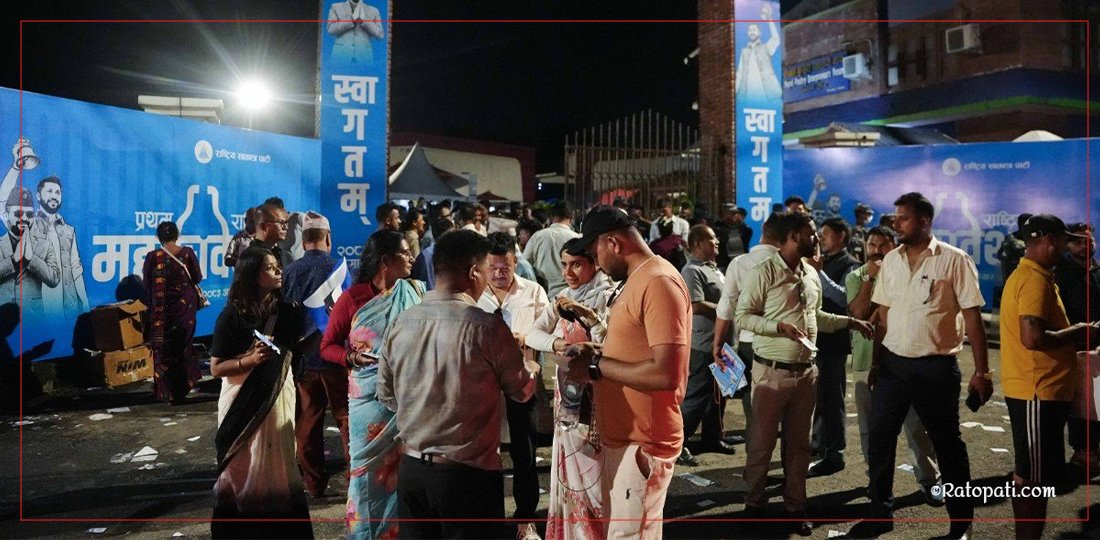
"For me, the ticket this time was not just an opportunity, but a big trial by fire," she says. "On one side was an established UML leader. On the other side was the wave of the Rastriya Swatantra Party (RSP) spread across the country, and for the constituency, a female candidate for the first time." She admits that initially, she was afraid she might lose the election.
"When I went to every village and mingled with the workers and the public, the trust reflected in their eyes replaced my fear with confidence," says Basana.
When the counting for Dailekh-1 began, Basana's heart pounded as the RSP took a lead of about 8,000 votes. She had faith in the voters with whom she had shared ups and downs in the past.
"RSP's vote base is social media. The eight thousand votes RSP received in our constituency were more than we expected," she says. "Many people voted recognizing the person. They chose the one who was with them in their joys and sorrows yesterday, the one they could mingle with."
Some might think Basana distributed grand agendas and dreams for victory. But that's not true; in the election, she only put forward education, health, and economic self-reliance as her agendas.
"I didn't have a big agenda. I only had a commitment to deliver results through work. Improving the physical infrastructure of schools and quality education was my first priority," she shares. "There was also the matter of upgrading health posts and managing doctors."
Basana states that the condition of women in Karnali remains challenging. Referring to the 2074 BS local elections, she says, "Back then, it was difficult to even find a Dalit woman member. Now some awareness has spread, but it is not enough." She explains that women there are still not economically self-reliant, which prevents them from openly entering politics.
One reason behind Basana's victory is also the 2074 BS local level election. She was a candidate for the post of Deputy Mayor of Narayan Municipality but was defeated by a narrow margin. For many, defeat is an end, but for her, it was a new beginning. Even after being defeated, she did not stop visiting the homes of the public. Instead of cutting a birthday cake, she started distributing notebooks and pens at schools in remote areas. Celebrating Teej with underprivileged communities and distributing health materials became her routine. This service spirit left a deep impression on the minds of the people.
Basana states that the condition of women in Karnali remains challenging. Referring to the 2074 BS local elections, she says, "Back then, it was difficult to even find a Dalit woman member. Now some awareness has spread, but it is not enough." She explains that women there are still not economically self-reliant, which prevents them from openly entering politics.
Basana is also a businesswoman. She runs a hotel business in her area. She was financially independent even before entering politics. She mentions that it would not have been possible to contest the election spending 14-15 lakh rupees if she were not self-reliant.
"As long as women are not economically strong, others will interfere in their decisions," she continues. "One of my main agendas for Karnali is also to make women self-reliant."
Born in Kathmandu, Career in Dailekh
If one closely observes Basana's life, it is no less interesting than a movie script. She was born and raised in an affluent family in Kathmandu. She completed her education up to Plus Two from a prestigious school like LRI in Kalanki. Her grandfather was elected as a Member of Parliament from the then Kathmandu Constituency No. 2 in the 2015 election. Raised under the protection and schooling of her grandfather, she lost her father at a young age. Her uncles and other family members were involved in Congress politics. Thus, it can be said that she inherited politics.
She started student politics from the Student Union of People's Campus. While studying at People's Campus, she fell in love with Rabin Singh Thapa from Dailekh. That love took a new turn in her life in 2059 BS (2002 AD). She married for love and moved to Dailekh.
At that time, the Maoist conflict was at its peak. There was no phone service, and towers were destroyed. Life in Dailekh was very difficult for her, having grown up in Kathmandu. She still shudders when she recalls those days.
"The first 6-7 months were enjoyable in the new place. But later it became difficult," she recalls the old days. "The values my family instilled in me, the idea that one must manage their home wherever they go, kept me bound. I somehow managed to pass the days."
Although her party, Congress, has shrunk to a small size in parliament, Congress will play the role of the main opposition. Basana will also have to play the role of a constructive opposition MP. "Regardless of who forms the government, the agenda for development must be shared. I will play the role of a constructive opposition in parliament," she says. "I will support the good work done by the government and hold them accountable for wrongdoings."
Because she was preoccupied with family matters, she only became active in politics from Dailekh after the 2062/63 People's Movement. In the 2064 BS Constituent Assembly election, she was active in Ganesh Bahadur Khadka's election campaign. She managed the 'campaigning' for women and youth in that election. Her activism established a special identity for her within the party, which led to her securing the Deputy Mayor ticket in the 2074 BS local elections and the MP ticket now.
It is natural that the goal of a politician is up to the Prime Minister's post. However, she believes that work is bigger than position for her.
"I will not let down the trust with which the people have sent me now. I have to deliver results no matter what," says Basana. "In five years, I have to go back among the people." Therefore, she currently intends to dedicate herself to the service of Dailekh and Karnali rather than various positions.
Although her party, Congress, has shrunk to a small size in parliament, Congress will play the role of the main opposition. Basana will also have to play the role of a constructive opposition MP. "Regardless of who forms the government, the agenda for development must be shared. I will play the role of a constructive opposition in parliament," she says. "I will support the good work done by the government and hold them accountable for wrongdoings."
Basana is the Sister of Heroine Bipana
Few Nepalis might not have heard the name of actress Bipana Thapa. Basana is Bipana's younger sister. While Basana was still in school, her sister Bipana had already started reigning in the film industry. Basana also had ample opportunity to enter that field. Her sister Bipana also wished to bring her into the film industry. However, her interest grew more in social service than in film acting. When her sister told her to pursue acting, she would get involved in social service through Scouts and the Lions Club.
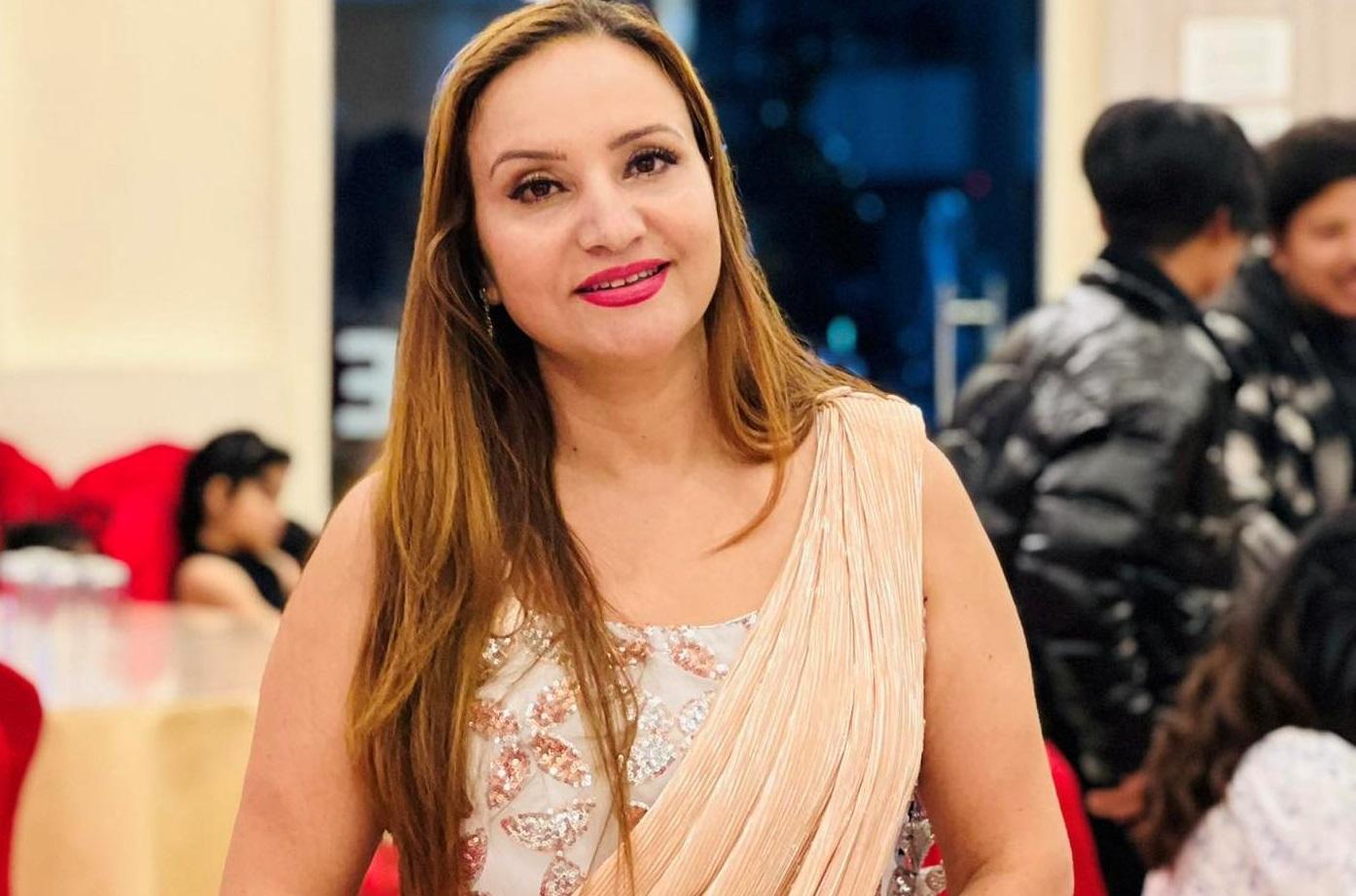
She says that although her sister was interested in acting, her own interest has been in social service since childhood. Basana was the captain of the Scout troop in school and had a habit of fearlessly conveying her friends' problems to the teachers. That habit led her to take on roles as a team captain and leader in the Lions Club and various social organizations.
After marriage, she shares that she did a lot of work in the remote villages of Dailekh through the Lions Club. When she contested for Deputy Mayor in 2074 BS, actress Bipana Thapa also came to campaign for her.
Basana is also continuing her studies. She is pursuing a doctorate from India. She believes that education and politics must go hand in hand.
Basana's Blueprint for Dailekh's Development
Quality of Education and Health: Her first priority is that it is not enough just to build school and health post buildings; there must be quality education and arrangement for skilled doctors there.
Dailekh's Petroleum and Gas Reserves: The excavation of petroleum resources in Dailekh is her main national agenda. Currently, due to wars around the world, there is a shortage of gas in our kitchens. She believes that if we can extract gas from our own district, we will become self-reliant. She expresses her determination to raise this issue in parliament to make this plan a reality.
Tourism and Herbs: She wants to introduce the historical significance of Dailekh's Panchakoshee (Shristan, Nabhisthan, Paduka, Dhuleshwor, Kotila), Mahabu Lake, and the origin of 32 castes to the world. She believes that if road access is provided to that area, Indian tourists will flock there.
Women Empowerment: Another important goal of hers is to bring the women of Karnali out of the kitchen and make them economically self-reliant. She believes that if this can be achieved, women from Karnali will be able to reach various bodies of the state.
This specific news has been automatically translated by AI. As a result, there may be some inaccuracies or language errors.
_Yq85YOxh21.jpg)