Expert Analysis: Restructuring Ministries and Combating Corruption in Nepal's New Government


Before forming the new government, the Rastriya Swatantra Party (RSP) is holding internal discussions on reducing the number of ministries as promised in its pre-election manifesto and establishing a powerful commission to control corruption in line with the spirit of the 'Gen-Z' movement.
The RSP is preparing for newly elected members to take the oath of office and secrecy on Chaitra 12, and to select senior leader Balen Shah as the parliamentary party leader, paving the way for him to become Prime Minister.
Prior to that, RSP stated that Chairman Rabi Lamichhane, senior leader Balen, Deputy Chairmen DP Aryal, Dr. Swarnim Wagle, and other leaders are in continuous discussion regarding the structure of the cabinet, who will be ministers, and how to implement the promises made in the manifesto.
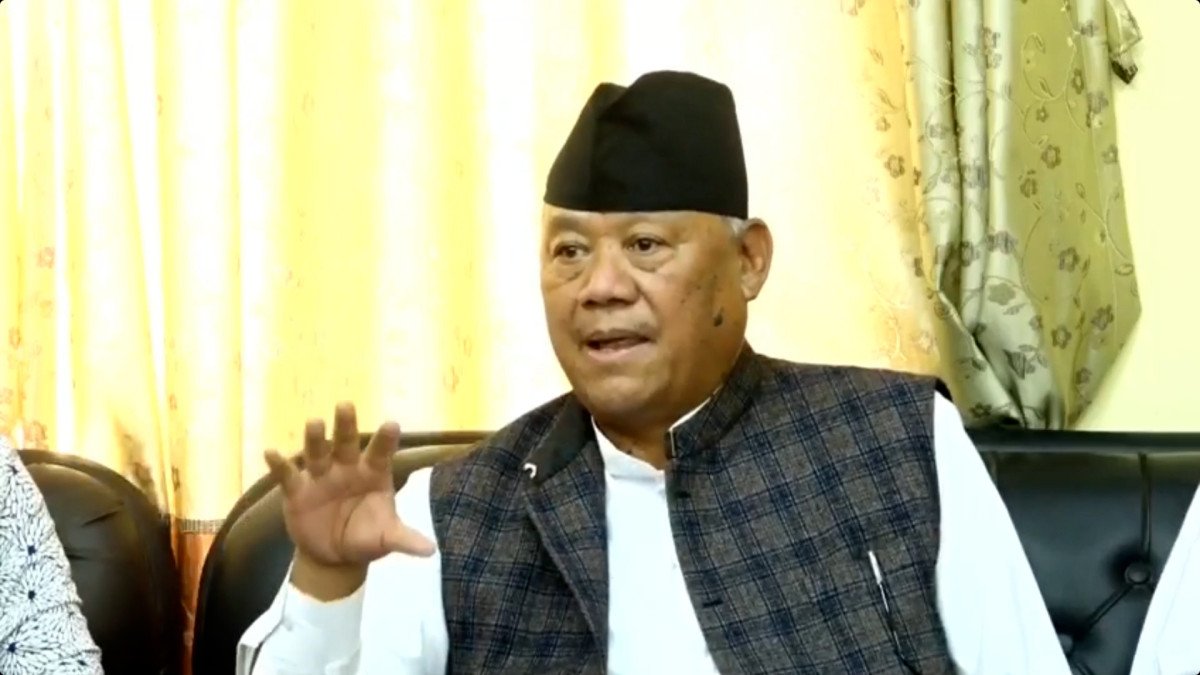
Ratopati correspondent Ganesh Pandey spoke with administration expert Umesh Mainali about what the upcoming government should do to reform the administration. Here is the edited excerpt of the conversation with Mainali:
- The Rastriya Swatantra Party (RSP), which has nearly a two-thirds majority, is forming a new government in a few days. It has started internal groundwork to reduce the number of ministries as mentioned in its pre-election manifesto. How appropriate is the number of ministries for the context of Nepal?
The number of ministries in Nepal is too high. For instance, the United States has 12 ministries, and Japan has 11. There is no logic for us to have 25 ministries. Moreover, we are in a federal structure. In a federal structure, the work of the federal government decreases, but we have been splitting ministries based on the need to 'adjust' various ministers and based on various personal interests. We have only increased them.
In 2048 BS, a High Commission for Administrative Reform was formed under the chairmanship of the Prime Minister. At that time, suggestions were made by some to keep the number of ministries at 15, some at 17, and some at 18. When they gave suggestions, federalism had not even been introduced. It was a unitary form of government. Now that we have adopted a federal structure, much of the load shifts to the two levels of government. Therefore, such a large size of federal ministries is not needed. 15 is appropriate. It is better not to exceed that.
It is better to merge ministries with similar natures. Their job is to create federal policy and implement federal programs. As far as federal programs are concerned, they are implemented through the provincial and local level mechanisms using delegated authority. A large mechanism is not needed here now.
Merging ministries with similar natures is good. Their job is to create federal policy and implement federal programs. As for federal programs, they are implemented through provincial and local mechanisms using delegated authority. A large mechanism is not needed here now.
In Switzerland, cantons and communes do not have federal government employees. They have 27 cantons at our state level, but the federal government's programs are implemented by those very cantons and communes. The presence of their federal employees is non-existent. In America, some ministries like Homeland Security, which they call Federal Offices, are housed in various state buildings—and they handle all the work. There are tasks that the Union must handle, tasks that must be overseen by the Union, which they call tasks for the Federal Administration or the Union to handle. Therefore, the organization here is large, and it needs to be reduced.
- Discussions are continuously being held between prospective Prime Minister Balen Shah and party officials regarding making the ministries lean and efficient. It is said that consultations are being held with subject matter experts, administration experts, and all stakeholders. How can the existing 21 ministries in the context of Nepal be adjusted?
They do not have to make that many decisions. Previous commissions have already written down suggestions for merging ministries by specifying the appropriate number of ministries. If they only want to follow what was suggested previously, there is no need for additional consultation or opinion gathering, unless they want to add or subtract from those suggestions. For instance, Kashi Raj Dahal also suggested 15 ministries. That can be looked at. Therefore, there is not much exercise needed for adding or subtracting ministries. For example, why do we need separate ministries for Industry, Commerce, and Supply? Why three for Irrigation, Water Resources, and Drinking Water? If everything is merged into a Water Resources Ministry, that would suffice. Ministries that should not be merged are only two or three, such as Foreign Affairs, Finance, Home, and Defense. All other ministries can be merged.
- You cited examples of countries like America, Japan, and Switzerland earlier. Will there be any problem if all ministries except the crucial ones are merged?
The work that the federal government does—the federal offices and federal programs—can be delegated to the provinces. They can be allowed to work based on certain conditions. Except for very large projects like the Asian Highway, smaller roads are currently being built by municipalities and the Department of Roads. Why should this be done by the center? If you look at Kathmandu, you see 'Sabi' written on all poles, meaning built by the Department of Roads. What difference would it make if the municipality built them? They are building the internal roads. Technical support can be provided if they lack capacity. The federal government can instruct them to work under certain federal conditions.
The provinces are sitting idle saying they have no work. They will get work this way. If this is done, a large empire will be built. This is called empire building; ministries tend to add more departments and pull back functions from the lower levels to the center. Either we should say we do not need federalism at all, or if we claim federalism brings government closer to the people, then they must be empowered.
- This work can be done by the Council of Ministers itself based on the Government of Nepal (Work Distribution) Regulations, right?
The Council of Ministers can do all these things. The Cabinet can pass the regulations. The Work Performance Regulations are also passed by the Cabinet. The Work Distribution Regulations specify the roles of ministries and which ministry does what, including the names of the ministries. The Cabinet can do that too. As for delegating federal programs downwards, why should that go to the Federal Parliament? The government itself can do it.
The closer the service is delivered to the people, the more effective it is. For example, we ourselves complain about ward programs not being effective. We don't have access to the central government above. Therefore, the lower it goes, the more it belongs to the people.
The Constitution of Nepal only mandates a maximum of 25 ministers. It does not say 'full ministries.' That includes the Council of Ministers, including assistant ministers and state ministers. Who is stopping the reduction of ministries?
- How effective is the addition or reduction of ministries in maintaining good governance?
The simplest meaning of good governance is not just talking about abstract principles. It comes in many aspects. In simple terms, did the people receive services easily? Did the people feel justice? Were their voices heard? These are the things. Did the living standard of the marginalized and poor classes rise? What kind of service are we providing—is it beneficial to the poor or the rich? We talk about deliverables; that means, did the service we provided improve the living standard of the lower class? Or did their life become dignified? Good governance is all about these things.
Principally, the closer the service is delivered to the people, the more effective it is. For example, we ourselves complain about ward programs not being effective. We don't have access to the central government above. Therefore, the lower it goes, the more it belongs to the people. The people control the agenda there. The lower the level of government, the more accountable they are to the people; thus, the ward is the most accountable.
- In Bhadra, 'Gen-Z' protested against corruption and malpractice. In the past, voices for good governance were raised in the government, parliament, and on the streets, but they were not implemented. Can the upcoming new government control corruption with the current constitutional bodies?
In our system, we have the Commission for the Investigation of Abuse of Authority (CIAA) for corruption prevention. That is sufficient for controlling and investigating corruption. Constitutional bodies are given autonomy; they are the constitutional bodies that take action against corruption that has already occurred, investigate it, and file cases. The work before that is the government's responsibility. Controlling corruption is not the CIAA's job. The government should be responsible for preventing corruption from happening.
The government should ensure its ministries are efficient and prevent any irregularities, keep them under surveillance, and exercise caution. The CIAA's job, using the authority granted by the constitution, is to investigate and file cases against corruption that has already taken place. We call those reactionary tasks.
It is not that the current institutions cannot control corruption. The current institutions need to be empowered. The law needs to expand their jurisdiction. When the CIAA Act was being discussed in parliament to expand the CIAA's jurisdiction, it was stopped. They say they cannot look into policy matters. What is policy? What is decision-making? They stopped even when attempts were made to interpret these. Therefore, the CIAA must be empowered. If it is empowered, that institution will certainly work. If someone is dissatisfied with that institution or its officials, they can be held accountable tomorrow or the day after.
Generally, constitutional bodies do not make mistakes. I was also the head of a constitutional body. Even the Prime Minister has to think ten times before interfering with the heads of constitutional bodies. Therefore, if these institutions are provided with sufficient resources and authority, it will suffice. As for preventing corruption or stopping it from happening, that is preventive work. For preventive work, offices like the Centre for Vigilance should be made very active. They should be made functional and powerful. They should monitor and prevent corruption.
Another thing is that the level of public awareness needs to be increased. There should be education at the public level that corruption and bribery should not happen. If I go and offer a bribe to get my wrong deed done, is that not a crime? That should also be stopped. It should be discouraged. Therefore, public awareness is a very big factor. China has the death penalty, but corruption exists there. Singapore has stopped corruption, but it does not have the death penalty. Denmark, a country without the death penalty, has no corruption at all. When awareness reaches the society itself, who will dare to ask for a bribe from a conscious citizen? If I think I should not get my wrong deed done, and I will also be a partner in the crime, then the person asking for the bribe should also think ten times. For that, we need education accordingly. We need that kind of moral education.
There should be education at the public level that corruption and bribery should not happen. If I go and offer a bribe to get my wrong deed done, is that not a crime? That should also be stopped. It should be discouraged. Therefore, public awareness is a very big factor.
Everything cannot be placed on the government's shoulders. What the leadership says must be like writing on stone. There must be a belief that what they say, they will truly do. Once an example is set at the top, it communicates downwards, and then the corrupt administrators will themselves fall in line, and if not, then action must be taken.
- RSP leaders have said that those who received political appointments earlier should resign on moral grounds. Can the new government recall those who received political appointments first?
First, one must understand what a political appointment is and what a constitutional appointment is. Political appointments need to be defined. The General Manager of an Oil Corporation can be a political appointee. The appointment of the chairman of some specific organization can be a political appointment. However, the appointment of the Chief Justice, the appointment of officials of constitutional bodies, is not a political appointment. It is a constitutional appointment. A constitutional appointment is made based on the recommendation of the Constitutional Council and approved by the Parliament. Who sits on it? The state itself sits there. The Chief Justice and the Prime Minister are on the Constitutional Council. The Chairman of the National Assembly, the Speaker and Deputy Speaker of the House of Representatives are there. How can an appointment made by representatives from all three organs of the state be political? It is not political; it is constitutional. The constitution specifies the provisions for removing them. There is no way to remove them except through impeachment.
If they are other political appointments, what the leaders said is correct. Even then, legal provisions must be examined. What happens if they win all the cases tomorrow? For example, let's take a Governor. The Nepal Rastra Bank Act specifies how they are appointed and removed. But until that act is amended accordingly, if they remove him, it will be illegal. As for morality, it is best if those who received political appointments, excluding officials of constitutional bodies, resign on their own. This is because those who received political appointments are the ones who create an environment for the new government to work.
- The leadership of the upcoming government is young. They do not have experience working in state administration, but there is a visible eagerness to do something new. What is your suggestion for them?
Let's look at Nepal's history in this regard. After the Jana Andolan (People's Movement) of 2046 BS, the first elected government came in. At that time, not all cabinet ministers, including the Prime Minister, were members of parliament and ministers. Girija Prasad and everyone else were new. People wondered how they would run things, but the clever move was that in the initial period, veteran secretaries like Professor Yadunath Khanal and Giriraj Koirala served as advisors to the Prime Minister. Even now, if they have an emotion, a fresh mind, they can form a technical expert group, and that's it! They can form an advisory group, and that advisory group will study every subject and provide reports.
They will point out that a certain law is flawed and what its impact will be. But they must have the desire to seek consultation. If they have the desire to seek consultation, there are such experts in Nepal. There are people here who want to serve without financial gain. But they need to recognize and utilize those individuals. If they keep such people, they won't need to say they are new. Because, apart from the Prime Minister, there are other ministers who have been ministers before. The Prime Minister and they should appoint advisors, some visible behind them and some not visible. It is not necessary for them to be visible. If they ask, the right consultation will be provided when needed.
This specific news has been automatically translated by AI. As a result, there may be some inaccuracies or language errors.