Former FNCCI President Bhawani Rana Discusses Private Sector Hopes Amidst New Government Formation

Kathmandu. The Rastriya Swatantra Party (RSP) is preparing to form a government after securing a near two-thirds majority in the elections held on Falgun 21. Balendra Shah (Balen), a senior leader of the RSP, is preparing to take the oath as Prime Minister on Chaitra 13.
However, the private sector is still struggling to recover due to the arson and looting that occurred at the residences of major business houses, industries, and traders during the recent protests. On the other hand, the escalating conflict in West Asia is posing a serious challenge to the economy due to the potential impact on remittances and inflation.
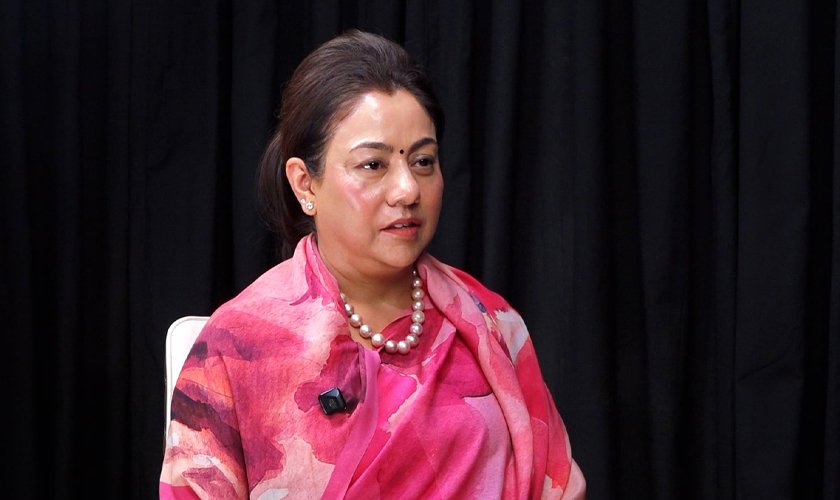
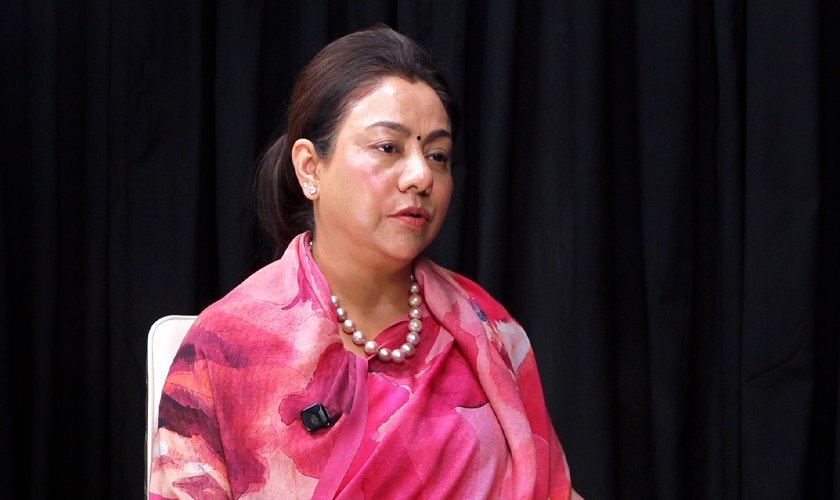
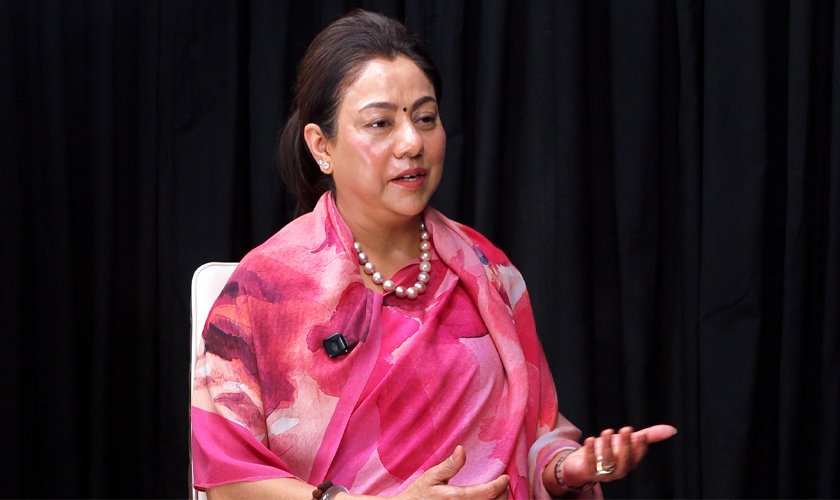
What are the expectations and perspectives of the private sector from the new government with a two-thirds majority? Here are the edited excerpts from an interview with former President of the Federation of Nepalese Chambers of Commerce and Industry (FNCCI), Bhawani Rana (the full video can be viewed separately):
What is the current state of the country's economy? How do you analyze it?
The country's economy currently stands at a very sensitive juncture. On one hand, there has been a major political 'departure,' with a single party forming a government with a two-thirds majority based on the new mandate, raising hopes of ending years of instability. On the other hand, external and internal economic indicators are highly challenging. The escalating war in the Gulf countries of West Asia appears to threaten our economy's main pillar: remittances. If millions of youths there are forced to return, not only will the foreign exchange reserves decrease, but a major unemployment crisis will arise at home.
Signs of rising inflation due to fuel price hikes are already visible in the market. Domestically, the morale of investors has been severely hit by the attacks on private property during the Bhadau protests. Market demand has decreased, and industries are not operating at full capacity. Therefore, the current situation is a mixture of unlimited political hope on one side and serious economic risk on the other.
Is the fear from the attacks on the private sector during the recent protests still lingering?
It remains fully. Which businessperson can sleep soundly at night after seeing their industry, built over years with blood and sweat, set on fire? While that movement brought good governance, the psychology of mob rule still exists in society. This fear will persist until the state takes strict action to break the mentality that anything can be done to someone's industry.
In the past, the private sector blamed instability for the lack of development. Now that the RSP has secured a two-thirds majority, how confident are you that political and policy stability will arrive?
The private sector always seeks policy stability. We were tired of a government being formed only to collapse within nine months, with new ministers overturning old policies overnight. It takes years to establish an industry, but policies were changed in a day.
Now, the RSP has secured nearly a two-thirds majority. This is a very rare and golden opportunity in Nepal's democratic history. This government is not compelled to make compromises with anyone to sustain the coalition. Therefore, we are fully confident that political stability will be maintained for at least the next five years. Political stability is what brings policy stability. Now the government can confidently create a five-year economic blueprint and work accordingly.
Does this strong and new mandate given to the RSP guarantee an increase in investor confidence?
The mathematics of two-thirds does not guarantee an increase in confidence by itself. For that, the government's behavior and delivery must be observed. The new mandate has certainly sparked hope. But investor confidence will only rise when they feel their lives and capital are secure. The incidents of Bhadau 23 and 24 have left businessmen deeply fearful. Confidence will only increase if this government can remove that fear and provide legal and practical assurance that the state exists and protects investment.
What specific actions should the new government, coming with agendas of good governance and citizen contracts, take in the first 100 days to bring the economy back on track and boost private sector morale?
The first 100 days are the acid test for a new government. Therefore, those who looted and set fire to the private sector in the name of the Bhadau protests must be immediately brought under the legal framework and strictly punished. This ends impunity and guarantees security.
Considering the crisis in West Asia, an Economic Crisis Management Taskforce should be formed immediately. Preparations to avoid potential economic shocks must be completed within 100 days. Obsolete and restrictive laws and acts, such as certain impractical provisions of the Black Marketing Act and the Land Acquisition Act, should be immediately repealed or the process for amendment initiated. The Prime Minister and Finance Minister must start intensive dialogue with businesspeople, considering the private sector as a crucial partner in the citizen contract.
How responsible do you think weak governance and administrative inefficiency in Nepal are for the overall development and expansion of the private sector?
They are 100% responsible. Development in Nepal has not stalled due to a lack of capital or ideas. Here, bureaucratic delays and corruption kill entrepreneurs right at the start. It takes months, sometimes years, to register a simple industry or pass an Environmental Impact Assessment.
Files get stuck at every desk. Weak governance has created a situation where honest businessmen struggle to survive, and only those who can arrange 'settings' get opportunities. This very administrative inefficiency scares foreign investors away from coming to Nepal.
It is a global practice for the government and the private sector to coordinate to understand industry needs. But why is dialogue and coordination between the private sector and the government always viewed with suspicion in Nepal?
This is a product of our archaic mindset. Everywhere in the world, the government consults the private sector when making policies because the private sector pays taxes and creates jobs. But in Nepal, the mindset of administrators and some politicians is that businessmen are merely profiteers.
When the government and businesspeople sit together, society and the media also tend to suspect that some 'setting' is taking place. This narrative needs to be broken. We are not competitors to the state; we are co-travelers.
How much does the hassle entrepreneurs face in government work, from company registration to tax payment, demotivate investors? What immediate reforms are needed in this area?
This not only lowers morale but has caused many to migrate. We talk about a 'One Window Policy,' but after entering that single door, one has to knock on a hundred others. Even when paying taxes, one faces treatment like a criminal. The immediate reform needed is complete digitalization. Company registration, renewal, and tax payment systems must be faceless and time-bound. This two-thirds government must immediately implement a system to penalize employees who do not process files within the stipulated time.
The recent attacks on the private sector during the protests showed a negative perception of businessmen among the youth. What needs to be done to improve this sentiment?
This is a matter for serious review for us. The younger generation had great frustration with the state power and the system. The private sector also became a target of that anger. We failed to properly communicate our relationship and contribution to society.
To improve this sentiment, the private sector must make its Corporate Social Responsibility results-oriented, not just cosmetic. We need to explain to the youth that we provide employment and pay taxes to the state. Businesses must become transparent and strictly adhere to environmental, social, and good governance standards.
To what extent do you agree that the public perception of the entire private sector has worsened due to 'Crony Capitalism' (Seth Pundjibaad) where a few entities gain undue advantage by colluding with the state? Why has Nepal's private sector failed to win the trust of the people?
I agree with this to a large extent. A few individuals or conglomerates colluded with political leadership to shape policies in their favor, exploit state resources, and establish monopolies. The public saw this and viewed the entire private sector through that lens. But in reality, more than 90% of small, medium, and large businesspeople are honestly paying taxes and struggling to do something for the country while enduring various government hassles. However, the stain of crony capitalism has overshadowed our contribution. We must focus on internal good governance to wash away this stain and win public trust.
Although the RSP claims to be pro-private sector and has committed to reducing tax rates, the proposed Prime Minister Balen Shah is talking about running and protecting state-owned industries himself. If the new government moves towards running industries itself, what would be the economic outcome?
Balenji is a very popular leader with an eagerness to get things done. There is no doubt about his intentions. But the concept of the state running industries is a globally failed model. Looking at Nepal's own history, state-owned industries drowned after becoming centers for political appointments and corruption.
The government's job is not to run industries and manage profits and losses. The government's job is to provide roads, electricity, and security for industries to operate and to regulate them. If this two-thirds government reverts to a state-controlled economy, it will discourage private investment, and the economic results could be counterproductive.
The RSP calls itself private sector-friendly and has committed to lowering tax rates. How hopeful are you that their commitment will be implemented?
The traditional government thinking is that increasing tax rates increases revenue, which is completely wrong. Increasing tax rates fosters the informal economy and customs evasion.
The RSP has put forward educated experts who understand the global economy. Therefore, I am hopeful that they will adopt a policy of reducing tax rates while broadening the base. When tax rates decrease, businesses are encouraged to pay taxes, and overall revenue increases.
Nepal is very weak in attracting foreign investment. How practical is the policy of banning Nepalis from investing abroad while only encouraging foreigners? Shouldn't an environment be created where Nepalis can also invest abroad, bringing in not just remittances but also dividends?
We are trying to navigate the era of globalization while carrying Panchayat-era laws. Nepali entrepreneurs are now capable of competing globally. Preventing them from investing abroad increases the risk of capital flight through informal channels (Hundi).
If organized and transparent avenues are provided for Nepali corporates to invest abroad, they will bring dollars back to Nepal in the form of dividends. This will also brand Nepali multinational companies. The new government should bring policy openness in this area in a phased manner.
What are your suggestions for the new government?
The upcoming government needs to guarantee physical security for investors and create an environment of respectful treatment in society. A contingency plan to save the economy and manage returning youths, should anything happen in the Gulf, must start today. Consulting stakeholders, they must introduce economic acts and laws that will not change for at least five years. The government should be a facilitator, not a competitor or controller.
What kind of Finance Minister would you like to see in the new government?
Nepal does not need a Finance Minister from a traditional mold at this time. With a strong two-thirds majority government, the Finance Minister must be a person with deep knowledge of both macro and microeconomics.
They must believe in practicality, not just theory. I wish to see a capable face as Finance Minister who can deliver results by working alongside the private sector rather than criticizing it, and who possesses the foresight to proactively manage external shocks like the West Asian crisis.
Video/Photo: Manoj Khadka/RatoPati
This specific news has been automatically translated by AI. As a result, there may be some inaccuracies or language errors.