Nepal Communist Party Leaders Discuss Significant Vote Decline Following Recent Elections


Kathmandu. Discussions are underway within the Nepal Communist Party (NCP) regarding the drop of over 700,000 votes in the House of Representatives elections held on Falgun 21. After failing to establish itself as a decisive force in the elections, the NCP has directed its lower committees to submit objective reports from all 165 constituencies.
The NCP conducted a preliminary review of the election results during a meeting of the Election Mobilization Committee held at the central office in Parisdanda on Falgun 28.
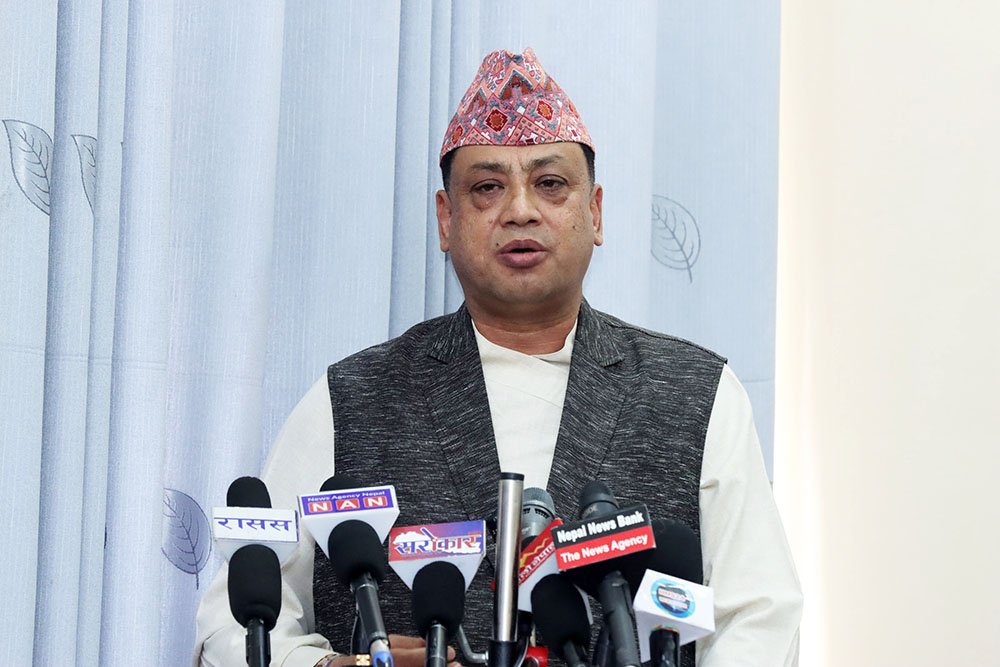
Chairman Pushpa Kamal Dahal 'Prachanda' was reportedly angered by the decrease of 10 seats in the directly elected system and a loss of over 700,000 votes in the proportional representation system over a three-year period. Prachanda warned of action against central committee members after receiving reports that they had voted for the Rastriya Swatantra Party (RSP) in various districts.
Addressing a gathering of mass organizations at the central office in Parisdanda on Thursday, he reiterated the warning that action would commence once concrete reports from all constituencies arrive. He stated that the disciplinary process would begin with the central committee members.
'We must receive reports on who did not vote, and who voted for the bell symbol. They must be disciplined, otherwise, the party cannot be built. The action will start first with the central committee members,' Prachanda said. 'We have received a general report that fifty percent of votes went to the bell symbol. Bring concrete reports. We will take action against them without hesitation. Party reorganization starts here. This is the beginning of building a new party.'
In the 2079 elections, the erstwhile CPN (Maoist Centre) alone secured 1,175,684 votes. The other constituent, CPN (Unified Socialist), obtained 298,391 votes. Before the election, the NCP was formed by the merger of the Maoist Centre, Unified Socialist, and 25 other constituents. The total votes of these two parties were 1,474,075.
It was estimated that about 50,000 more votes were added from constituents like the Janata Samajbadi Party and Nagarik Unmukti Party. Internal analysis suggested that the total votes received by all these parties amounted to 1,524,075.
The internal conclusion was that the proportional representation votes were not secured in the previous election because candidates were fielded in limited areas due to the alliance. The NCP had analyzed that the proportional votes would increase this time as they fielded candidates in 164 constituencies. However, according to the final election results published by the Election Commission, the NCP received only 811,577 votes.
In the previous election, the Maoist Centre alone won 32 seats—18 directly elected and 14 proportional. The Unified Socialist won 10 directly elected seats, and the RSP won four. The NCP had internally assessed that they could win at least 45 seats as the Unified Socialist, which has a majority base in Madhes and Sudurpaschim Province, and the RSP had joined the unity process.
However, as the seat count shrank to 17 this time, pushing the party to fourth place, the call for party reorganization gained momentum within the NCP, leading Prachanda to order reports from all constituencies. During the program, he also concluded that the narrative that elections can only be won through physical infrastructure development, money, and a strong organization is flawed.
_jMfYl7w465.jpg)
'The argument that development leads to victory is valid, but it is not the main argument. You said—the development of Bharatpur is international standard. But they lost. If winning depends on spending a lot of money, then Binod Chaudhary would have won. He also lost,' Prachanda said. 'Narayaman Man Bijukchhe (Nepal Workers' and Peasants' Party), who had organized well, published good propaganda, and satisfied the public in Bhaktapur, lost. Even the UML, with a good and strong organization, lost. Therefore, these things are secondary. The main thing is ideology, politics, and struggle. In this period, we lagged behind in the struggle.'
Prachanda asserted that national and international influences contributed to the current election loss. He urged leaders and cadres not to be disheartened by the defeat, noting that major parties with strong organizations like the Congress and UML also suffered significant setbacks.
'There is a national and international influence behind the unfavorable election results. I will not elaborate much on that. I don't know the RSP candidate. The wind blew in a certain way. Public opinion was influenced by the ringing of the bell,' he said. 'We have won in terms of ideology and politics. Federalism, inclusion, secularism, and democracy established by the People's War and the People's Movement have been saved. Do not be discouraged by this defeat; we will rise again next time.'
He stated that the focus would be on streamlining the organization alongside ideology and politics.
Leader Rajendra Shrestha, who participated in the program, claimed that the NCP suffered less damage compared to other parties. He asserted that in terms of popular vote, Bagmati was first, Lumbini second, and Madhes third. He believed that Karnali Province was excellent in terms of strong organization. However, he concluded that votes did not come as expected in Sudurpaschim. He said, 'Ghandaki had already declined. We could not have a good presence in the East either.'
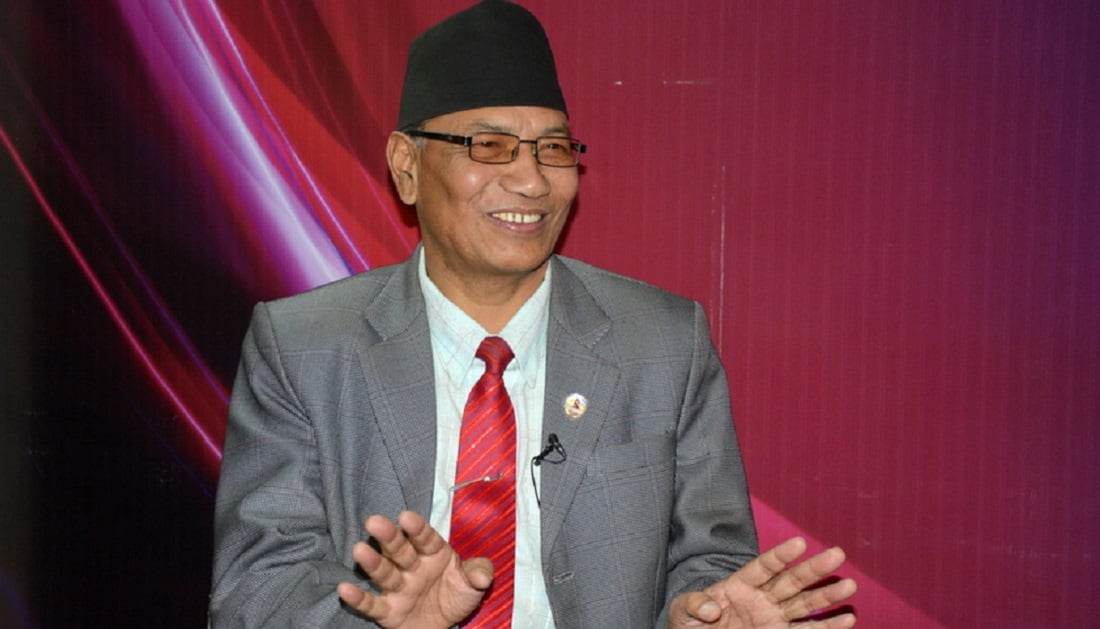
Shrestha argued that it is incorrect to analyze the situation as if the entire party was integrated, even though it was called 25 constituents. He said, 'Comparatively, the NCP has suffered less damage. Although called 26 constituents, not everyone from the former parties came. Most leaders and cadres of the Unified Socialist had already returned to the UML. Kisan Shrestha, Ram Kumari Jhakri, and others returned to the UML during the unification. Ghanashyam Bhusal went to the NCP Samajbadi. The Maoist Centre also split. Not everyone from JSP Nepal came. Many from the RSP went to Resham Chaudhary's party. Therefore, it cannot be interpreted as if the entire party was integrated.'
Shrestha informed that Prachanda briefed them on the election results during a discussion on how to integrate the mass organizations involved in the unity process.
A question was raised during the program about why the leadership showed proactiveness in going to the elections when the then major parties, Congress and UML, were hesitant.
'Why did our party insist on going to the elections in a hurry? Prachanda would certainly know about the national and international grand design, as Congress and UML were not agreeing to go to the polls,' said another participating leader.
NCP Spokesperson Agni Prasad Sapkota stated that the secretariat meeting would seriously review the election results. He mentioned that discussions would move forward to hold a general convention in Ashar for party transformation and reorganization.
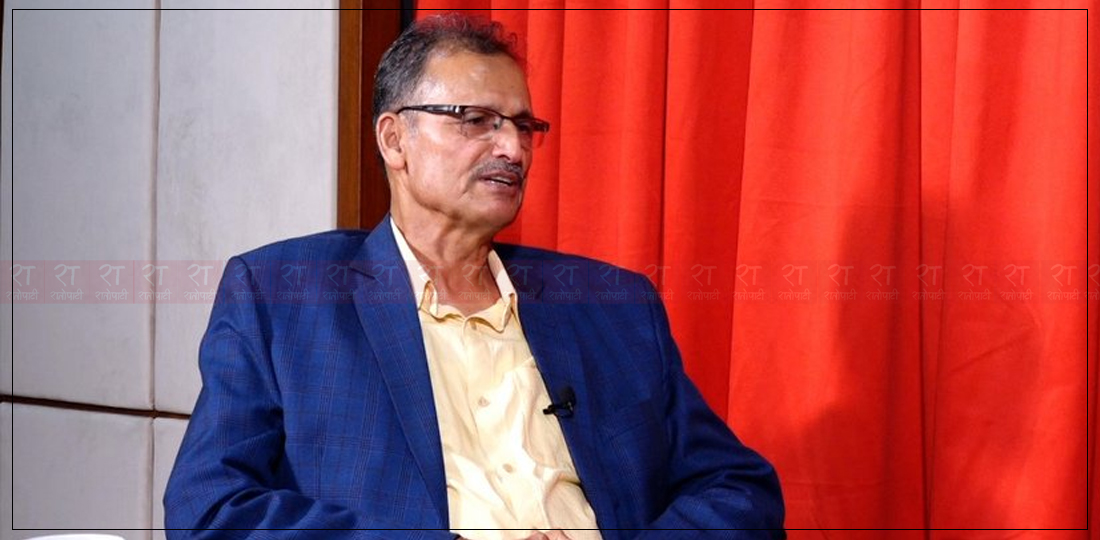
'There will be a serious review of why our party is continuously facing setbacks. The secretariat meeting will convene in a few days. We will also call a central committee meeting to hold a convention in Ashar for party transformation and reorganization along with the synthesis of ideology,' he said.
This specific news has been automatically translated by AI. As a result, there may be some inaccuracies or language errors.
-(2)_QJLjKxR87n.jpg)