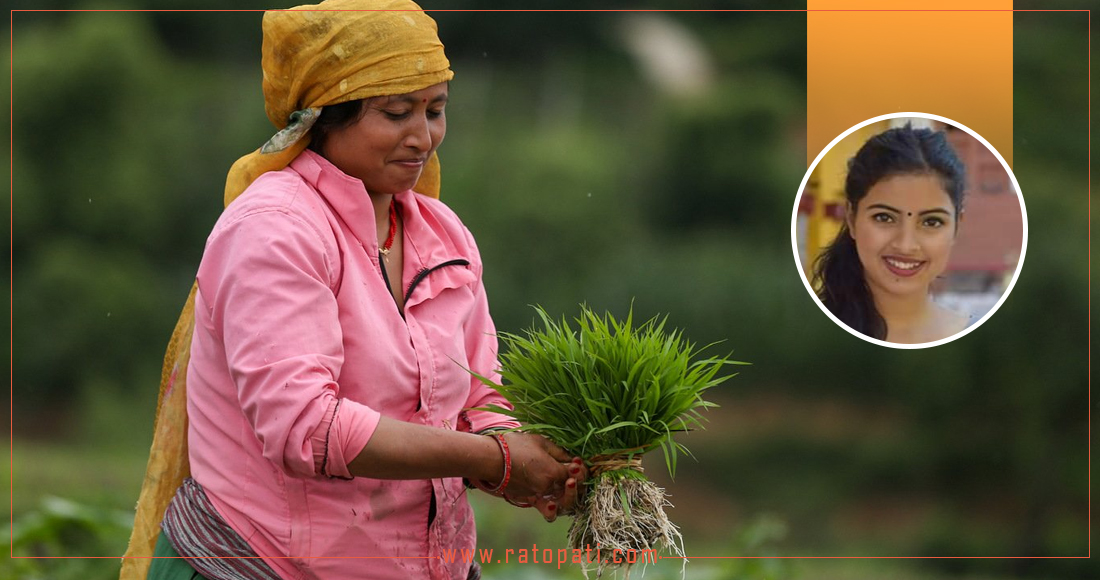
Jhapa Farmers Lose Enthusiasm for Boro Rice Cultivation Amid Low Prices

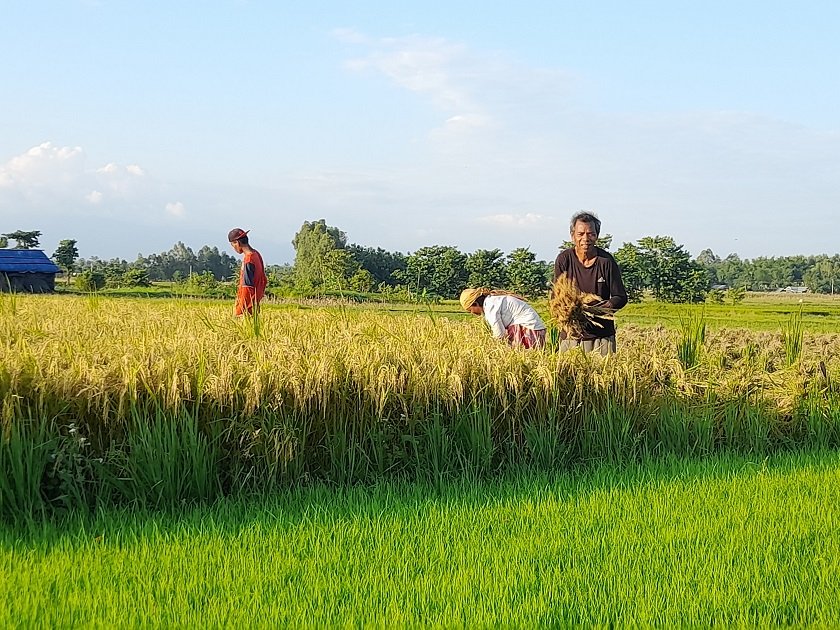
Jhapa. Last year, farmers were extremely busy with Boro (spring) rice cultivation around this time. However, this time, farmers lack the enthusiasm and vigor seen last year. The reason is that two years ago, farmers received good prices for both monsoon and Boro paddy.
The government's timely announcement of Boro paddy prices also boosted farmer morale. Market rates were also favorable. But, the recent Boro and monsoon paddy crops did not fetch prices comparable to the previous year.
Last year, farmers received between NPR 600 to NPR 700 per man for Boro paddy, and between NPR 1,200 to NPR 1,300 for monsoon paddy. Sagar Bista, Chief of the Agriculture Knowledge Center Jhapa, states that the area for Boro paddy cultivation is expected to decrease by about 15 to 20 percent this year compared to last year.
“Last year, farmers did not even get the cost price for Boro paddy,” he said, “It was difficult for farmers to recover their costs.” Chief Bista attributes the expected reduction in Boro cultivation area in Jhapa district this year to the low prices. “We estimate a decrease of three thousand to four thousand hectares in Boro paddy cultivation,” he added.
For the fiscal year 2081/82, the government set the minimum support price for Boro paddy with up to 18 percent moisture content at NPR 2,869 per quintal. However, farmers barely received between NPR 1,500 to NPR 1,750 per quintal.
The government increased the price of Boro paddy by NPR 93.41 per quintal in FY 2081/82 compared to FY 2080/81. However, farmers failed to receive even the old price. The government also increased the minimum support price for monsoon paddy for the current fiscal year.
The Council of Ministers set the price for coarse paddy at NPR 3,463.81 per quintal, and the minimum support price for medium paddy at NPR 3,628.33 per quintal. In the previous year, the minimum support price for coarse paddy was NPR 3,410, and for medium paddy, it was set at NPR 3,580. However, farmers did not receive the increased price, nor even the previous year's price.
The cycle continues where the government increases prices annually, but farmers fail to receive them. Mill owners and traders arbitrarily determine the price paid to farmers. Mill owners have their own grievances, complaining that their industries are facing a crisis.
In FY 2080/81, Boro paddy farmers received fair prices. In that fiscal year, 104,014 metric tons of Boro paddy were produced across 19,850 hectares.
Following the good prices, the area for Boro paddy cultivation increased by one hundred hectares to 19,950 hectares in FY 2081/82, with a production of 106,134 metric tons of Boro paddy, informed Bista, Chief of the Agriculture Knowledge Center.
Knowledge Center Teaching Technology
The Agriculture Knowledge Center is conducting various programs to reduce farmers' input costs and increase production. Chief Bista stated that, like in previous years, model farming was carried out on 24 bighas in Shivsataxi and Gauradaha this year as well. He mentioned that this model farming utilized rice transplanting machines in these two locations.
“We are teaching farmers agricultural technology and making them accustomed to it,” he said, “We believe this will reduce farmers' costs and attract them to the agricultural sector.”
This specific news has been automatically translated by AI. As a result, there may be some inaccuracies or language errors.
_OpOYENSORc.jpg)