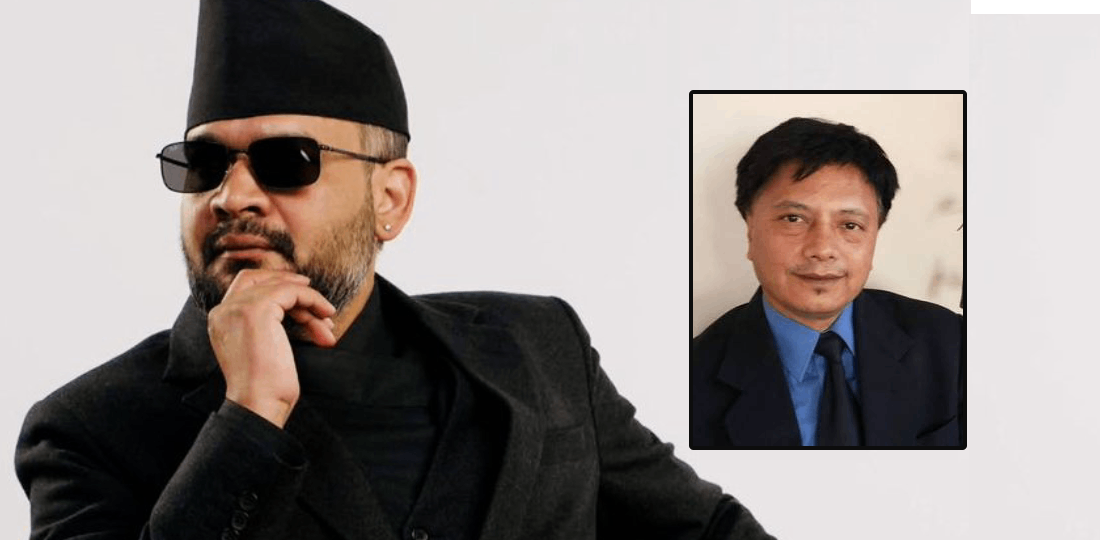
Reflections on Political Relationships: Kirtinidhi Bista, B.P. Koirala, and Arjun Narsingh KC


Kirtinidhi Bista often spoke of the nation, nationality, and statesmen. His nation was Nepal, his nationality was Nepali, and his statesman was Mahendra. After that, he would bring up B.P. Koirala.
In reality, Koirala and Bista got along famously. Although Koirala wrote about Kirti Babu in his book 'King, Nationality, and Politics'—'Some people ask—what is the secret behind the frequent visits of this Bista to your place? He has a habit of taking a morning stroll, and if he happens to walk this way, he ends up at my place. My politics and his politics do not align.' What I mean to say is that there is a political relationship, and then there is a social one! I have a good social relationship with Bista, and I also have a good relationship with his family. If his wife sees me at any function, she comes and talks to me.
There were many occasions when B.P. Koirala's name came up in connection with Kirti Babu. Especially among the younger generation of leaders at that time, Bista had a strong acquaintance with Girija Prasad Koirala, Prakash Koirala, Ramchandra Paudel, and Arjun Narsingh KC. In recent days, after Arjun Narsingh KC became Gagan Thapa's father-in-law, Kirti Babu used to say—'Arjun never called me a Panchayat member. Arjun is not a politician like others. He possesses abundant qualities found in a statesman.' And a little later, Kirti Babu had said—'Arjun's son-in-law is indeed a son-in-law; the son-in-law also seems sharp.'
Although Arjun Narsingh KC's ideology is staunchly Congress, he is considered a pillar of morality. In reality, he was fearless and still appears so. For example, I had read what he wrote regarding Kirti Babu—'I remember Kirti Babu more for his personal conduct, goodwill, frankness, and affectionate relationships than for ideology, politics, or position. Whatever the outcome, good or bad, I have appreciated the human virtue of confidence and stance with which Kirti Babu stood with honesty and dedication to the side he took and his integrity until his final moments. Kirti Babu remained in power for many years during the Panchayat era, but it was never heard that he became involved in controversies like corruption by deviating from morality and honesty.'
Just like Kirti Babu, Arjun Narsingh KC's name also comes up among the wealthy in terms of ideology. Speaking of political ideology, he even used to fight against the 'P' of the Panchayat. I had read an article he wrote about his youth when he would eat coal and extract ash—'In 2022 BS, I had finished my high school studies and was a college student. Simultaneously, I was a revolutionary democrat activist opposing the Panchayat system. The foundation of my rebellious politics was laid during my high school life, and by the time I reached college, my activities had become more mature, fearless, and widespread. At that time, I was an I.Sc. student at Amrit Science College, newly admitted, but I could not continue my science studies after becoming a political prisoner. We were doing something or the other, which resulted in activities that troubled the then Panchayat regime. We were preparing for a large conference of students from across the country in Kathmandu. At that time, Kirti Babu was the Vice Chairman of the Council of Ministers, Minister of Foreign Affairs, and Minister of Education.'
Even as Arjun Narsingh KC transformed himself into a prominent figure in partisan politics, his attachment to principles never wavered. I had heard from Kirti Babu himself the fact that he joined the Nepali Congress with firm conviction. That is why I felt inclined to call a leader from the opposition camp, filled with such specific skills, a strong teacher of moral education by the royalist Narendra Raj Prasai. The words reflecting his perspective from that time still color my diary—'Before the establishment of the Nepal Students' Union, there were various student unions in the geographical areas of democratic students. These student organizations were formed as a result of the widespread crackdown and repression in 2022 BS to resist the oppression of the Panchayat regime. The harsh crackdown and repression on the student movement at that time were dreadful. While preparations were underway for the first nationwide student conference scheduled for Baishakh 5, 2022 BS, the Panchayat government conducted extensive searches, crackdowns, and repression against students to foil it. The police would notice or follow even if five students walked together. All the senior leaders of the party were either in jail or in exile in India. We students had brought forward agendas such as organizing that conference and gaining the right to form student unions and organizations, along with educational demands. The crackdown through searches was so extensive that there was no space left in the jails to keep the detained students; they were kept in places like police posts, stations, warehouses, cells, and even the ground floor of leader Suvarna Shamsher's house in Baluwatar (Lalita Niwas). Due to the widespread repression, the conference could not take place, but it necessitated the establishment of student organizations in various geographical areas.'
Was the history of the Nepali Congress at that time that of Gagan Thapa's father-in-law, or that of an ardent worker of B.P. Koirala? What is the point of cornering KC, who upheld the Congress spirit back then, by calling him Gagan Thapa's father-in-law now? That history has resurfaced in my eyes today. KC himself wrote about that time—'After our preparations were completely disrupted by the government, Kirti Babu, who was the Minister of Education, grabbed my arm in his characteristic style of speaking loudly from a distance at a social program one day and said—'Hey Arjun Babu! I have received reports that you are a meritorious and promising student with a bright future. What is the point of ruining your studies by doing unnecessary things? Your parents from the village sent you with so much pain and effort, with hope to study! You shouldn't be here causing a ruckus; I will send you to India to study under the Colombo Plan. Will you go to study?' As per his assurance, I did not go to study, but that sensitive and unexpected proposal has left a positive mark on my conscience to this day. I saw no self-interest or condition in the assurance he gave me. But I too did not abandon my duty and continued to walk with my neck laid down for the party.' It was because of KC's strong, high, and firm morality that he inscribed those words about Kirti Babu.
When son-in-law Gagan Thapa became the party president, I feel like asking those who sling mud at KC one thing. In 2026 BS, when KC was the president of the Nepal Students' Union, were Ramchandra Paudel, Sher Bahadur Deuba, and others his active workers? But has KC only entered politics today by becoming Gagan's father-in-law? Why are people trying to turn his political integrity into a lump of ash from then until now? Does the fact that he hasn't become Prime Minister mean he should always be harassed? If this is true, then Ganesh Man Singh, Bishwabandhu Thapa, Rajeshwar Devkota, and Sahana Pradhan should also not be chased away by making them relatives of someone!
What is the point being made here? Should father-in-law Arjun Narsingh KC abandon the Nepali Congress ingrained in his very blood, or should son-in-law Gagan Thapa abandon the Congress? How can the narrative that KC should not fulfill his party responsibilities due to the curse of being Gagan Thapa's father-in-law be eternal?
It is not new in our Nepal for the ancient process of finding some fault, destroying the prestige, or even eliminating the top political leadership who carry the country and nationality on their shoulders. Therefore, it is not at all strange that Arjun Narsingh KC, who has stood intact while holding the nationalist stance, is being implicated in the 'Gagan Father-in-law' controversy after failing to find any other fault. However, I see it as extremely necessary for all concerned to understand that the country will not be cleansed this way, and the political situation of the country will only deteriorate further.
Otherwise, in Nepali politics, the monkey gives the cat nothing to eat. This is evident in the current political situation in Nepal!
This specific news has been automatically translated by AI. As a result, there may be some inaccuracies or language errors.