NASA's Van Allen Probe A Re-enters Earth's Atmosphere Years Ahead of Schedule

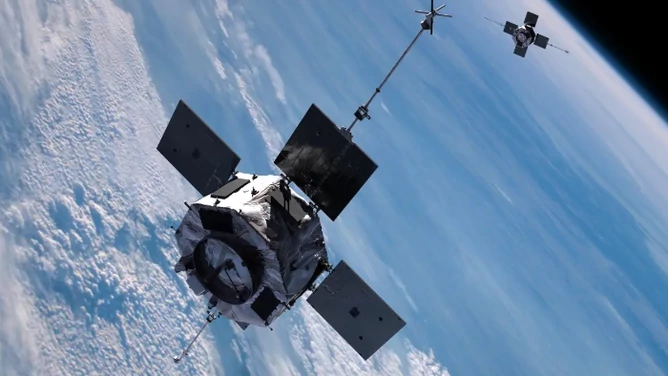
USA. A spacecraft from the American space agency NASA has re-entered the Earth's atmosphere many years earlier than expected. According to NASA, the spacecraft named 'Van Allen Probe-A' entered the Earth's atmosphere at 6:37 AM on Wednesday.
This spacecraft was launched in August 2012 and has returned to the atmosphere after approximately 14 years. The spacecraft was sent along with its twin, 'Van Allen Probe-B', to study the Van Allen radiation belts surrounding the Earth.
According to the US Space Force, 'Van Allen Probe-A' re-entered the atmosphere over the eastern part of the Pacific Ocean. NASA stated that most of the spacecraft is estimated to have burned up upon re-entry through the Earth's atmosphere, although some parts might remain.
These spacecraft actively worked from 2012 to 2019, collecting unprecedented data about the Earth's radiation belts. During this mission, scientists also discovered new facts, such as the temporary formation of a third radiation belt during intense solar activity.
The mission was concluded in 2019 when both spacecraft ran out of fuel. At that time, scientists estimated that the spacecraft would re-enter the Earth's atmosphere around 2034. However, due to higher than expected solar activity in the current solar cycle, atmospheric drag increased, causing the spacecraft's orbit to decay faster, leading to its return to Earth earlier than anticipated.
According to NASA, the data collected from this mission continues to help in understanding space weather and its impact on satellites, astronauts, and Earth's communication, navigation, and electrical systems.
NASA indicated that 'Van Allen Probe-B' is not expected to re-enter the Earth's atmosphere before 2030.
This specific news has been automatically translated by AI. As a result, there may be some inaccuracies or language errors.