Analysis Suggests Nepali Communist Parties Face Decline, Citing Ideological Stagnation and Voter Disillusionment

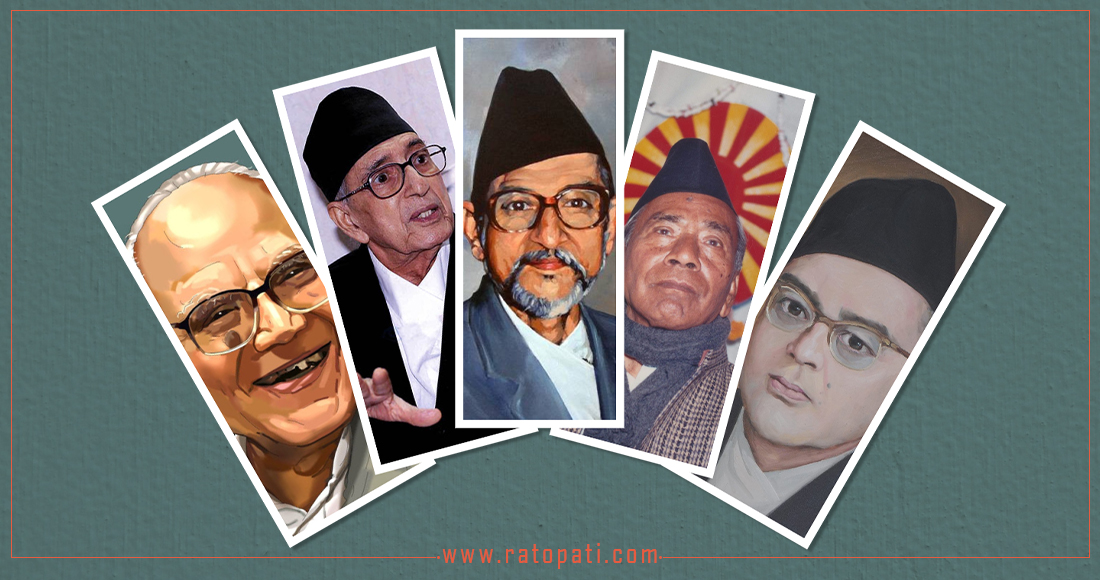
It cannot be said that a political party is finished forever just because it performed poorly in one election. However, the communist or leftist groups in Nepal, which used to secure around 40 to 50 percent of the votes, appear to have settled for less than 20 percent this time. This clearly indicates that the communist vote bank has halved.
If this trend continues in the coming days, communist groups could be finished by the third election cycle. They might survive only if they manage to cover the losses in the immediate next election.
Whether they can cover the losses depends on two factors. First, the extent of internal reform, leadership change, and unity they achieve. Second, how much space the ruling party allows their agenda to reach the public, or how successful the ruling party is. If the ruling party succeeds, the communists will weaken further. If the ruling party fails, they will find an opening to reach the people. In my opinion, this is the theoretical standpoint. Looking at the practical reality, it seems that Nepal's communist groups will continue to weaken. There is a growing possibility of them becoming like West Bengal's political scenario.
The first reason for this situation is that the communist leaders lost their majority, which they had achieved through the unity between K.P. Sharma Oli's rise and the merger of Oli and Prachanda, due to their ego. Consequently, voters became disillusioned with them.
Second, by the time of the recent general elections, the communists were established as the suppressors or repressive forces, the anti-revolutionary power. The government at that time was led by Oli. This caused the communist vote bank to weaken. Looking at other internal ideological issues, the ideological crisis within the communists was that the writings of Marx, Lenin, and Mao could not lead the 21st century. For a time, they propagated the ideas of Marx, Lenin, and Mao. As we enter the third decade of the 21st century, those ideas have failed. They failed to construct new narratives, theories, and set new agendas as an alternative to those ideas, and failed to demonstrate behavior accordingly.
There is a global debate that the ideology of communist parties is irrelevant today. Especially in the 30-40 years since 1990, communism is considered just one more ideology worldwide. Nepal always had the remnants of that. No political party can survive by perpetually living off the interest of history. Every era requires them to change, adapt, formulate new ideas, set agendas, and demonstrate corresponding behavior, which they failed to do.
I am also surprised regarding the case of Bhaktapur (Nepal Workers' and Peasants' Party - NWPP). I hadn't imagined this. I had predicted that the Congress, UML, and Maoists would weaken. I thought the Rastriya Janamorcha and Masal would be finished after this election because their base was limited to Baglung and Pyuthan; their failure to secure seats there almost confirmed their end. But perhaps many people did not expect NWPP to lose in Bhaktapur-1. There might be some local study involved. I am not fully aware of it. I haven't deeply studied that constituency, but there doesn't seem to be a strong reason why NWPP should have lost there.
One reason observed is the public's desire for change among those who have governed for a long time. The party had existed for a long time under the leadership of Narayan Man Bijukchhe. The local community there was also intact with that party. They had won many seats in the municipality and wards. Bhaktapur Municipality was also known among many municipalities for being clean, corruption-free, and efficient in development. Despite all this, their defeat suggests two possible reasons. One is that very desire for change. Even sugar tastes bitter if consumed too much; there is a natural aspiration for change. NWPP used to win both seats in Bhaktapur previously. Later, as people migrated and urbanization occurred, bringing diverse populations from various parts of the country, NWPP started losing in Bhaktapur-2. Urbanization is rapid in areas like the Changu Narayan region. Many people might have moved in from outside. That could be one reason, but I cannot claim it definitively. It requires further study.
(Based on an interview)
This specific news has been automatically translated by AI. As a result, there may be some inaccuracies or language errors.




_6FSvCrCShE.jpg)