Chief Justice Prakashman Singh Raut's Tenure Marked by Challenges, Unfulfilled Judicial Reforms
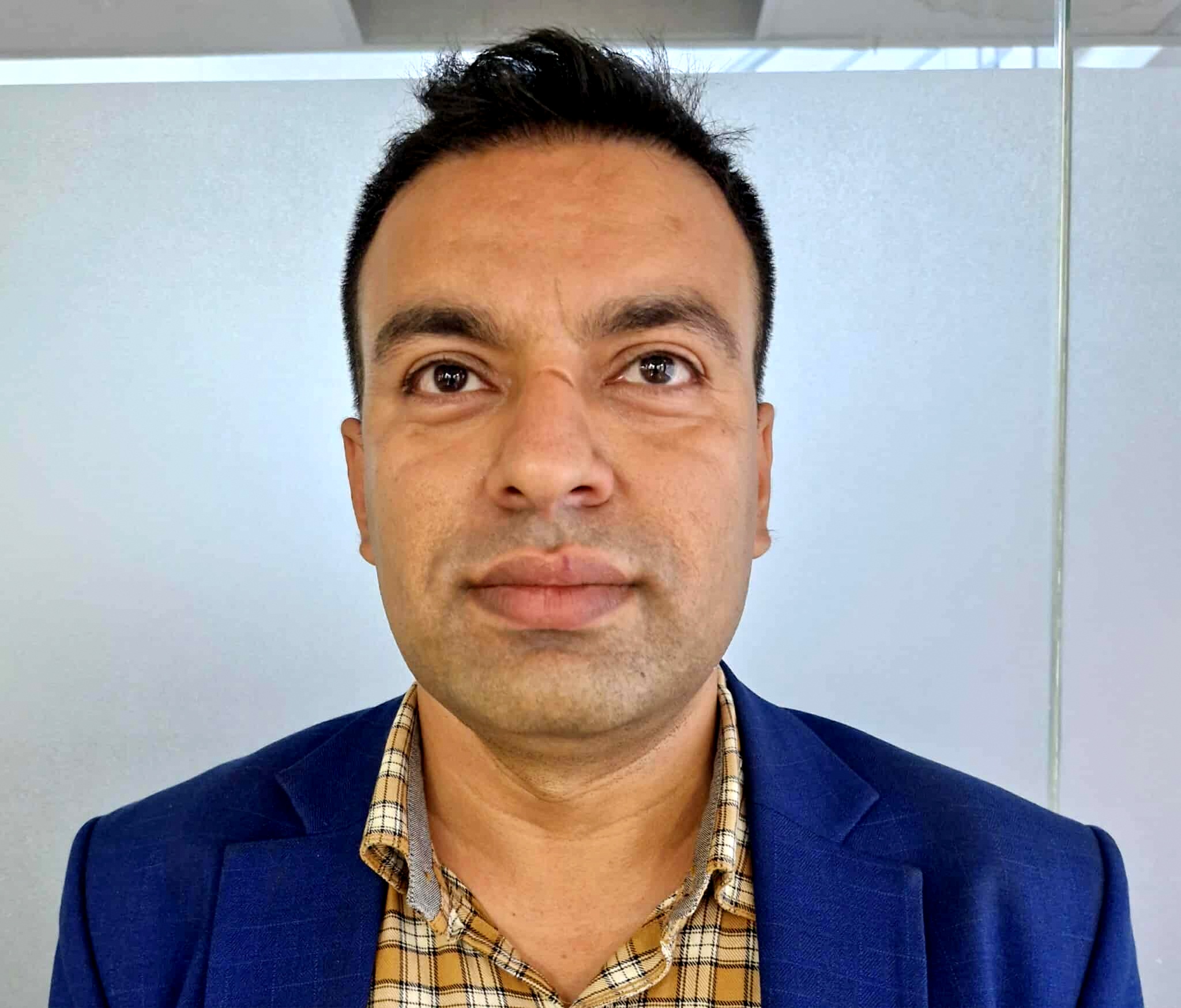

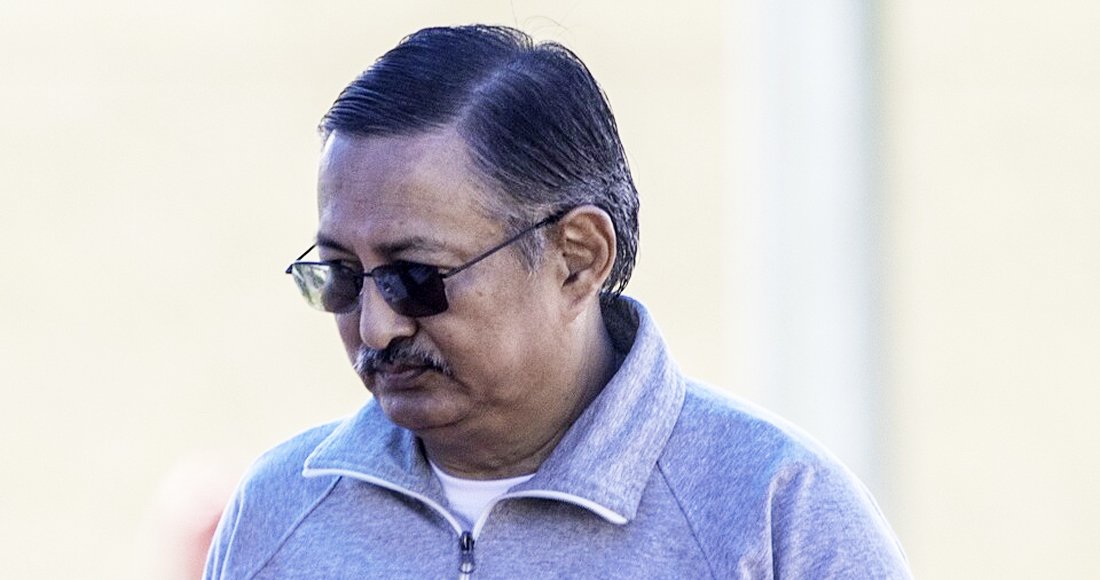
Kathmandu. Chief Justice Prakashman Singh Raut was surrounded by challenges when he took the oath of office on Ashoj 20, 2081 BS. Raut, who rose to become Chief Justice after serving as a Supreme Court Justice from a legal background, is set to complete his term on Chaitra 17 due to the age limit of 65 years.
Raut was appointed Chief Justice amidst an ongoing tussle between the Bar and the Bench regarding the amendment of the Judicial Council Act. The previous Chief Justice, Bishwambhar Prasad Shrestha, could not smoothly resolve the conflict with the Nepal Bar Association over the amendment of the Judicial Council Act concerning judicial appointments.
Before becoming Chief Justice, Raut first raised the alarm about corruption within the judiciary in 2064 BS when he was the President of the Supreme Court Bar Association. While serving as the Supreme Bar President, he formed a study committee to stop corruption and irregularities in the court. The committee members were Prakash Basti, Bharat Raj Upreti, Kamala Narayan Das, and Shrikanta Baral, chaired by Shri Hari Aryal. The committee was mandated to study and investigate what needed to be done to increase public faith in the judiciary.
The committee concluded in its report that if the Chief Justice did not engage in wrongdoing, half of the judiciary's problems would be solved. The report also addressed issues such as the qualifications for judges, the relationship between the Bar and the Bench, the problems in the justice sector, how corruption occurs, and what measures should be taken to stop the influence of middlemen in the courts.
During the tenure of the then Chief Justice Cholendra Shamsher JBR, another study committee was formed to suggest ending corruption in the judiciary. Raut was a member of that committee, which was chaired by then-Justice Hari Krishna Karki. That committee concluded that the Chief Justice himself was involved in irregularities and promoted middlemen and distortions.
The committee recommended implementing a lottery system and an automated method for case scheduling. Although Raut, who vowed to end the distortions in the judiciary, brought about some structural reforms in the judiciary during his 18-month tenure, he failed to implement the report submitted by the committee he was once part of for judicial reform.
The last seven months of his 18-month tenure were challenging. Following the arson attack on the Supreme Court building amidst the J-G protests on Bhadra 23 and 24, Raut ensured that the lamp of justice did not go out. During this seven-month period, shaking off the ashes to deliver justice to the victims became his challenge.

Thousands of case files were burned in the arson. After the judicial process was virtually halted for a long time, Chief Justice Raut took the initiative. In that difficult situation for the judiciary, the hearing of Habeas Corpus writs began by setting up a tent on one side of the pile of ashes. After some time, stating that the citizens' right to justice should not be denied, the Supreme Court repaired the Annex building and operated a temporary bench. After three months, Chief Justice Raut succeeded in bringing the Supreme Court back to its normal rhythm.
Significant progress was made during Raut's tenure in judicial appointments and the disposal of old cases. While there used to be a large number of pending cases registered in the Supreme Court, Raut prioritized the disposal of old cases. Although he announced a plan to prioritize cases older than 8 years for speedy hearings, he could not succeed due to the arson attack at the Supreme Court at the last moment. Nevertheless, the Supreme Court declared that cases older than 8 years were zeroed out.
- Complexity in Judicial Appointments
Judicial appointments have always been a major and complex problem in the judiciary. Appointments were either not made or were controversial when they were made. Every appointment in the past tended to become controversial.
Three Supreme Court justices were appointed on Ashar 23, 2082 BS. Senior Advocate Meghraj Pokhrel, who was the President of the Supreme Court Bar Association, Chief Judge of Patan High Court Shrikanta Paudel, and Chief Judge of Dipayal High Court Shanti Singh Thapa were appointed as Supreme Court justices in the Supreme Court, which had four vacant positions.
Furthermore, 27 judges were appointed to the High Courts on Shrawan 22, 2082 BS. Some controversy arose regarding the names of those appointed from the legal profession background. Disputes arose, alleging appointments were made based on quotas from CPN-UML and Nepali Congress. The Nepal Bar Association protested the appointments.
The Bar issued a statement saying, "The Nepal Bar Association's serious attention has been drawn to the recommendation of 27 judges appointed to the High Court by the Judicial Council. This appointment completely disregards the spirit and sentiment of proportional inclusive state envisioned by the Constitution of Nepal. While meaningful representation of women, various geographical regions, classes, and communities should be ensured in an important organ like the judiciary, this appointment rejects that. Such an unbalanced appointment severely harms the feeling of equal access and ownership in the judiciary. It has weakened the trust in the justice system."
- Constitutional Bench Formation Affected by Case on Appointment of 52 Officials
The case concerning the appointment of 52 officials to constitutional commissions became an issue that constantly troubled Chief Justice Raut from within. Although Raut held the view that appointments made by then-Prime Minister KP Sharma Oli through an ordinance to commissions ranging from the Commission for the Investigation of Abuse of Authority to the National Human Rights Commission should be nullified, Raut was in the minority in the Constitutional Bench. Chief Justice Prakashman Singh Raut and Justice Nahakul Subedi gave opinions favoring the cancellation of the appointments of 52 constitutional commission officials in the Constitutional Bench.
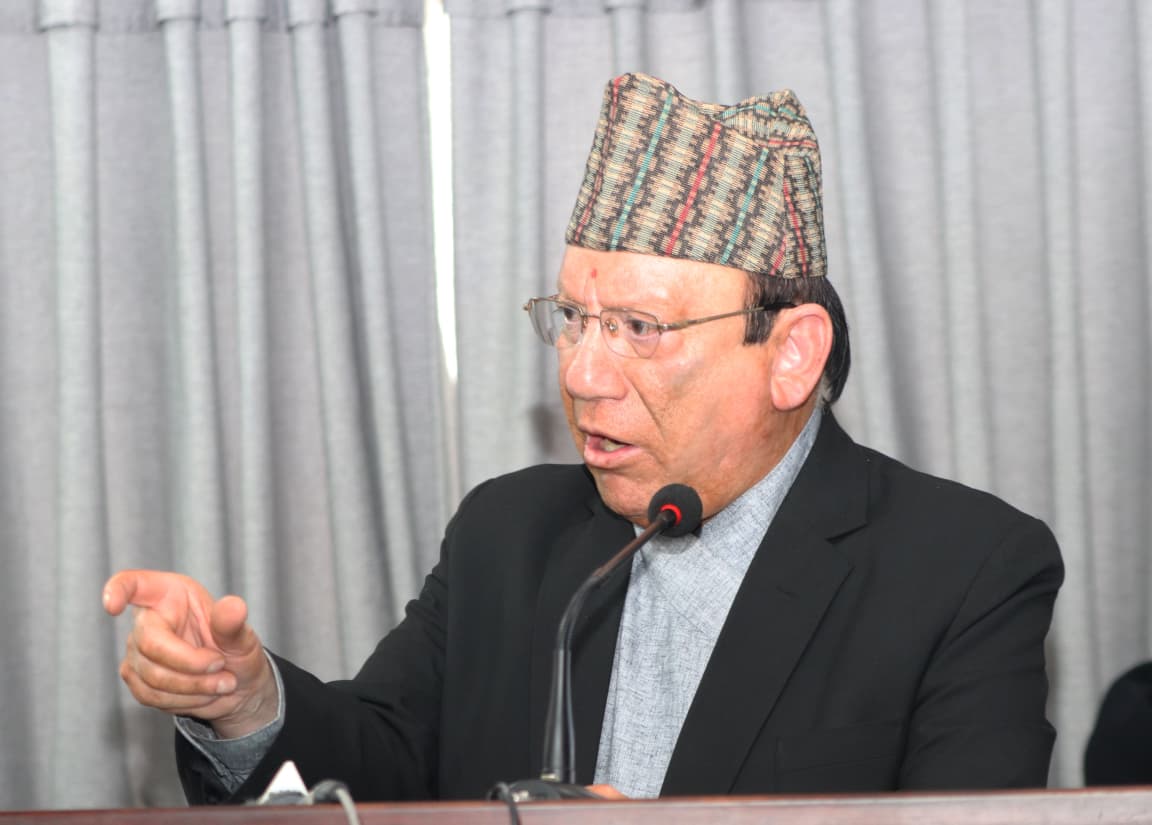
However, the majority judges of the Constitutional Bench—Sapana Pradhan Malla, Manoj Kumar Sharma, and Kumar Chudal—ruled to dismiss the writ. Since the opinion of Chief Justice Raut and others was in the minority in that ruling, although the case was decided after nearly four and a half years, it could not set a precedent.
Following the verdict on the appointment of constitutional officials, Chief Justice Raut proposed in a full court meeting of the Supreme Court to determine the bench for the Constitutional Bench through a lottery system. The Supreme Court judges appeared divided on this matter. After senior judges strongly disagreed, Chief Justice Raut did not form the Constitutional Bench for a long time.
The case related to the appointment of constitutional commission officials could not be heard for four and a half years. The verdict was delivered on Ashar 18, 2082 BS, in which the opinion of the current Chief Justice Prakashman Singh Raut was in the minority. After the writ was dismissed based on the majority, Chief Justice Raut became restless. Concluding that he was in the minority because the judges were not favorable to him, he indirectly proposed in a full court meeting involving all Supreme Court judges that the bench for the Constitutional Bench should be formed through a lottery system.
As the Chief Justice's proposal suggested that the Constitutional Bench might not be formed for a long time, the Chief Justice formed the bench according to his preference with the consensus of the Supreme Court judges themselves. The Constitutional Bench was formed after nearly two months.
- Chief Justice's Commitments Unfulfilled
Although the 24-point work plan presented by Chief Justice Prakashman Singh Raut to the Parliamentary Hearing Committee appeared excellent, the prestige of the judiciary did not increase accordingly in practice. He committed to paying special attention to case disposal in the Supreme Court. While a plan was made to reduce cases older than 8 years to zero, an 18-year-old case linked to corruption is still pending.
The old problem of long 'not to be heard' and 'not enough time to hear' lists in the daily cause list remains. There has been little improvement in the tendency for cases involving power and political influence to receive priority over cases of ordinary citizens.
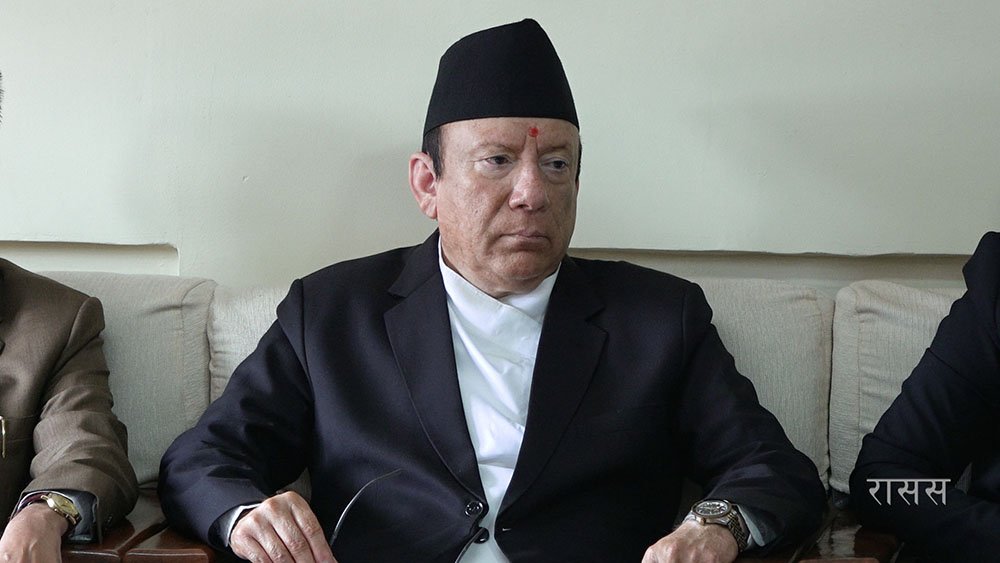
His commitment was to ensure transparency in judicial appointments, appoint only individuals with merit, competence, and high moral character as judges, and enhance the credibility of the Judicial Council. In the judicial appointments made or advanced during his tenure, the shadow of political party division and nepotism is still visible.
The Judicial Council meetings are held repeatedly, but the sequence of not reaching concrete decisions or names of controversial individuals being discussed has not stopped. This raises questions about the independence of the judiciary itself.
Regarding the commitment to broadcast case hearings live and make the judiciary fully digital, Chief Justice Raut has managed to broadcast the hearings of important cases. The concept of online registration and a 'paperless' court has remained merely rhetoric. The use of technology is more focused on the internal work of the court than on service recipients. Dozens of cases requiring serious constitutional interpretation have been pending in the Constitutional Bench for years.
The Constitutional Bench, which should convene twice a week, has not been meeting regularly, leaving disputes involving important state organs unresolved. Moreover, due to Chief Justice Raut himself, the Constitutional Bench could not be formed for two months.
This specific news has been automatically translated by AI. As a result, there may be some inaccuracies or language errors.